
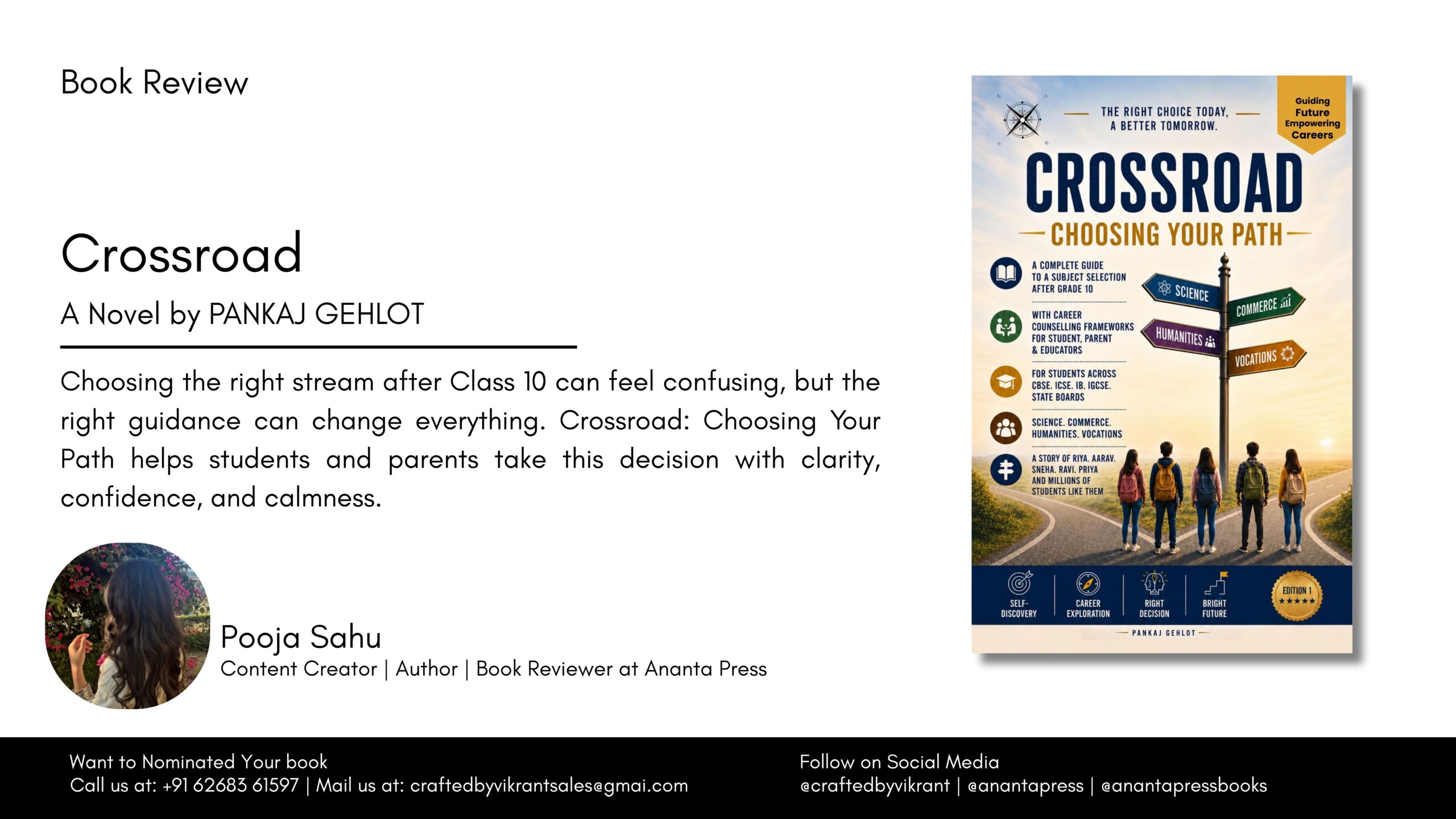
In every student’s school life, there comes one moment when the future suddenly starts feeling serious. For most Indian students, that moment comes after Grade 10. Until then, students mostly study common subjects. But after Grade 10, they are asked to choose a stream: Science, Commerce, Humanities, or Vocational. For adults, it may look like a normal academic process. But for a sixteen-year-old student, it can feel like standing at a very big crossroads. Crossroad: Choosing Your Path by Pankaj Gehlot understands this feeling very well. This book is a complete guide for subject selection after Grade 10, but it is much more than a guide. It is a thoughtful book about students, parents, pressure, expectations, career dreams, fear of failure, and the need for honest guidance. The book speaks to the real Indian education environment where subject choices are often influenced by marks, family dreams, peer pressure, and social status. The title Crossroad is perfect because the book is really about that one stage where students feel pulled in many directions. One road says Science is safe. Another road says Commerce is practical. Another road says Humanities is creative and meaningful. Another road says skills and vocational education can build a strong future. But the student standing in the middle often does not know which road truly belongs to them. The author does not make the mistake of giving one fixed answer for everyone. This is one of the best qualities of the book. It does not say Science is best, Commerce is best, or Humanities is best. It says that the right path depends on the student. This approach is very important because every child has different strengths, interests, dreams, and personality. The book begins with emotional stories, especially the story of Riya. She is a Grade 10 student who is good at mathematics but also loves creativity and storytelling. Her parents think about a secure future. Her teachers see her academic skills. Her friends influence her with their own choices. Riya’s confusion feels very real because many students go through the same thing. They are not confused because they are careless. They are confused because the decision matters. One line of thought that runs beautifully through the book is that students need space to hear their own voice. In many families, students are asked what they want only after everyone else has already given their opinion. Parents, relatives, teachers, neighbours, and friends all speak. By the time the student tries to speak, their own voice becomes weak. This book asks adults to slow down and listen. The chapter about parental expectations is especially powerful. In India, parents often connect stream selection with safety and respect. Many parents prefer Science because they believe it opens more doors. Some prefer Commerce because they see business and finance opportunities. Some worry about Humanities because society has created wrong ideas around it. The book explains that parents’ fears are understandable, but fear should not become pressure. Love should become support, not control. This message is very useful for parents. A parent reading this book may realize that their child needs guidance, not command. The book shows that the best question a parent can ask is not, “Which stream will give you the highest salary?” but “What kind of work makes you feel alive?” This does not mean practical concerns should be ignored. It means practical planning should be combined with self-awareness. The book is also strong because it breaks common myths. Many students still hear statements like “Only Science students are intelligent,” “Commerce is for average students,” “Arts has no scope,” or “Vocational stream is not respectable.” These statements are harmful and outdated. The book challenges such thinking and gives respect to every stream. This is one of the biggest contributions of the book. Science is explained not only as a prestigious stream but as a path for students who enjoy logic, curiosity, problem-solving, and discipline. Commerce is presented as a strong stream for students interested in finance, business, economics, entrepreneurship, and systems. Humanities is shown as a serious and powerful stream for students interested in people, society, law, psychology, communication, public service, and creativity. Vocational education is discussed as a practical and valuable option for students who want skill-based careers. The book also gives importance to career pathways. This is very helpful because many students choose a stream without understanding what comes after it. They may choose Science but not know the difference between PCM, PCB, and PCMB. They may choose Commerce but not know about professional qualifications, economics, finance, management, or entrepreneurship. They may choose Humanities but not understand its connection with law, psychology, media, civil services, design, and international careers. They may ignore Vocational streams without knowing the real opportunities in skill-based fields. A good career decision is not only about the next two years. It is about the kind of skills the student will build. This book explains that every stream develops a different way of thinking. Science builds analytical thinking. Commerce builds understanding of systems and value. Humanities builds critical thinking, empathy, communication, and social understanding. Vocational streams build practical skills and employability. When students understand this, they can make a more informed decision. Another major strength of the book is its discussion on career counselling. The author explains that students should not be left alone with such a serious decision. Career counselling, psychometric tools, and structured guidance can help students understand themselves better. In India, many families still think career counselling is needed only when a child is very confused. But this book shows that guidance is useful even for bright and confident students. The book is also helpful for educators. Teachers often see students struggling with stream choices, but they may not always have a structured way to guide them. Crossroad can become a resource for schools, counsellors, and educators because it combines stories, explanations, reflection, and practical frameworks. It can be used for discussions with students and parents before stream selection. The

Crossroad: Choosing Your Path — A Much-Needed Guide for Students After Grade 10
Choosing a subject stream after Grade 10 is one of the first big decisions in a student’s life. For many students, this decision comes with confusion, pressure, fear, and too many opinions from parents, relatives, teachers, friends, and society. In India, the question of choosing Science, Commerce, Humanities, or Vocational stream is not treated like a simple academic decision. It is often treated like a life-changing moment. This is exactly where Crossroad: Choosing Your Path by Pankaj Gehlot becomes an important and timely book. This book is not just about choosing subjects. It is about understanding yourself before choosing your future. The author has written this book especially for students who are standing after Grade 10 and asking themselves, “What if I choose wrong?” That one question is very powerful because almost every student feels it at some point. The book does not ignore this fear. Instead, it accepts it and explains it with maturity and compassion. One of the strongest points of this book is its emotional beginning. The book introduces students like Riya, Aarav, Sneha, Ravi, and Priya. These names are not just characters; they represent thousands of real students who are confused about their future. Riya’s story is especially relatable. She is good in mathematics, but she also loves storytelling and creativity. Her parents think Science is safe. Her teachers see potential in Commerce. Her friends are excited about Humanities. In the middle of all this, Riya is unable to hear her own voice. This situation is very common in Indian families. The author understands that students do not make decisions in silence. They make decisions while carrying expectations. Parents want security for their child. Teachers give advice based on performance. Friends influence choices. Society gives labels to streams. Science is called prestigious. Commerce is called practical. Humanities is often misunderstood. Vocational education is sometimes ignored. The book carefully breaks these old ideas and shows that every stream has dignity, value, and scope when chosen for the right reason. The language of the book is simple, but the message is deep. It does not sound like a boring career manual. It feels like a conversation between a mentor, a student, and a parent. This makes the book useful for different readers. A Grade 10 student can read it and feel understood. A parent can read it and realize how love sometimes becomes pressure. A teacher or counsellor can read it and use it as a structured resource while guiding students. The chapters on parents are very important. Many parents do not intentionally pressurize their children. They only want a safe and successful future for them. But sometimes this love becomes direction, and the student feels trapped. The book explains that the role of parents is not to force a road but to sit with the child at the crossroads. Instead of saying, “You should choose Science,” parents can ask, “What excites you?” This small change in language can make a big difference in a child’s confidence. Another valuable part of the book is its clear explanation of different streams. Science, Commerce, Humanities, and Vocational streams are discussed with honesty. The book does not promote one stream as better than another. It explains what each stream demands, what it builds, and where it can lead. This balanced approach is very necessary because many students choose streams based on myths. Some think Science is the only successful path. Some think Commerce is only for average students. Some think Humanities has no career scope. Some do not even consider Vocational options seriously. This book challenges these wrong beliefs. The author also discusses career pathways in a practical way. This is very helpful because students often know the name of a stream but not the possibilities connected with it. For example, Science can lead to engineering, medicine, research, technology, biotechnology, and many other areas. Commerce can lead to finance, entrepreneurship, economics, management, and professional qualifications. Humanities can lead to law, psychology, journalism, civil services, design, education, social sciences, and many meaningful careers. Vocational streams can create strong skill-based futures in IT, hospitality, fashion, agriculture, media, and other practical fields. The book also makes an important point: marks alone should not decide a stream. Many students with high marks are pushed into Science even when their interest is somewhere else. This creates stress later. At the same time, some students are stopped from choosing Science or Commerce because others assume they are not capable. Both situations are harmful. The right decision should come from a mix of interest, aptitude, personality, strengths, goals, and proper guidance. One of the most meaningful ideas in the book is that confusion is not always bad. Sometimes confusion is the beginning of self-awareness. When a student is confused, it means they care about the decision. Instead of shutting down that confusion with pressure, adults should help the student explore it. This point makes the book emotionally mature. The book also highlights the importance of career counselling and psychometric assessment. In many Indian schools, career guidance is still treated as optional. But the author strongly explains that structured guidance is not a luxury. It is a necessity. Students should not be expected to make such an important decision with incomplete information. A good counsellor can help students understand their strengths, interests, personality, and future options. Another impressive thing about Crossroad is its storytelling style. The book does not only give advice; it shows situations. Through different students and family examples, the reader understands how decisions are actually made in real life. This storytelling makes the book more engaging and relatable. Students who may not like reading heavy guidance books may still connect with this one because it feels close to their own life. For parents, this book can be eye-opening. Many parents think their child is confused because the child is immature. But this book shows that the child may be confused because too many voices are speaking at once. Parents may also realize that their own
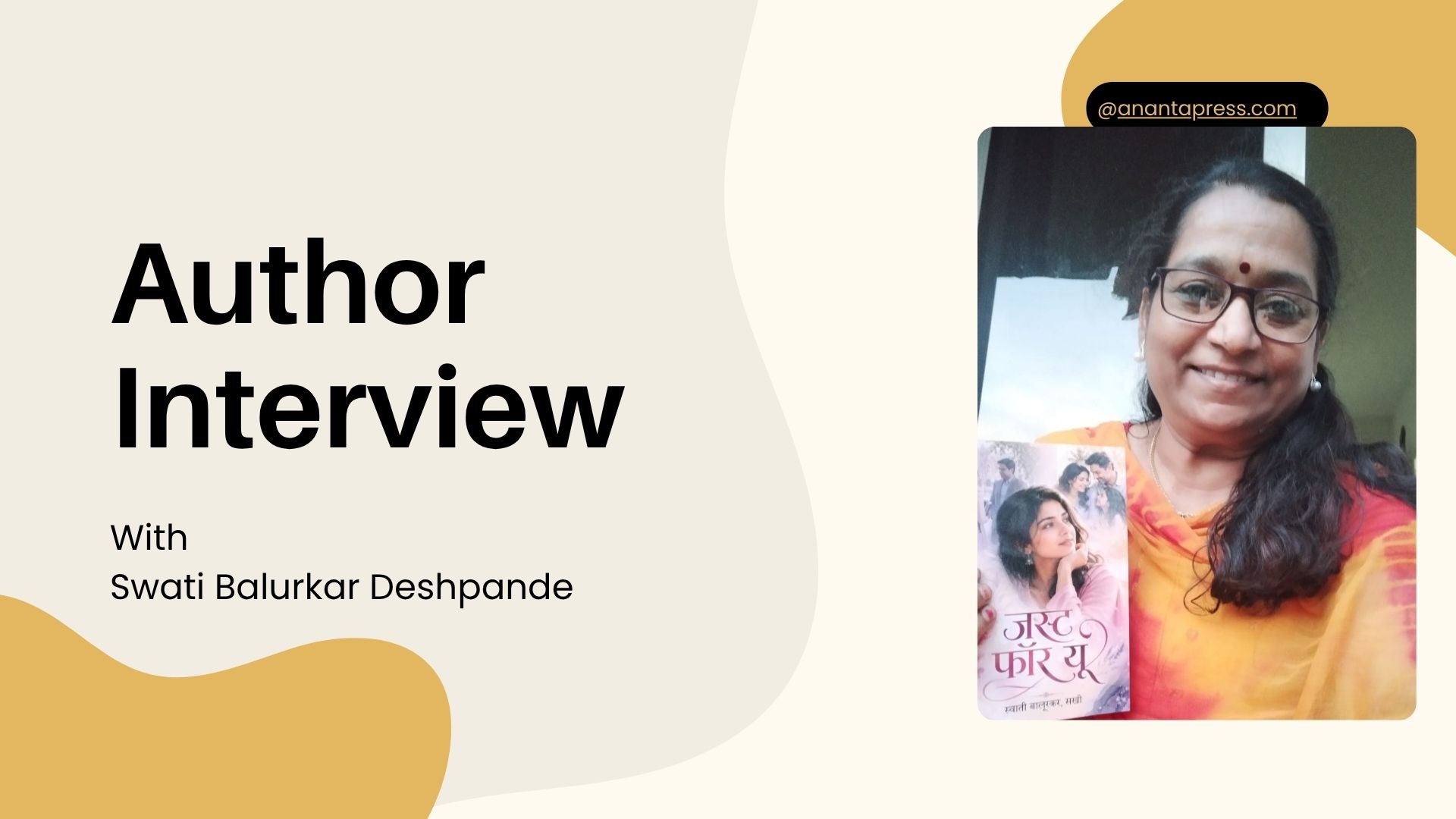
Author Interview: Ms. Swati Balurkar Deshpande on Writing, Teaching, and Her Literary Journey
Answer– Writing began as a way to express my innermost feelings through poetry. Over time, this passion gradually evolved into writing short reflective pieces, allowing me to explore emotions and experiences more deeply. As my confidence and creativity grew, I ventured into storytelling and began writing short stories, transforming thoughts and observations into meaningful narratives. 2. You have served in the field of education for almost 30 years. How has your experience as a Hindi teacher and Head of Department influenced your writing? Answer. Teaching has always been an advantage in my writing journey. Being surrounded by young minds kept me youthful, aware, and connected to changing perspectives. Understanding people and observing social changes enriched my thoughts and made me more mature as a person and a writer. My passion for writing positively influenced my teaching career, and teaching, in turn, nurtured my creativity. Serving as the Head of the Hindi Department strengthened my personality and deepened my understanding of the Hindi language. Reading Hindi classics added depth to my literary vision and significantly enriched my Marathi writing. Overall, teaching and writing complemented each other beautifully, making my journey more meaningful. The only challenge was finding enough time to write alongside professional responsibilities. 3. During your college years, you were active in speech, debate, storytelling, poetry recitation, writing, and acting. How did these activities shape your creative personality? Answer– I am truly grateful to God for blessing me with opportunities to participate in various creative activities during my college years. Speech, debate, storytelling, poetry recitation, writing, and acting played a significant role in shaping my personality. These experiences made me creative, open-minded, confident, and a capable public speaker. They also strengthened my literary sensibilities and broadened my understanding of people and life. Today, I feel that these activities have helped me become a versatile writer who can explore a wide range of subjects with confidence and sensitivity. They nurtured in me an optimistic outlook, a cheerful approach to life, and the courage to express my thoughts freely. In many ways, these formative experiences have contributed greatly to making me the person and writer I am today. 4. From 1994 to 2018, you took a 24-year break from writing. What was that phase like, and what brought you back to writing after so many years? Answer– In May 1994, after my marriage, I moved to Hyderabad. It was a completely new phase of life—a new city, a new state, a new family, and new responsibilities as a daughter-in-law. Marathi was my language of expression, but living in a non-Marathi-speaking environment and not knowing Telugu made it difficult to stay connected with the literary world I belonged to. I did make a few attempts to continue writing and sending my work for publication, but the circumstances were not favorable. Gradually, family responsibilities took priority, and I put my writing aside. Over the next 24 years, my life revolved around my family, career, and raising my two sons. As they grew up, became independent, and my professional and personal responsibilities settled, I began to feel that something was missing in my life. I realized how deeply I missed reading and writing in Marathi. By then, technology had transformed the literary landscape. The emergence of the internet, mobile phones, and various writing platforms created new opportunities for writers. These platforms rekindled my passion for literature and motivated me to start writing again. Returning to writing felt like reconnecting with an important part of myself that had been waiting patiently for years. 5. After resuming writing in 2018, you published stories, poems, blogs, and articles across many platforms. How did readers’ responses encourage your second literary journey? Answer -My second literary innings has been even more exciting and fulfilling than the first. Unlike earlier times, digital publishing platforms and self-publishing apps made it possible to share my work instantly and connect directly with readers. The convenience of publishing anytime and anywhere made the entire process much easier and more engaging. A turning point came when I posted a poem that I had written nearly 25 years earlier. To my delight, it received a five-star rating and highly encouraging comments from readers. That response gave me the confidence to believe that my writing was worthy of publication and appreciation. The positive feedback motivated me to explore new themes and genres, experiment with different forms of writing, and continue my literary journey with renewed enthusiasm. Since then, I have been writing consistently, and the encouragement of readers has remained one of the greatest inspirations behind my work 6. Your stories such as Keli Pan Preeti, Just for You, Magani, Gondan, Anahita, and Parineeta are appreciated by readers. What themes do you enjoy exploring the most in your stories? At heart, I am a romantic person and a lover of love stories. Human emotions, relationships, and the many shades of love naturally attract me as a writer. However, I do not like to limit myself to a single genre. Over the years, I have explored a variety of themes, including social issues, family relationships, psychological complexities, mystery, tragedy, and other thought-provoking subjects. I am particularly interested in the intricacies of human relationships and the emotions that shape our decisions and lives. As a writer, I enjoy experimenting with different subjects and perspectives. Whether it is a heartwarming love story or a story that reflects social realities, my aim is always to connect with readers through authentic emotions and meaningful narratives. 6. Your stories Ankur and Kinare won Second Prize in a State-Level Short Story Competition. How important are such awards and recognitions for a writer? Answer– Awards and recognitions are very important for any writer. While the true joy of writing comes from self-expression and creative satisfaction, awards serve as a valuable acknowledgment of a writer’s efforts and contribution to literature. Such recognition validates our work, boosts our confidence, and assures us that our writing has connected with readers and critics alike. It also brings appreciation
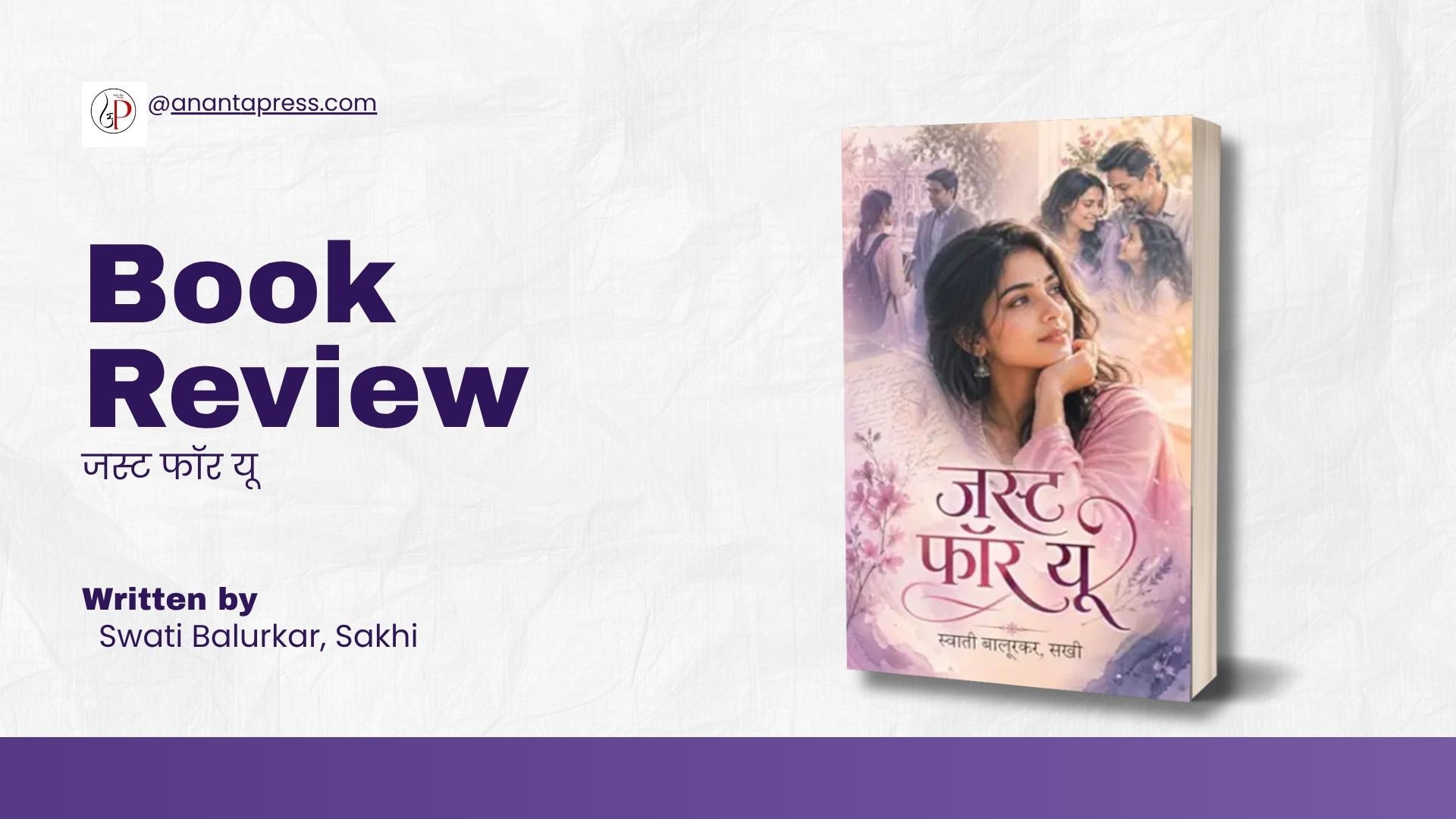
Book Review: A Heartfelt Journey from Infatuation to Mature Love
A nostalgic story of emotions and self-discovery:Set against the memorable backdrop of the 1990s, this book beautifully captures the innocence of youth, the confusion of emotions, and the journey of self-realization. The story reflects how young hearts often misunderstand admiration as love, and how life slowly teaches the deeper meaning of relationships, trust, and emotional maturity. The innocence of youthful attachment:The story revolves around a college girl who develops deep admiration for her professor. In the innocence of youth, she believes her feelings to be true love. The professor also becomes emotionally attached to her, creating a sensitive and delicate emotional bond. However, destiny separates them, and she eventually marries another man. Marriage, loneliness, and emotional struggle:After marriage, her life begins with emotional restrictions and possessiveness. Her husband’s controlling nature slowly cuts her off from her old friends, memories, and even her own identity. This emotional distance fills her life with loneliness and emptiness, eventually pushing her into depression and making her seek psychiatric help. Understanding the true meaning of love:Through her painful emotional journey, she slowly begins to understand the difference between attraction, attachment, infatuation, and genuine love. The story beautifully shows that every strong feeling is not necessarily lifelong love. Some emotions are temporary, yet they leave behind important lessons and unforgettable memories. A beautiful transformation in marriage:One of the most touching parts of the book is the transformation of her husband. The man who once tried to control her gradually becomes her closest companion and truest friend. He learns to trust her, gives her emotional freedom, and supports her individuality. Their relationship grows into a mature bond based on understanding, friendship, patience, and care. Reunion with the past after twenty years:After nearly twenty years, fate brings her face-to-face with her former professor again. This meeting clears the confusion of the past and gives her emotional closure. She realizes that what she once considered love was actually a beautiful but temporary infatuation of youth — precious as a memory, but not strong enough to become a lifelong connection. Rediscovering herself and finding peace:Reuniting with her old friends helps her rediscover the happiness, confidence, and identity she had lost over time. She begins to live with renewed peace and emotional strength. Later, she and her husband adopt a little girl, completing their family with love, warmth, and hope. Final review:Overall, this book is a touching and meaningful tale of youthful emotions, emotional healing, mature love, and self-discovery. It reminds readers that true love is not only about attraction, but about trust, freedom, understanding, and growing together with time. The story will connect deeply with readers who enjoy emotional, nostalgic, and relationship-based fiction. Buy Now : https://www.amazon.in/Just-Sakhi-Swati-Balurkar-Deshpande/dp/9378214584/ref=rvi_d_sccl_1/257-7736802-2781144
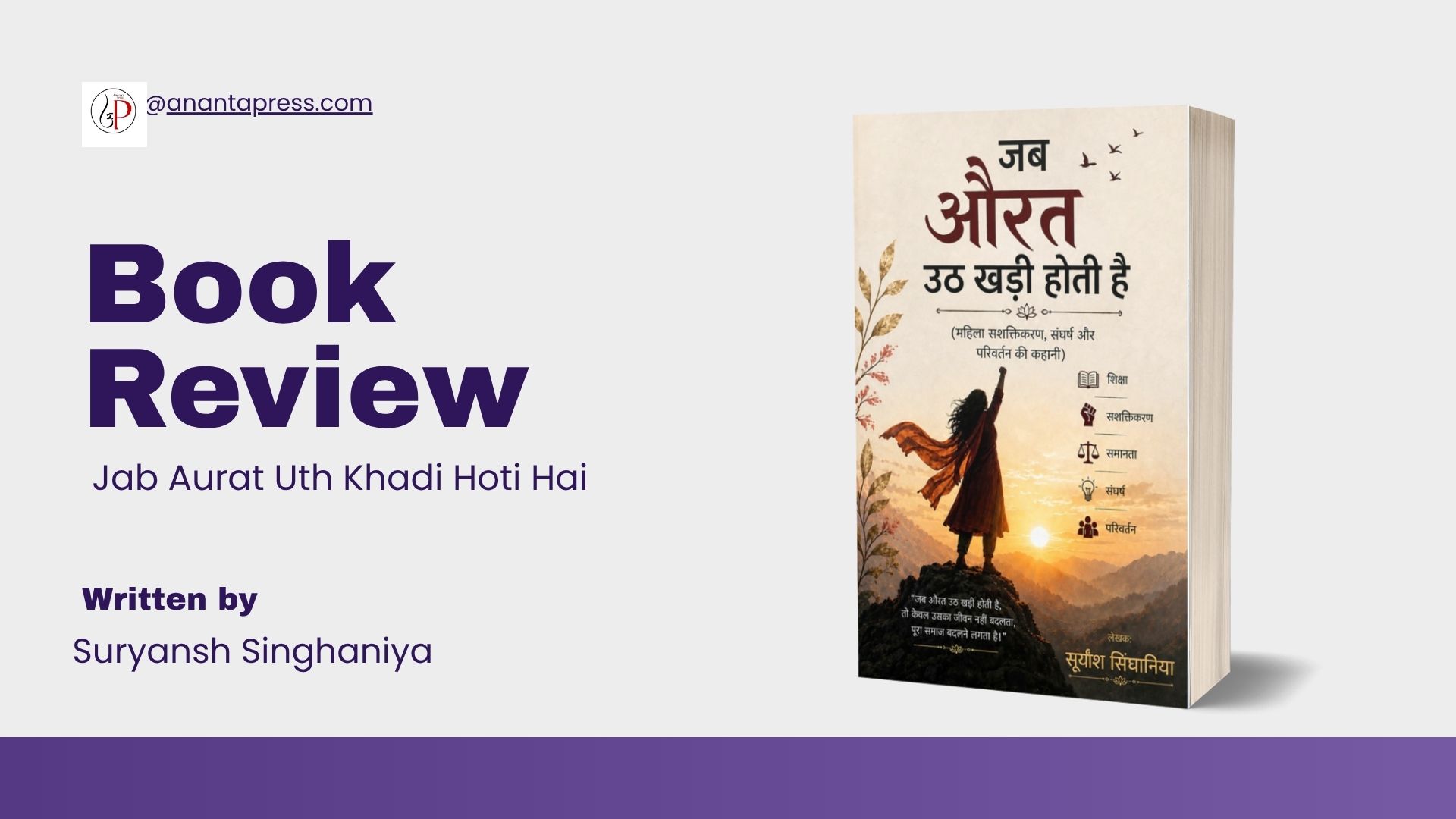
Book Review of Jab Aurat Uth Khadi Hoti Hai by Suryansh Singhaniya
Jab Aurat Uth Khadi Hoti Hai is a thoughtful and socially relevant book that discusses women’s empowerment, equality, education, struggle, and social transformation in simple yet emotionally impactful language. Written by young author Suryansh Singhania, the book focuses on the condition of women in Indian society and explains how women’s progress is directly connected with the progress of society itself. The title itself carries a strong and inspiring message — when a woman rises, she not only changes her own life but also transforms the future of the entire society. The book begins with a powerful introduction in which the author highlights the contradiction present in society. Women are often worshipped as goddesses in culture and tradition, yet many women are denied equal rights, opportunities, education, and freedom in real life. The author explains that women form half of society and play a central role in building families and communities, but historically they have been restricted within social boundaries created by patriarchal thinking. The author’s writing is emotional yet balanced, and it immediately creates a connection with readers who are aware of the inequalities women still face in many parts of the world, especially in rural India. One of the strongest aspects of this book is its simplicity. The language is easy to understand, which makes the book accessible to readers of all age groups. Instead of using overly academic or complex language, the author chooses a direct and heartfelt style. This simplicity increases the emotional impact of the message. Readers who are not familiar with discussions about feminism or social reform can still understand the ideas clearly. The book does not try to sound intellectual for the sake of complexity; rather, it focuses on communicating important social truths in a relatable manner. The first chapters discuss the historical condition of women and the rise of patriarchy in society. The author explains how women were gradually limited to domestic roles while men controlled decision-making, property, politics, and education. The book clearly describes how patriarchal systems developed over time and how they affected women’s freedom and opportunities. The discussion is not aggressive or hateful toward men; instead, it encourages readers to understand social structures critically and work toward equality. This balanced approach makes the book more constructive and meaningful. Another important theme explored in the book is education. The author repeatedly emphasizes that education is the strongest tool for women’s empowerment. According to the book, when a girl receives education, it does not only transform her life but also influences future generations. Educated women contribute to the development of healthier families, economically stable households, and socially aware communities. This idea is presented throughout the book with emotional conviction. The author successfully explains that denying education to girls weakens society itself. The repeated message that “when a girl studies, generations change” becomes one of the emotional foundations of the book. The sections focusing on rural women are especially impactful. The author presents the realities faced by women in villages where education, healthcare, and opportunities are often limited. Girls are sometimes forced to leave school because of poverty, social customs, or gender discrimination. The book explains how many talented and intelligent women never get the chance to realize their potential simply because society underestimates them. These chapters are emotionally powerful because they reflect the reality of countless families in India. Readers from rural backgrounds may especially connect with these discussions. The book also talks about the challenges women continue to face in everyday life, including discrimination, economic dependency, lack of decision-making power, child marriage, and unequal treatment. The author explains that even though progress has been made, many women still struggle for basic dignity and equality. The discussion about economic independence is particularly meaningful because the author highlights how financial freedom can increase women’s confidence and social standing. The book encourages society to recognize women’s labor and contributions both inside and outside the home. One of the most inspiring sections of the book is the chapter about great women in history. The author discusses influential figures such as Savitribai Phule, Rani Lakshmibai, Sarojini Naidu, Kalpana Chawla, Kiran Bedi, and Indira Gandhi. These examples make the book motivational because they show how women have broken barriers in education, politics, science, administration, and social reform. The stories remind readers that courage and determination can challenge even the strongest social limitations. The discussion about the Indian Constitution and women’s rights adds depth to the book. The author explains constitutional rights such as equality before law, protection against discrimination, and equal opportunity in employment. This section is informative and educational, especially for young readers who may not fully understand their constitutional rights. The author also mentions laws related to women’s protection and safety, emphasizing that social awareness must grow alongside legal reforms. This combination of social thought and constitutional understanding gives the book educational value beyond emotional storytelling. A notable quality of the book is its hopeful tone. Even while discussing serious social problems, the author continuously focuses on the possibility of change. The book repeatedly argues that society is slowly changing and that education and awareness are creating new opportunities for women. Instead of presenting women only as victims, the book portrays them as agents of transformation. This positive and empowering perspective makes the reading experience inspiring rather than depressing. The emotional strength of the book comes from its repetitive but effective central idea: when women rise, society rises with them. This thought appears throughout the chapters in different forms and contexts. Although some readers may feel that the repetition is excessive, it also reinforces the book’s core message strongly. The repeated lines act almost like motivational reminders that keep the reader emotionally connected to the purpose of the book. At the same time, the book has a few limitations. Readers looking for deep academic analysis or detailed statistical research may find the discussion somewhat basic. The author focuses more on emotional appeal and social awareness than on scholarly argument. Some chapters repeat similar ideas
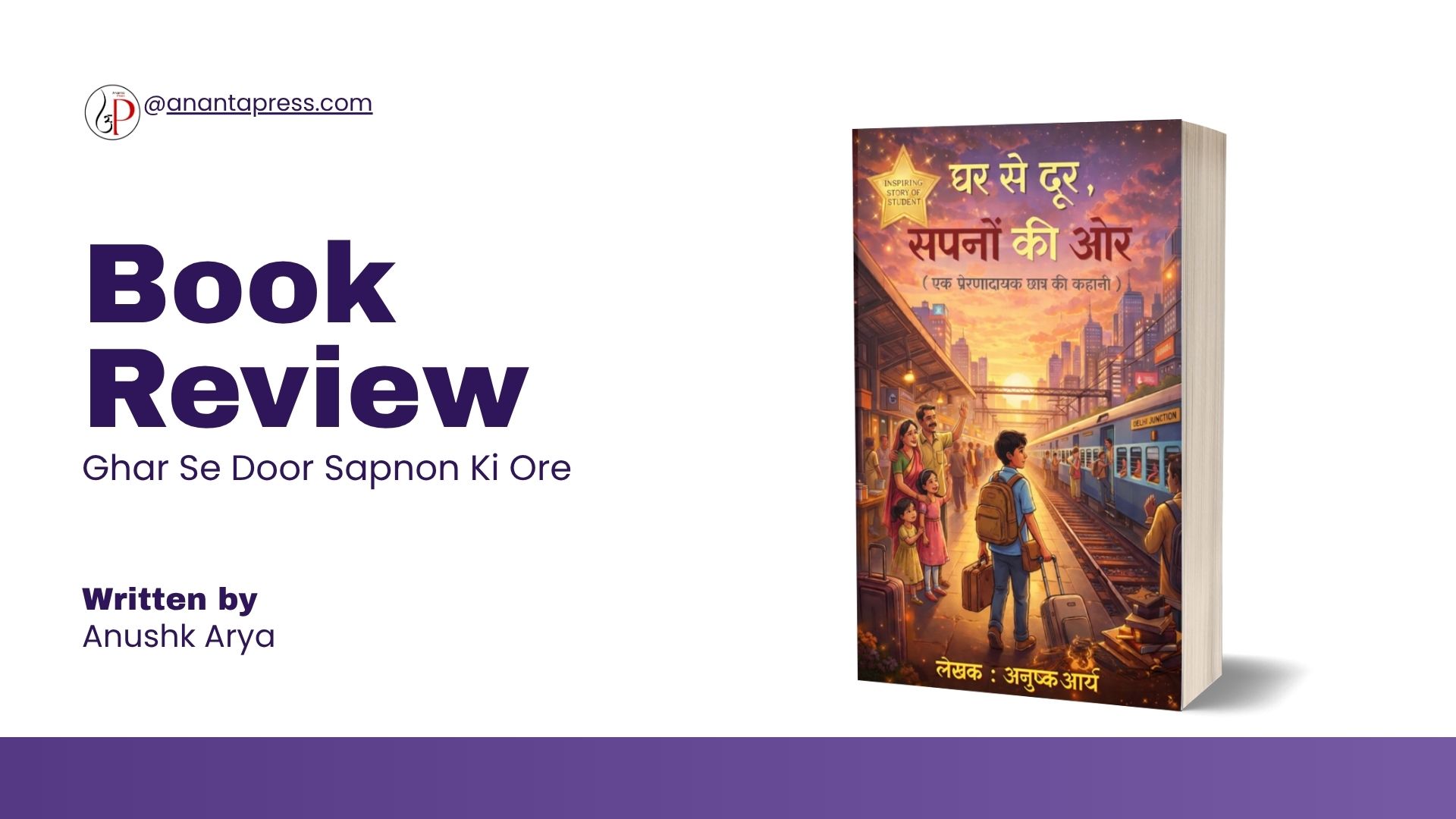
Book Review of Ghar Se Door Sapnon Ki Ore by Anushk Arya
Ghar Se Door Sapnon Ki Ore is an emotional and relatable coming-of-age novel that beautifully captures the journey of a small-town student who leaves home in search of education, dreams, self-discovery, and emotional growth. Written in a simple and heartfelt style, the book reflects the real struggles, hopes, friendships, family emotions, and distractions faced by many students during their teenage years. The story revolves around Vedarth, an ordinary boy with extraordinary dreams. His journey begins with the fear and tension of his Class 10 board examination result. Like every middle-class student, he worries not only about marks but also about the expectations of his family and society. The opening chapters instantly create a connection with readers because the situations feel very realistic. The teasing from family members, nervousness before results, comparison with friends, and fear of disappointing parents are all portrayed naturally. Instead of presenting the protagonist as perfect, the author shows him as a normal student who experiences fear, confusion, excitement, and emotional ups and downs. One of the strongest aspects of the book is its emotional honesty. Vedarth’s disappointment after scoring lower than expected feels genuine. However, the novel does not become overly tragic. His parents, especially his father, play an important role in motivating him and teaching him that failure is not the end of life. These scenes give the novel emotional depth and make it inspiring for young readers. The conversations between Vedarth and his parents feel authentic and reflect the emotional atmosphere of many Indian households. The Delhi journey becomes a major turning point in the story. Vedarth’s excitement about traveling away from home for the first time is written with great energy. The descriptions of train journeys, planning trips with friends, eating snacks, discussing famous places, and dreaming about city life make the narrative lively and entertaining. The Delhi chapters are not just about tourism; they represent freedom, ambition, and the excitement of exploring a larger world. The author successfully captures the curiosity of a teenager who wants to see life beyond his hometown. Another impressive quality of the novel is the way it portrays friendship. Characters like Abhay, Mintu, Kanhaiya, Rahul, and others add warmth and realism to the story. Their casual conversations, jokes, emotional support, and daily interactions create a familiar atmosphere that many readers will recognize from their own school days. The friendships in the book are not exaggerated or dramatic; instead, they feel natural and relatable. This simplicity becomes one of the novel’s biggest strengths. The educational journey of Vedarth is perhaps the most inspiring part of the book. When he joins a new school in another city, he faces language barriers, academic pressure, loneliness, and self-doubt. Coming from a Hindi-medium background and adjusting to an English-medium environment becomes a major challenge for him. The author honestly describes how Vedarth struggles in tests and feels lost in class. However, instead of giving up, he slowly learns discipline, consistency, and the correct way of studying. The guidance from teachers and the support from his family help him improve. These sections of the novel send a positive message that success comes through patience, effort, and learning from mistakes. The title Ghar Se Door Sapnon Ki Ore (“Away from Home Towards Dreams”) perfectly matches the soul of the story. The novel is not only about physical distance from home but also about emotional growth. Vedarth gradually transforms from a confused boy into a more mature and responsible individual. His experiences teach him about independence, discipline, emotional attachment, and the importance of focus in life. The romantic portions of the novel are also presented in a very innocent and youthful manner. The introduction of Vritika brings emotional excitement into Vedarth’s life. Their conversations through Snapchat, phone calls, school interactions, and silent admiration reflect the typical emotions of teenage love. The author presents these moments with simplicity and sweetness rather than unnecessary drama. Readers can easily relate to the nervousness, happiness, distraction, and emotional confusion that come with first attraction during school life. At the same time, the novel also subtly warns readers about losing focus. As Vedarth becomes emotionally attached, his studies begin to suffer. Through this, the author highlights a common struggle faced by students — balancing emotions, friendships, relationships, and career goals. This balance between emotional storytelling and life lessons makes the book meaningful for young readers. The language of the book is simple, conversational, and easy to understand. Instead of using heavy literary vocabulary, the author writes in a natural style that feels like listening to someone narrating their life story. This simplicity makes the novel accessible to school and college students. The dialogues especially stand out because they feel realistic and spontaneous. Many scenes read like real-life memories rather than fictional drama. The poetic lines and short shayaris included throughout the novel add emotional beauty to the narrative. These lines effectively express feelings of love, loneliness, ambition, and hope. They also break the monotony of prose and make certain emotional scenes more memorable. One noticeable aspect of the book is that it focuses more on emotions and experiences than on complex plot twists. Readers looking for high suspense or dramatic storytelling may find the story simple. However, this simplicity is actually the novel’s identity. The book succeeds because it reflects ordinary life honestly. It reminds readers that even simple experiences like school life, friendships, exam pressure, family support, and first love can become unforgettable chapters of life. The novel also carries motivational value. It encourages students not to lose hope after failure, not to fear new beginnings, and not to stop dreaming because of temporary struggles. Vedarth’s journey shows that success is not achieved overnight. It comes through learning, adapting, failing, and trying again. The story inspires readers to step outside their comfort zones and chase their ambitions, even when the journey feels uncertain. Overall, Ghar Se Door Sapnon Ki Ore is a heartfelt and relatable novel about youth, dreams, education, friendship, family, and emotional growth. Anushk Arya has
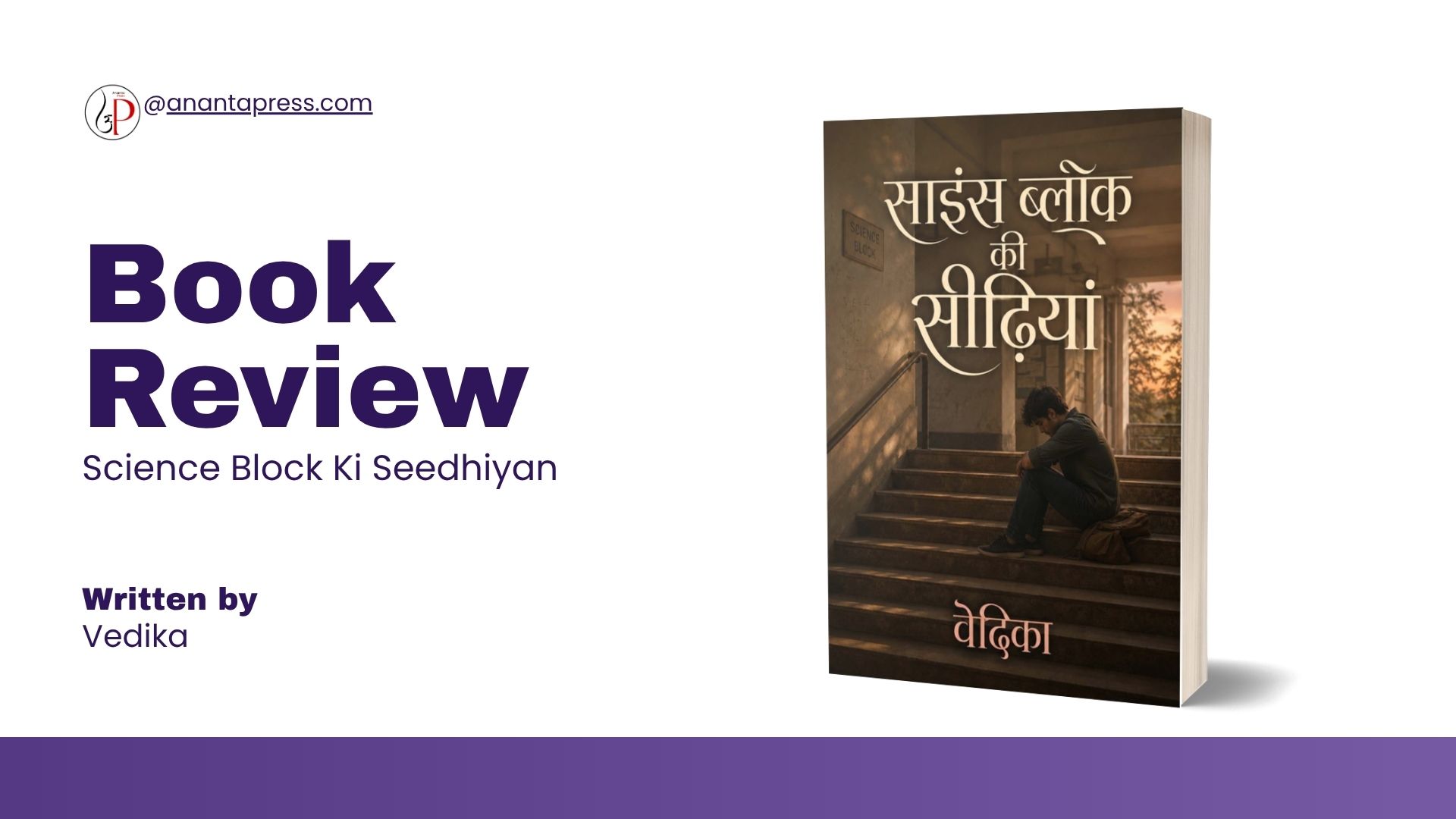
Book Review: “Science Block Ki Seedhiyan” by Vedika
“Science Block Ki Seedhiyan” by Vedika is an emotional love story that goes beyond the usual idea of romance, separation, and heartbreak. It is not merely a story of two people meeting and drifting apart; it is a deeply felt account of silent pain, one-sided love, waiting, and the kind of attachment that the world often fails to understand. The book opens with the thought that it is not just a story, but an account of those silent screams that often hide behind smiles. This line beautifully sets the emotional tone of the entire novel. At the center of the story is Vishal, a soldier whose outer personality is filled with strength, humor, and courage, but whose inner world is marked by an incomplete love. Vedika presents him with great sensitivity. Vishal does not feel like a dramatic fictional hero; instead, he feels like someone real—someone who laughs in front of people but carries a storm inside. His story begins during a train journey, where he meets a group of young travelers and gradually opens up about the love that changed his life forever. One of the strongest parts of the novel is its portrayal of college life. Delhi University, the Science Block, classrooms, canteen conversations, friendships, proxy attendance, and waiting outside the class—all these details feel natural and relatable. Vishal’s first glimpse of Kriti, his restlessness to see her again, and his habit of sitting on the Science Block stairs just to catch one look at her are written with innocence and emotional depth. The author captures the beginning of love in a pure and youthful way, where attraction slowly turns into devotion. Kriti, though not always present in the story, leaves a powerful impact on the entire narrative. She enters Vishal’s life like a beautiful chapter and later becomes the deepest emptiness within him. Her refusal is not shown as cruel or insensitive; rather, it feels realistic. She is clear about her boundaries and choices, and this makes the story more mature. The novel does not suggest that every love must be returned. Instead, it shows that sometimes love lives only inside one heart, and that heart continues to carry it silently for years. The emotional strength of the book lies in Vishal’s journey after college. His joining the Navy, wearing the uniform, facing harsh training, and still keeping Kriti’s memories alive make the story more than just a campus romance. Here, love, duty, and loneliness come together beautifully. On one side, Vishal is preparing himself to serve the nation; on the other, a part of him remains seated on those Science Block stairs, waiting for someone who may never return. The main message of the novel is that love is not always about possession. Sometimes, love becomes meaningful even when it remains incomplete. The book repeatedly reminds us that some stories are not left unfinished because they failed, but because they are meant to become timeless. Vishal’s love is not about demanding, forcing, or expecting; it is about remembering, respecting, and silently accepting. The language of the book is simple, emotional, and heartfelt. The use of poetry and short reflective lines adds a lyrical quality to the narrative. Many passages feel deeply personal, as if Vishal’s pain is being spoken directly to the reader. However, the book could have benefited from stronger proofreading and tighter editing in some places. A few spelling and formatting issues slightly affect the reading flow, but they do not take away from the emotional core of the story. What makes “Science Block Ki Seedhiyan” special is its honesty. In today’s time, when relationships are often shown as temporary and easily replaceable, Vishal’s long-lasting attachment feels different. Some readers may find his waiting unrealistic, but those who understand unspoken love, emotional loyalty, and unfinished memories will connect deeply with this book. Overall, “Science Block Ki Seedhiyan” is a touching novel for readers who enjoy emotional, poetic, and incomplete love stories. It is a story of heartbreak, but also of dignity, patience, and silent devotion. Through Vishal, Vedika gives voice to countless people who could not get the person they loved, yet could never truly forget them. By the end, the story leaves a quiet ache in the reader’s heart. The book may end, but Vishal’s waiting, the Science Block stairs, and Kriti’s memory continue to stay with us. That lingering emotional impact is the biggest success of this novel.
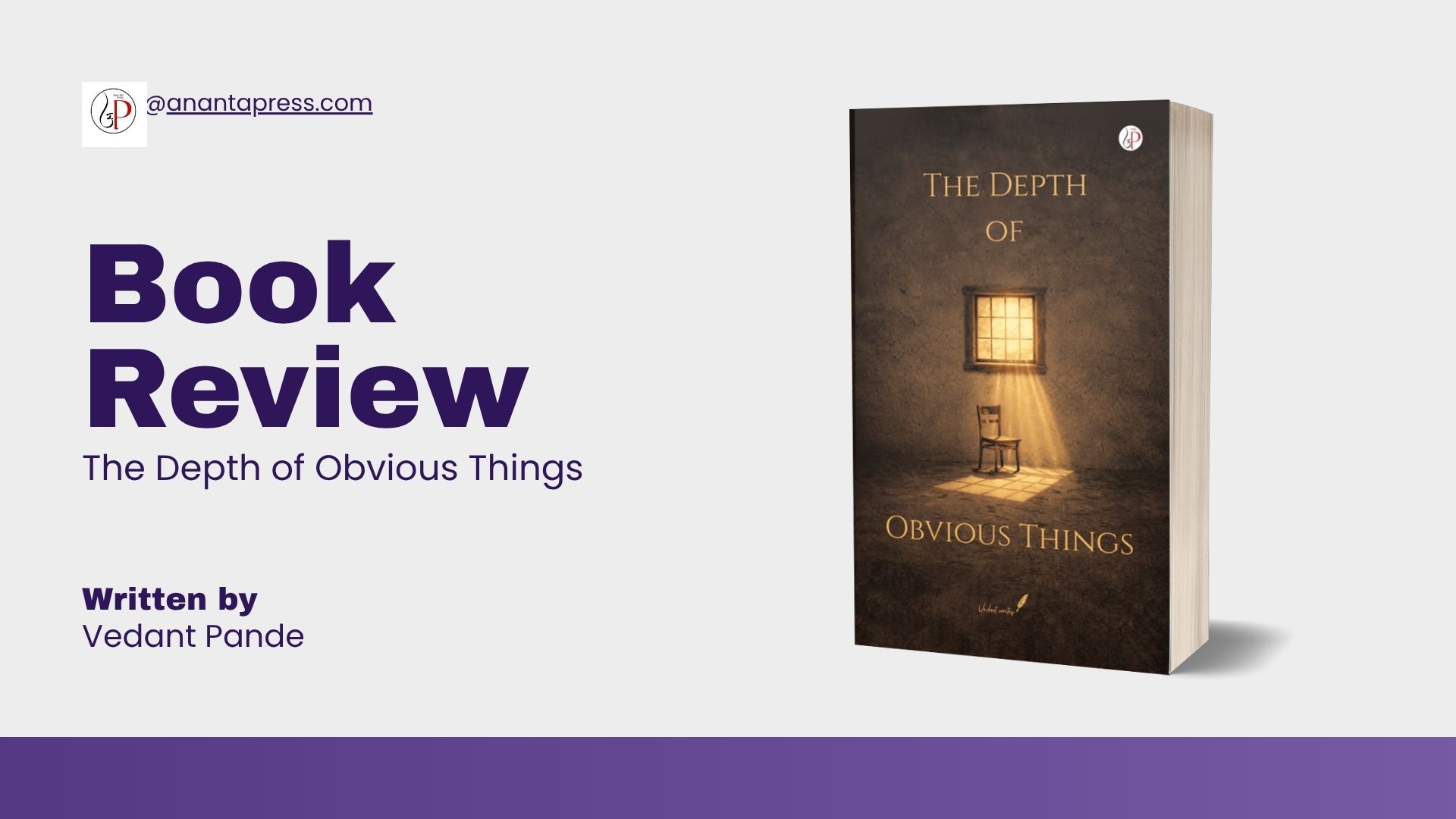
Book Review: “The Depth of Obvious Things“ by Vedant Pande
In a world filled with loud opinions, fast distractions, and books that constantly try to “teach” life, The Depth of Obvious Things arrives with a completely different energy. It does not shout. It does not pretend to have all the answers. Instead, it quietly sits beside the reader and asks them to pause, reflect, and notice the emotions that have always existed within them. That simplicity becomes the book’s greatest strength. Written by Vedant Pande, this book is not a traditional self-help guide, nor is it a philosophical text filled with complicated theories. It is a deeply reflective collection of thoughts about ordinary human experiences — home, silence, loneliness, grief, kindness, waiting, small joys, overthinking, and perspective. These are subjects everyone encounters, yet very few people truly stop to examine. The author takes these familiar emotions and reveals the hidden depth within them. One of the most beautiful aspects of this book is its writing style. The language is simple, calm, and emotionally honest. There are no unnecessarily difficult words or dramatic literary tricks. Every chapter flows like a quiet conversation with someone who understands human emotions deeply. The simplicity of the writing allows the emotions to feel real and personal. Readers do not feel like they are being lectured; they feel like they are being understood. The opening chapter, “Home,” immediately establishes the emotional tone of the book. Instead of defining home as merely a physical place, the author explores the emotional meaning behind it. The chapter slowly moves from houses and relationships toward the idea that perhaps home is actually a state of inner peace — a place within ourselves where we stop resisting who we are. This reflection feels universal because almost everyone has searched for belonging in places, people, or future dreams. The chapter leaves readers with an important realization: sometimes the thing we are searching for externally may already exist within us. The chapter on “Silence” is equally powerful. Most people claim they enjoy silence, but the author carefully explains the difference between controlled quiet and true silence. Real silence forces us to face our own thoughts. It removes distractions and exposes emotions we have been avoiding. The way the author describes silence as something that first disturbs us before it clarifies us is deeply accurate. It captures a psychological truth many readers will immediately recognize in their own lives. Perhaps one of the strongest chapters in the book is “Loneliness.” Unlike common definitions that associate loneliness only with physical isolation, the author presents loneliness as the feeling of being emotionally unseen. This perspective gives the chapter immense emotional depth. The book explains how loneliness can exist even among friends, relationships, and crowded spaces. The slow transformation from expressing emotions openly to quietly withdrawing from others is described with painful honesty. Many readers will likely feel that this chapter speaks directly to experiences they never fully knew how to explain. The chapter on “Grief” expands the understanding of loss in a thoughtful and mature way. Instead of discussing only death, the author explores quieter forms of grief — lost relationships, unrealized futures, fading friendships, and versions of ourselves that no longer exist. This broader understanding of grief makes the chapter emotionally rich and relatable. The idea that people often grieve possibilities and memories as much as actual people is expressed beautifully. It reminds readers that grief is not limited to dramatic endings; sometimes it lives quietly inside unfinished stories. “Kindness” is another standout chapter because it addresses a truth that many sensitive people experience but rarely discuss. The author explores how kindness can slowly turn into emotional exhaustion when people continuously ignore their own needs while trying to care for others. The chapter does not discourage kindness; instead, it asks readers to find balance between compassion for others and compassion for themselves. This emotional honesty gives the chapter great maturity and relevance. The chapter titled “Waiting” may resonate strongly with younger readers and people struggling with uncertainty in life. The author carefully explains the difference between patience and waiting. Patience moves alongside action, while waiting often becomes an excuse for postponing difficult decisions. The realization that life rarely offers a perfect moment to begin something important is one of the most impactful ideas in the book. It encourages readers to confront the ways fear and hesitation quietly shape their lives. One of the warmest and most comforting chapters is “Small Joys.” In modern life, people often measure happiness through achievements, milestones, and dramatic moments. This chapter reminds readers that many of the things keeping them emotionally alive are small and ordinary — coffee, music, sunlight, familiar routines, quiet evenings, and simple moments of peace. The personal storytelling in this section feels especially intimate and genuine. It gently teaches readers to notice happiness while they are still living it, instead of recognizing it only after it disappears. “The Stories We Tell Ourselves” is perhaps the most psychologically insightful chapter in the entire book. It explores overthinking and the human tendency to create explanations when situations feel incomplete. The author explains how the mind slowly builds narratives, collects emotional evidence, and eventually turns assumptions into emotional reality. This chapter is incredibly relatable because almost everyone has experienced moments where fear, insecurity, or uncertainty created stories that felt true even when they were not. The reflections here are intelligent, emotionally accurate, and deeply human. The final chapter, “Also,” leaves the reader with one of the book’s most meaningful ideas: every story contains another perspective. The author explains that while our emotions and pain are valid, other people may also be carrying struggles we cannot see. This does not invalidate our experiences; it simply expands our understanding of human complexity. The repeated use of the word “also” becomes a quiet philosophical reminder that reality is rarely one-sided. It is a thoughtful ending that perfectly represents the spirit of the book. Another remarkable quality of this work is the use of poetry, lyrics, and references from artists like Jaun
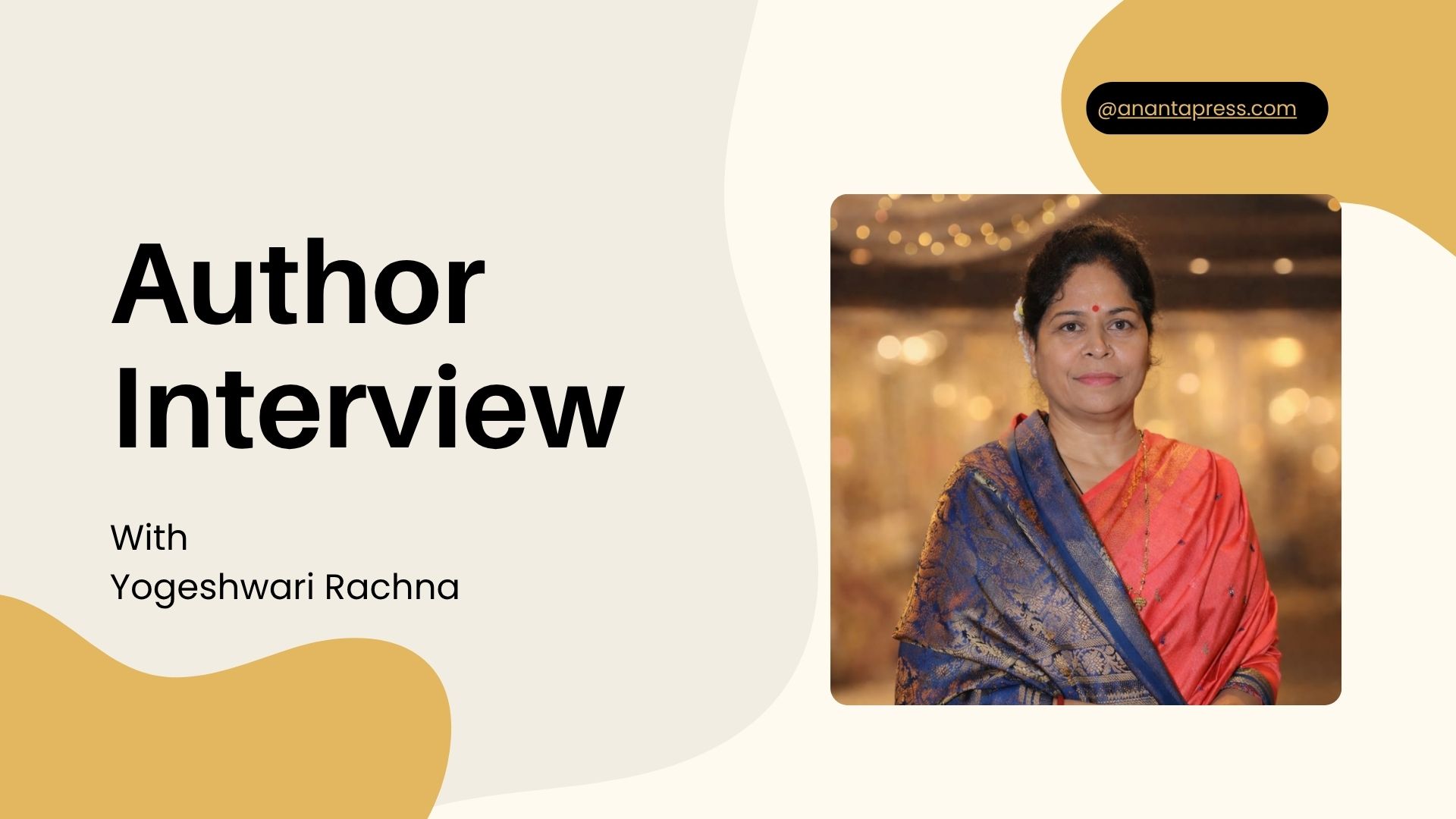
Interview With Yogeshwari Rachna
Crafted by Vikrant- How did you get the inspiration to write the story of Kaumudi and her transformation into a Yogeshwari? Yogeshwari Rachna – Writing about a seeker’s transformation into a Yogeshwari (a realised being) has not just been a literary endeavour, but a spiritual experience. Human Consciousness is limitless. The transformation of an ordinary woman into a Yogeshwari—meaning a divine state of yoga—through her practice, penance, and determination shows that the journey within is far more important than any external success. Our ancient tales and scriptures also describe many such realised women and yoginis who unravelled the secrets of the universe through silence and meditation. The core inspiration of this story is the attempt to revive the dignity of this vanishing form of asceticism through Yogeshwari. Crafted by Vikrant- This book is a blend of spirituality and the struggles of real life. How much of this story is based on true events? Yogeshwari Rachna – This story is not pure fiction but is based on true experiences. Every feeling described, every stage of the practice, and every transformation of Consciousness is completely real. However, when Truth is brought before the world through words, it needs to be given a form. Therefore, literary beauty has been employed to make the profound spiritual experiences more exciting, impactful, and artistic. The words have been chosen so that the reader not only reads this journey but can also feel it. In short, its soul is truth, and its body is beautiful words. Crafted by Vikrant- What message do you want to convey to readers about liberation and its meaning in everyday life? Yogeshwari Rachna – My message for readers is very simple and practical—the fusion of daily life and liberation. Liberation is not an end, but a perspective. Liberation does not mean running away from life or something that is attained after death. Life-liberation is about keeping yourself free from the attachment to and stress of your everyday responsibilities. When you perform each of your actions—whether at home, at the office, or elsewhere—with complete honesty and without expecting any fruit, that very action becomes your spiritual practice. Living in the present is essential; we are often preoccupied with worries about the future or regrets about the past. The door to liberation opens in the present moment. The person who is fully awake in this moment is closest to the Supreme Being. Crafted by Vikrant- How does the concept of Guru Shakti influence the main character’s journey in your book? Yogeshwari Rachna – In Yogeshwari’s journey, the place of Guru Shakti is paramount. It can be succinctly described as a bridge from darkness to light. A Guru is not just a person, but the energy that awakens the dormant discernment within the seeker. In this journey, Guru Shakti has acted as a lamp, illuminating the path even in the darkest of times. When intellect ceases to function on the spiritual journey, the power of the Guru propels the practitioner forward. Without them, it is impossible to comprehend and handle the depths of Maha Yoga. The Guru power stabilizes the practitioner’s mind, leading them to listen, and teaches that we are not the doer but merely an instrument in the hands of the Supreme Being. Guru Shakti protects like a shield from the mental and spiritual obstacles that arise during sadhana. The Guru is the pivot around which a seeker’s entire Universe revolves. Without the Guru’s grace, the path to becoming a Yogeshwari can neither begin nor be completed. Crafted by Vikrant- Why have you chosen a female character like Kaumudi to depict such a tremendous spiritual transformation? Yogeshwari Rachna – This is a very profound question. The reasons for placing a female character at the centre of a story like Yogeshwari’s are very clear and purposeful. A woman, by nature, is the mother of Creation and patience. The deep patience, compassion, and endurance required for spiritual transformation are naturally evident in a woman’s personality. In Indian philosophy, Shakti is worshipped in the feminine form. When an ordinary woman awakens her inner energy, she becomes a Yogeshwari, proving that spirituality is not the monopoly of any class, caste, or gender. Choosing a female character symbolises that the power of devotion and surrender on the path of yoga is far greater than the power of struggle. Crafted by Vikrant- This book challenges the notion that one must give up everything for spirituality. Can you elaborate on this? Yogeshwari Rachna – This book completely shatters the prevailing notion that spirituality or liberation can only be found in the caves of the Himalayas or through renunciation. It teaches that the real challenge is not to leave the world, but to stay connected to your inner centre while living in it. You can be a yogi even amidst your job, family, and responsibilities. This book proves that liberation is not a geographical location you have to go to, but a state of Consciousness you can attain right here and right now. Crafted by Vikrant- As shown in the story, what role do childhood experiences and divine signs play in determining the spiritual path? Yogeshwari Rachna – Childhood experiences and divine signs are like the foundation of the spiritual journey. According to the book, their roles can be understood as follows: experiences from childhood, whether it’s the peace of a temple, the prayers of elders, or a supernatural event, leave deep impressions on the soul. These experiences indicate that spiritual development is innate, which the Guru Shakti awakens when the time is right. Childhood experiences mentally prepare the practitioner for the difficult spiritual practices to come. Meanwhile, divine signs make one realise that the meaning of life is not just material happiness, but something far greater. These signs prove that spirituality is not a sudden event, but a continuous journey that has been carried over from past lives. Childhood experiences are the seeds, and divine signs are the milestones on that path, which prevent the seeker from straying. Crafted
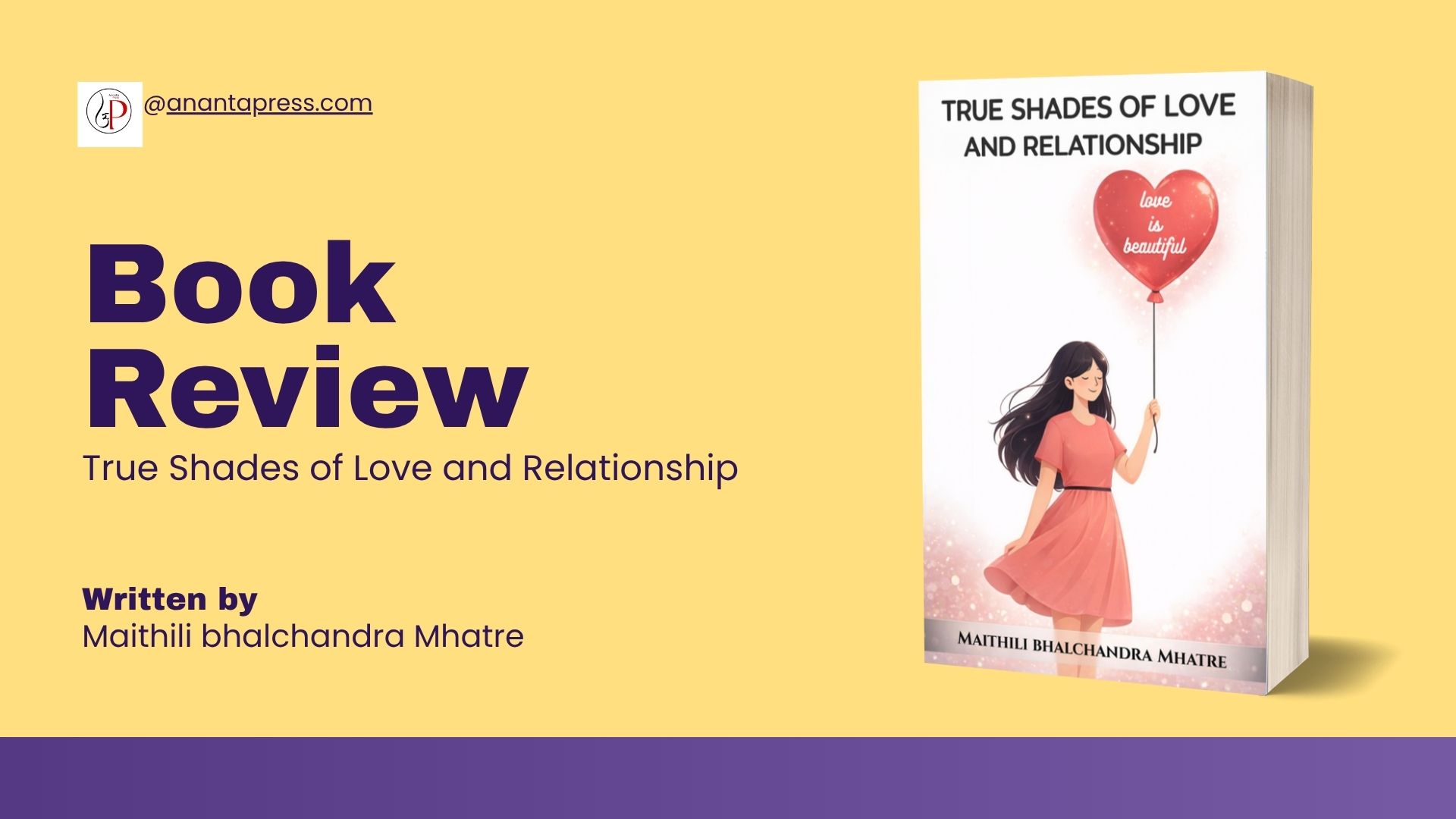
Book Review: “True Shades of Love and Relationship” by Maithili Bhalchandra Mhatre
“True Shades of Love and Relationship” by Maithili Bhalchandra Mhatre is a simple yet heartfelt exploration of human emotions, focusing on love, trust, friendship, and the many dimensions of relationships. Rather than presenting a continuous storyline, the book is structured as a collection of short reflections, thoughts, and definitions that aim to capture the essence of relationships in everyday life. One of the most striking features of the book is its simplicity. The author uses very basic language and direct expressions, making the content easily understandable for readers of all ages, especially young readers or those new to reading. Each page touches upon a different aspect of relationships—friendship, trust, respect, care, jealousy, and support—offering brief insights into how these elements shape human connections. This straightforward approach gives the book a personal, almost diary-like feel, as if the author is sharing her own thoughts and observations about love and life. The book emphasizes core values such as honesty, kindness, and mutual respect as the foundation of any strong relationship. It repeatedly highlights that true love is not based on external factors like appearance, caste, or distance, but rather on emotional understanding and genuine care. The idea that “good behavior and a good heart are more beautiful than a beautiful face” stands out as one of the central messages, reinforcing the importance of inner qualities over superficial attraction. Another important theme explored in the book is trust. The author describes trust as delicate, comparing it to glass that can break easily but takes time and effort to rebuild. This metaphor effectively conveys the fragility of relationships and the importance of communication and patience in maintaining them. Similarly, emotions like jealousy, admiration, and the pain of misunderstanding are discussed in a relatable manner, making the reader reflect on their own experiences. While the book succeeds in conveying genuine emotions, it does have certain limitations. The writing, though sincere, lacks depth and refinement in places. There are grammatical errors and repetitions that sometimes disrupt the reading flow. Additionally, the ideas presented, while meaningful, are often brief and could have been developed further with examples or narratives to create a stronger impact. Readers looking for a detailed or analytical exploration of relationships may find the content somewhat basic. However, what the book lacks in technical polish, it makes up for in authenticity. The emotions expressed feel real and unfiltered, which adds to its charm. It reflects the perspective of someone who values love deeply and wishes to express its importance in simple terms. The book also carries a positive and hopeful tone, encouraging readers to believe in love, practice kindness, and nurture their relationships with care and effort. In conclusion, “True Shades of Love and Relationship” is a light, thoughtful read that focuses on the emotional fundamentals of human connections. It is best suited for readers who appreciate simple, heartfelt writing and are looking for quick reflections rather than complex narratives. Despite its imperfections, the book succeeds in delivering a clear message: true love is built on trust, respect, and genuine emotion, and it is something everyone should experience at least once in life.