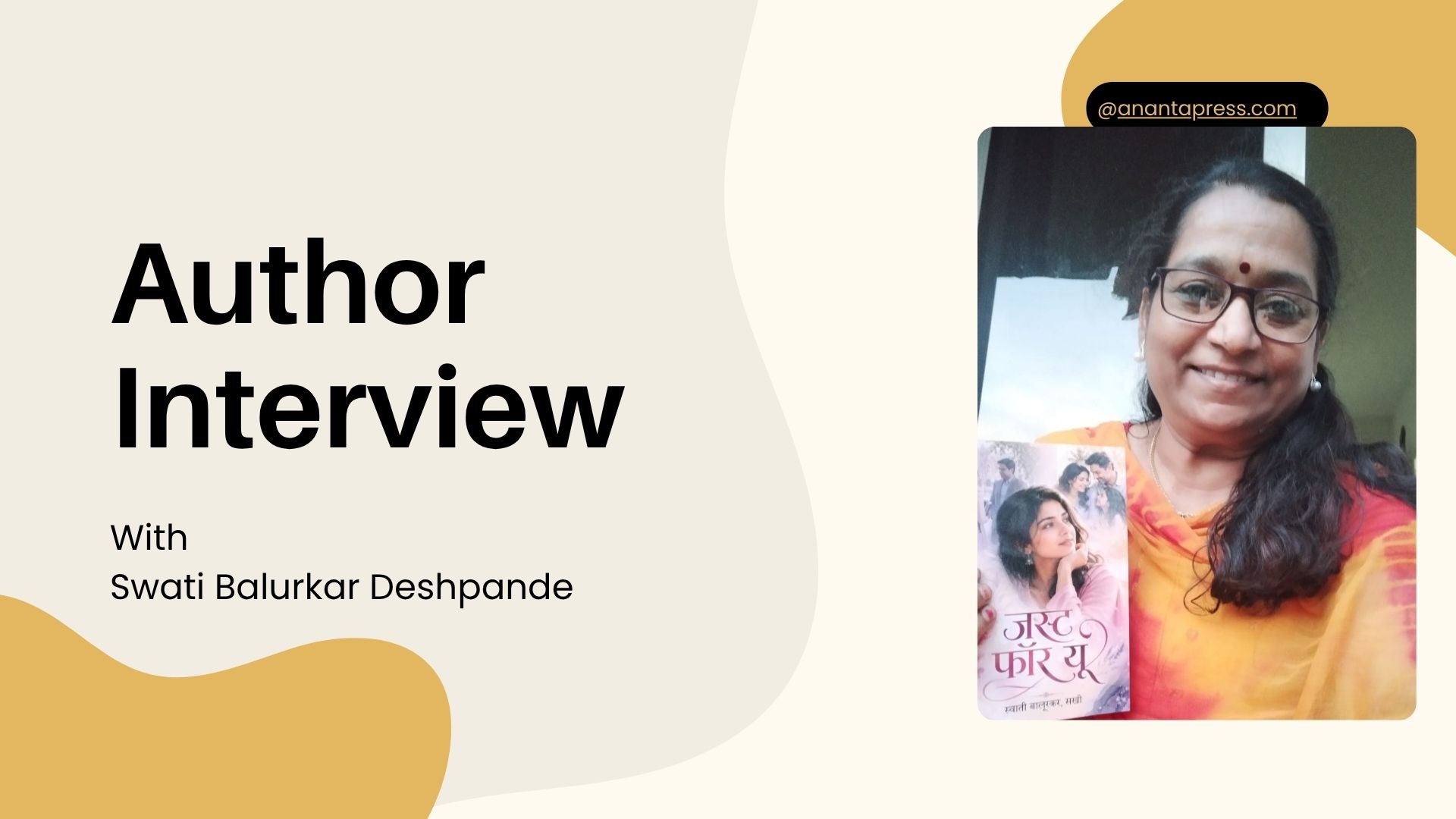
- You began writing at the age of 17. What first inspired you to enter the world of literature?
Answer– Writing began as a way to express my innermost feelings through poetry. Over time, this passion gradually evolved into writing short reflective pieces, allowing me to explore emotions and experiences more deeply. As my confidence and creativity grew, I ventured into storytelling and began writing short stories, transforming thoughts and observations into meaningful narratives.
2. You have served in the field of education for almost 30 years. How has your experience as a Hindi teacher and Head of Department influenced your writing?
Answer. Teaching has always been an advantage in my writing journey. Being surrounded by young minds kept me youthful, aware, and connected to changing perspectives. Understanding people and observing social changes enriched my thoughts and made me more mature as a person and a writer.
My passion for writing positively influenced my teaching career, and teaching, in turn, nurtured my creativity. Serving as the Head of the Hindi Department strengthened my personality and deepened my understanding of the Hindi language. Reading Hindi classics added depth to my literary vision and significantly enriched my Marathi writing.
Overall, teaching and writing complemented each other beautifully, making my journey more meaningful. The only challenge was finding enough time to write alongside professional responsibilities.
3. During your college years, you were active in speech, debate, storytelling, poetry recitation, writing, and acting. How did these activities shape your creative personality?
Answer– I am truly grateful to God for blessing me with opportunities to participate in various creative activities during my college years. Speech, debate, storytelling, poetry recitation, writing, and acting played a significant role in shaping my personality. These experiences made me creative, open-minded, confident, and a capable public speaker. They also strengthened my literary sensibilities and broadened my understanding of people and life.
Today, I feel that these activities have helped me become a versatile writer who can explore a wide range of subjects with confidence and sensitivity. They nurtured in me an optimistic outlook, a cheerful approach to life, and the courage to express my thoughts freely. In many ways, these formative experiences have contributed greatly to making me the person and writer I am today.
4. From 1994 to 2018, you took a 24-year break from writing. What was that phase like, and what brought you back to writing after so many years?
Answer– In May 1994, after my marriage, I moved to Hyderabad. It was a completely new phase of life—a new city, a new state, a new family, and new responsibilities as a daughter-in-law. Marathi was my language of expression, but living in a non-Marathi-speaking environment and not knowing Telugu made it difficult to stay connected with the literary world I belonged to.
I did make a few attempts to continue writing and sending my work for publication, but the circumstances were not favorable. Gradually, family responsibilities took priority, and I put my writing aside.
Over the next 24 years, my life revolved around my family, career, and raising my two sons. As they grew up, became independent, and my professional and personal responsibilities settled, I began to feel that something was missing in my life. I realized how deeply I missed reading and writing in Marathi.
By then, technology had transformed the literary landscape. The emergence of the internet, mobile phones, and various writing platforms created new opportunities for writers. These platforms rekindled my passion for literature and motivated me to start writing again. Returning to writing felt like reconnecting with an important part of myself that had been waiting patiently for years.
5. After resuming writing in 2018, you published stories, poems, blogs, and articles across many platforms. How did readers’ responses encourage your second literary journey?
Answer -My second literary innings has been even more exciting and fulfilling than the first. Unlike earlier times, digital publishing platforms and self-publishing apps made it possible to share my work instantly and connect directly with readers. The convenience of publishing anytime and anywhere made the entire process much easier and more engaging.
A turning point came when I posted a poem that I had written nearly 25 years earlier. To my delight, it received a five-star rating and highly encouraging comments from readers. That response gave me the confidence to believe that my writing was worthy of publication and appreciation.
The positive feedback motivated me to explore new themes and genres, experiment with different forms of writing, and continue my literary journey with renewed enthusiasm. Since then, I have been writing consistently, and the encouragement of readers has remained one of the greatest inspirations behind my work
6. Your stories such as Keli Pan Preeti, Just for You, Magani, Gondan, Anahita, and Parineeta are appreciated by readers. What themes do you enjoy exploring the most in your stories?
At heart, I am a romantic person and a lover of love stories. Human emotions, relationships, and the many shades of love naturally attract me as a writer. However, I do not like to limit myself to a single genre.
Over the years, I have explored a variety of themes, including social issues, family relationships, psychological complexities, mystery, tragedy, and other thought-provoking subjects. I am particularly interested in the intricacies of human relationships and the emotions that shape our decisions and lives.
As a writer, I enjoy experimenting with different subjects and perspectives. Whether it is a heartwarming love story or a story that reflects social realities, my aim is always to connect with readers through authentic emotions and meaningful narratives.
6. Your stories Ankur and Kinare won Second Prize in a State-Level Short Story Competition. How important are such awards and recognitions for a writer?
Answer– Awards and recognitions are very important for any writer. While the true joy of writing comes from self-expression and creative satisfaction, awards serve as a valuable acknowledgment of a writer’s efforts and contribution to literature.
Such recognition validates our work, boosts our confidence, and assures us that our writing has connected with readers and critics alike. It also brings appreciation from society and helps a writer gain wider visibility.
For me, awards are not just trophies or certificates; they are a source of motivation. Validation, appreciation, and recognition encourage a writer to continue pursuing their passion with greater enthusiasm and dedication. At the same time, they provide a deep sense of personal satisfaction and fulfillment.
- Your work has also reached listeners through Akashvani and audio narration by artists like Subodh Bhave and Anushree Phadnis. How does it feel to see your stories come alive in voice format?
Answer -It is a wonderful and deeply satisfying experience to hear my stories come alive through voice. When talented artists and platforms choose to present my work, it gives me immense joy and a sense of fulfillment.
I have never considered myself a great writer, but when readers and listeners appreciate my work and connect with my stories, it is truly heartening. Hearing my creations narrated by skilled voices adds a new dimension to the storytelling and allows the emotions of the story to reach a wider audience.
I would be dishonest if I said it does not feel good. Recognition, appreciation, and the opportunity to have my work presented in such a meaningful format bring both happiness and encouragement, inspiring me to continue writing.
- Your first short story collection, Keli Pan Preeti, received three state-level awards within a year. What does this achievement mean to you personally?
Answer – This achievement holds a very special place in my heart. During the second wave of COVID-19, I experienced a deep personal loss that left a profound impact on my life. Writing became a way for me to heal and reconnect with myself, and in 2022, I gradually returned to my literary journey.
Publishing my first short story collection, Keli Pan Preeti, in 2024 was the fulfillment of a long-cherished dream. It was a moment of immense joy, but also of mixed emotions, because some of the people closest to me were no longer there to witness it.
Receiving three state-level awards for the book within a year made the achievement even more meaningful. These awards gave me confidence that I was moving in the right direction as a writer. More than the recognition itself, they served as validation of my efforts and encouraged me to continue pursuing my passion with renewed determination.
For me, these awards are not just honors; they are milestones that transformed personal loss into creative strength and inspired me to keep writing.
My first book Keli Pan preeti was a collection of seven soft and heartwarming love stories centered around mature emotions and relationships. My second book, Padasad, is a collection of fourteen short stories that explore various social issues and their impact on a girl’s mind and life.
Just for You is different from both. It is a long story—almost a short novel—that beautifully captures the emotional journey of a woman through different phases of life. It explores a wide range of emotions, including attraction, infatuation, love, commitment, sacrifice, relationships, and self-discovery.
One of the special aspects of this book is its universal appeal. An eighteen-year-old girl as well as her forty-year-old mother can relate to and enjoy the story in their own way. Readers who experienced college life in the 1990s, in particular, may find themselves immersed in nostalgia and familiar emotions.
At its heart, Just for You is a story about life itself—with all its joys, dilemmas, dreams, and emotional complexities. I believe readers will not only enjoy reading it but will also find something meaningful to connect with and carry with them long after they finish the book.