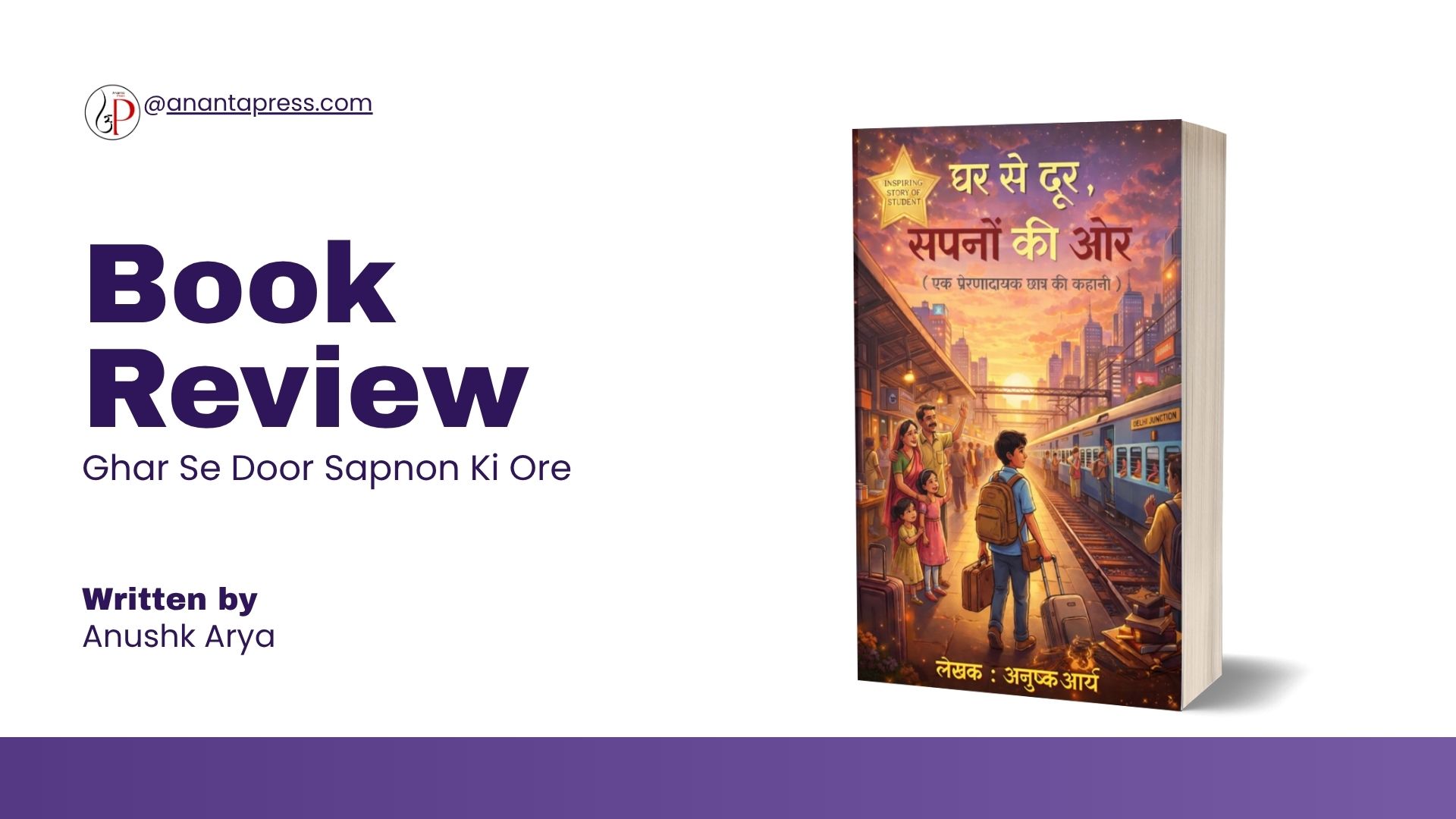
Ghar Se Door Sapnon Ki Ore is an emotional and relatable coming-of-age novel that beautifully captures the journey of a small-town student who leaves home in search of education, dreams, self-discovery, and emotional growth. Written in a simple and heartfelt style, the book reflects the real struggles, hopes, friendships, family emotions, and distractions faced by many students during their teenage years.
The story revolves around Vedarth, an ordinary boy with extraordinary dreams. His journey begins with the fear and tension of his Class 10 board examination result. Like every middle-class student, he worries not only about marks but also about the expectations of his family and society. The opening chapters instantly create a connection with readers because the situations feel very realistic. The teasing from family members, nervousness before results, comparison with friends, and fear of disappointing parents are all portrayed naturally. Instead of presenting the protagonist as perfect, the author shows him as a normal student who experiences fear, confusion, excitement, and emotional ups and downs.
One of the strongest aspects of the book is its emotional honesty. Vedarth’s disappointment after scoring lower than expected feels genuine. However, the novel does not become overly tragic. His parents, especially his father, play an important role in motivating him and teaching him that failure is not the end of life. These scenes give the novel emotional depth and make it inspiring for young readers. The conversations between Vedarth and his parents feel authentic and reflect the emotional atmosphere of many Indian households.
The Delhi journey becomes a major turning point in the story. Vedarth’s excitement about traveling away from home for the first time is written with great energy. The descriptions of train journeys, planning trips with friends, eating snacks, discussing famous places, and dreaming about city life make the narrative lively and entertaining. The Delhi chapters are not just about tourism; they represent freedom, ambition, and the excitement of exploring a larger world. The author successfully captures the curiosity of a teenager who wants to see life beyond his hometown.
Another impressive quality of the novel is the way it portrays friendship. Characters like Abhay, Mintu, Kanhaiya, Rahul, and others add warmth and realism to the story. Their casual conversations, jokes, emotional support, and daily interactions create a familiar atmosphere that many readers will recognize from their own school days. The friendships in the book are not exaggerated or dramatic; instead, they feel natural and relatable. This simplicity becomes one of the novel’s biggest strengths.
The educational journey of Vedarth is perhaps the most inspiring part of the book. When he joins a new school in another city, he faces language barriers, academic pressure, loneliness, and self-doubt. Coming from a Hindi-medium background and adjusting to an English-medium environment becomes a major challenge for him. The author honestly describes how Vedarth struggles in tests and feels lost in class. However, instead of giving up, he slowly learns discipline, consistency, and the correct way of studying. The guidance from teachers and the support from his family help him improve. These sections of the novel send a positive message that success comes through patience, effort, and learning from mistakes.
The title Ghar Se Door Sapnon Ki Ore (“Away from Home Towards Dreams”) perfectly matches the soul of the story. The novel is not only about physical distance from home but also about emotional growth. Vedarth gradually transforms from a confused boy into a more mature and responsible individual. His experiences teach him about independence, discipline, emotional attachment, and the importance of focus in life.
The romantic portions of the novel are also presented in a very innocent and youthful manner. The introduction of Vritika brings emotional excitement into Vedarth’s life. Their conversations through Snapchat, phone calls, school interactions, and silent admiration reflect the typical emotions of teenage love. The author presents these moments with simplicity and sweetness rather than unnecessary drama. Readers can easily relate to the nervousness, happiness, distraction, and emotional confusion that come with first attraction during school life.
At the same time, the novel also subtly warns readers about losing focus. As Vedarth becomes emotionally attached, his studies begin to suffer. Through this, the author highlights a common struggle faced by students — balancing emotions, friendships, relationships, and career goals. This balance between emotional storytelling and life lessons makes the book meaningful for young readers.
The language of the book is simple, conversational, and easy to understand. Instead of using heavy literary vocabulary, the author writes in a natural style that feels like listening to someone narrating their life story. This simplicity makes the novel accessible to school and college students. The dialogues especially stand out because they feel realistic and spontaneous. Many scenes read like real-life memories rather than fictional drama.
The poetic lines and short shayaris included throughout the novel add emotional beauty to the narrative. These lines effectively express feelings of love, loneliness, ambition, and hope. They also break the monotony of prose and make certain emotional scenes more memorable.
One noticeable aspect of the book is that it focuses more on emotions and experiences than on complex plot twists. Readers looking for high suspense or dramatic storytelling may find the story simple. However, this simplicity is actually the novel’s identity. The book succeeds because it reflects ordinary life honestly. It reminds readers that even simple experiences like school life, friendships, exam pressure, family support, and first love can become unforgettable chapters of life.
The novel also carries motivational value. It encourages students not to lose hope after failure, not to fear new beginnings, and not to stop dreaming because of temporary struggles. Vedarth’s journey shows that success is not achieved overnight. It comes through learning, adapting, failing, and trying again. The story inspires readers to step outside their comfort zones and chase their ambitions, even when the journey feels uncertain.
Overall, Ghar Se Door Sapnon Ki Ore is a heartfelt and relatable novel about youth, dreams, education, friendship, family, and emotional growth. Anushk Arya has successfully created a story that feels personal yet universally relatable. The novel captures the emotions of teenage life with sincerity and warmth. It is especially suitable for students and young readers who may see their own experiences reflected in Vedarth’s journey.
This book is not just a story about going away from home; it is a story about growing up, understanding life, and finding oneself while chasing dreams. It leaves readers with nostalgia, motivation, and emotional connection long after the final page.