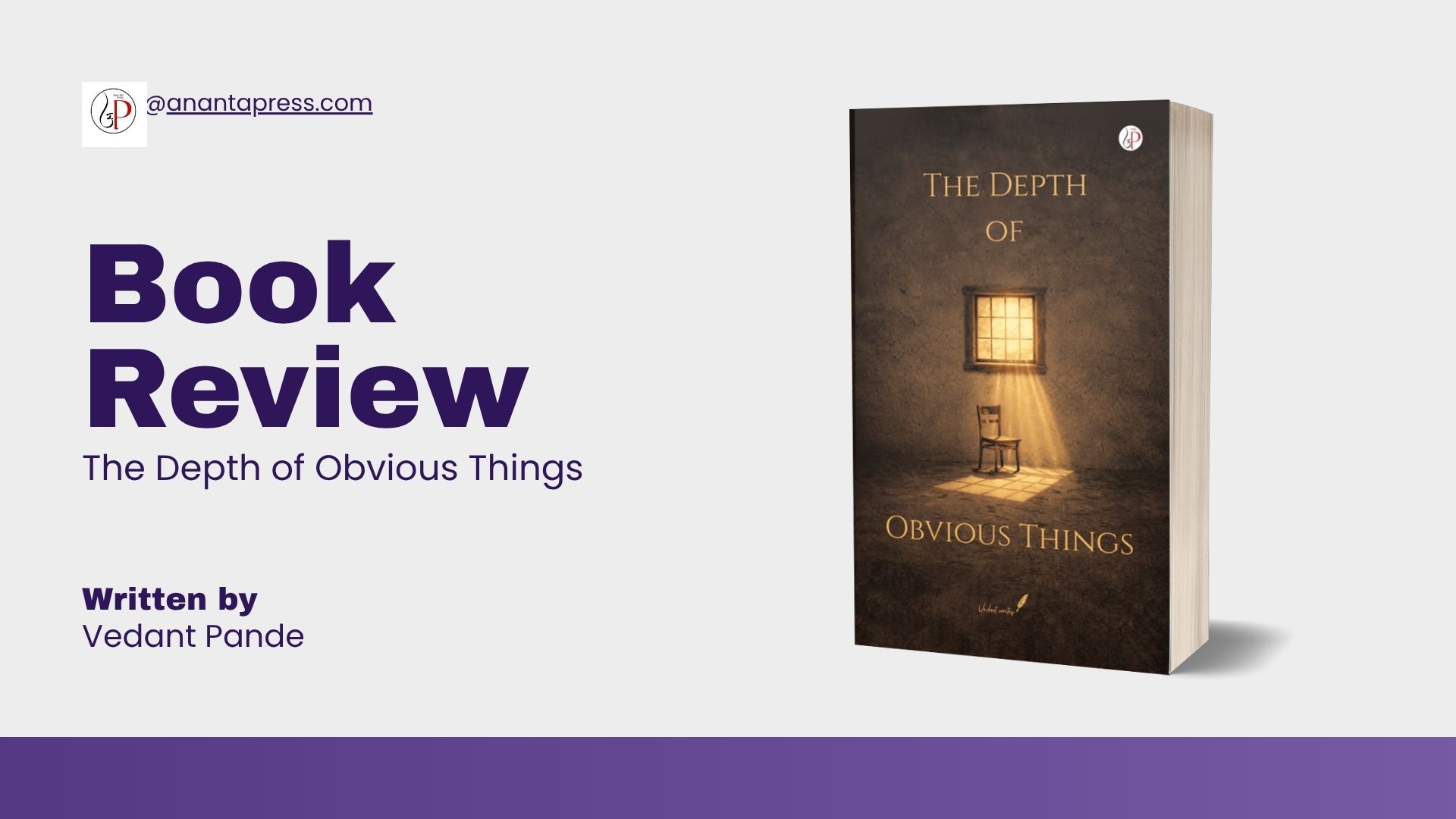
In a world filled with loud opinions, fast distractions, and books that constantly try to “teach” life, The Depth of Obvious Things arrives with a completely different energy. It does not shout. It does not pretend to have all the answers. Instead, it quietly sits beside the reader and asks them to pause, reflect, and notice the emotions that have always existed within them. That simplicity becomes the book’s greatest strength.
Written by Vedant Pande, this book is not a traditional self-help guide, nor is it a philosophical text filled with complicated theories. It is a deeply reflective collection of thoughts about ordinary human experiences — home, silence, loneliness, grief, kindness, waiting, small joys, overthinking, and perspective. These are subjects everyone encounters, yet very few people truly stop to examine. The author takes these familiar emotions and reveals the hidden depth within them.
One of the most beautiful aspects of this book is its writing style. The language is simple, calm, and emotionally honest. There are no unnecessarily difficult words or dramatic literary tricks. Every chapter flows like a quiet conversation with someone who understands human emotions deeply. The simplicity of the writing allows the emotions to feel real and personal. Readers do not feel like they are being lectured; they feel like they are being understood.
The opening chapter, “Home,” immediately establishes the emotional tone of the book. Instead of defining home as merely a physical place, the author explores the emotional meaning behind it. The chapter slowly moves from houses and relationships toward the idea that perhaps home is actually a state of inner peace — a place within ourselves where we stop resisting who we are. This reflection feels universal because almost everyone has searched for belonging in places, people, or future dreams. The chapter leaves readers with an important realization: sometimes the thing we are searching for externally may already exist within us.
The chapter on “Silence” is equally powerful. Most people claim they enjoy silence, but the author carefully explains the difference between controlled quiet and true silence. Real silence forces us to face our own thoughts. It removes distractions and exposes emotions we have been avoiding. The way the author describes silence as something that first disturbs us before it clarifies us is deeply accurate. It captures a psychological truth many readers will immediately recognize in their own lives.
Perhaps one of the strongest chapters in the book is “Loneliness.” Unlike common definitions that associate loneliness only with physical isolation, the author presents loneliness as the feeling of being emotionally unseen. This perspective gives the chapter immense emotional depth. The book explains how loneliness can exist even among friends, relationships, and crowded spaces. The slow transformation from expressing emotions openly to quietly withdrawing from others is described with painful honesty. Many readers will likely feel that this chapter speaks directly to experiences they never fully knew how to explain.
The chapter on “Grief” expands the understanding of loss in a thoughtful and mature way. Instead of discussing only death, the author explores quieter forms of grief — lost relationships, unrealized futures, fading friendships, and versions of ourselves that no longer exist. This broader understanding of grief makes the chapter emotionally rich and relatable. The idea that people often grieve possibilities and memories as much as actual people is expressed beautifully. It reminds readers that grief is not limited to dramatic endings; sometimes it lives quietly inside unfinished stories.
“Kindness” is another standout chapter because it addresses a truth that many sensitive people experience but rarely discuss. The author explores how kindness can slowly turn into emotional exhaustion when people continuously ignore their own needs while trying to care for others. The chapter does not discourage kindness; instead, it asks readers to find balance between compassion for others and compassion for themselves. This emotional honesty gives the chapter great maturity and relevance.
The chapter titled “Waiting” may resonate strongly with younger readers and people struggling with uncertainty in life. The author carefully explains the difference between patience and waiting. Patience moves alongside action, while waiting often becomes an excuse for postponing difficult decisions. The realization that life rarely offers a perfect moment to begin something important is one of the most impactful ideas in the book. It encourages readers to confront the ways fear and hesitation quietly shape their lives.
One of the warmest and most comforting chapters is “Small Joys.” In modern life, people often measure happiness through achievements, milestones, and dramatic moments. This chapter reminds readers that many of the things keeping them emotionally alive are small and ordinary — coffee, music, sunlight, familiar routines, quiet evenings, and simple moments of peace. The personal storytelling in this section feels especially intimate and genuine. It gently teaches readers to notice happiness while they are still living it, instead of recognizing it only after it disappears.
“The Stories We Tell Ourselves” is perhaps the most psychologically insightful chapter in the entire book. It explores overthinking and the human tendency to create explanations when situations feel incomplete. The author explains how the mind slowly builds narratives, collects emotional evidence, and eventually turns assumptions into emotional reality. This chapter is incredibly relatable because almost everyone has experienced moments where fear, insecurity, or uncertainty created stories that felt true even when they were not. The reflections here are intelligent, emotionally accurate, and deeply human.
The final chapter, “Also,” leaves the reader with one of the book’s most meaningful ideas: every story contains another perspective. The author explains that while our emotions and pain are valid, other people may also be carrying struggles we cannot see. This does not invalidate our experiences; it simply expands our understanding of human complexity. The repeated use of the word “also” becomes a quiet philosophical reminder that reality is rarely one-sided. It is a thoughtful ending that perfectly represents the spirit of the book.
Another remarkable quality of this work is the use of poetry, lyrics, and references from artists like Jaun Elia, Gulzar, Seedhe Maut, and Rumi. These references are not inserted merely for decoration. They blend naturally into the reflections and strengthen the emotional atmosphere of the book. The quotations feel meaningful because they connect modern emotional experiences with timeless artistic expression.
What makes this book truly special is its emotional sincerity. Many reflective books try too hard to sound wise or profound. The Depth of Obvious Things avoids that problem completely. Its wisdom comes from observation rather than performance. The author understands that some of the deepest truths in life are already visible around us — we simply move too quickly to notice them.
This book will particularly resonate with readers who enjoy introspective writing, emotional reflection, philosophy of everyday life, and quiet psychological observations. People who appreciate slow, thoughtful books rather than fast-paced storytelling will likely connect deeply with it. It is the kind of book readers may return to during emotionally confusing periods of life because its reflections feel calming, grounding, and honest.
If there is one thing this book achieves brilliantly, it is awareness. It encourages readers to look again at emotions they previously ignored. It transforms ordinary experiences into meaningful reflections about being human. By the end of the book, readers may realize that many answers they were searching for in dramatic places had quietly existed inside ordinary moments all along.
Overall, The Depth of Obvious Things is a thoughtful, emotionally intelligent, and beautifully reflective book that turns simple human experiences into profound observations about life. It is gentle without being weak, philosophical without becoming complicated, and emotional without becoming excessive. More than a book of answers, it is a book of awareness — one that quietly stays with the reader long after the final page ends.