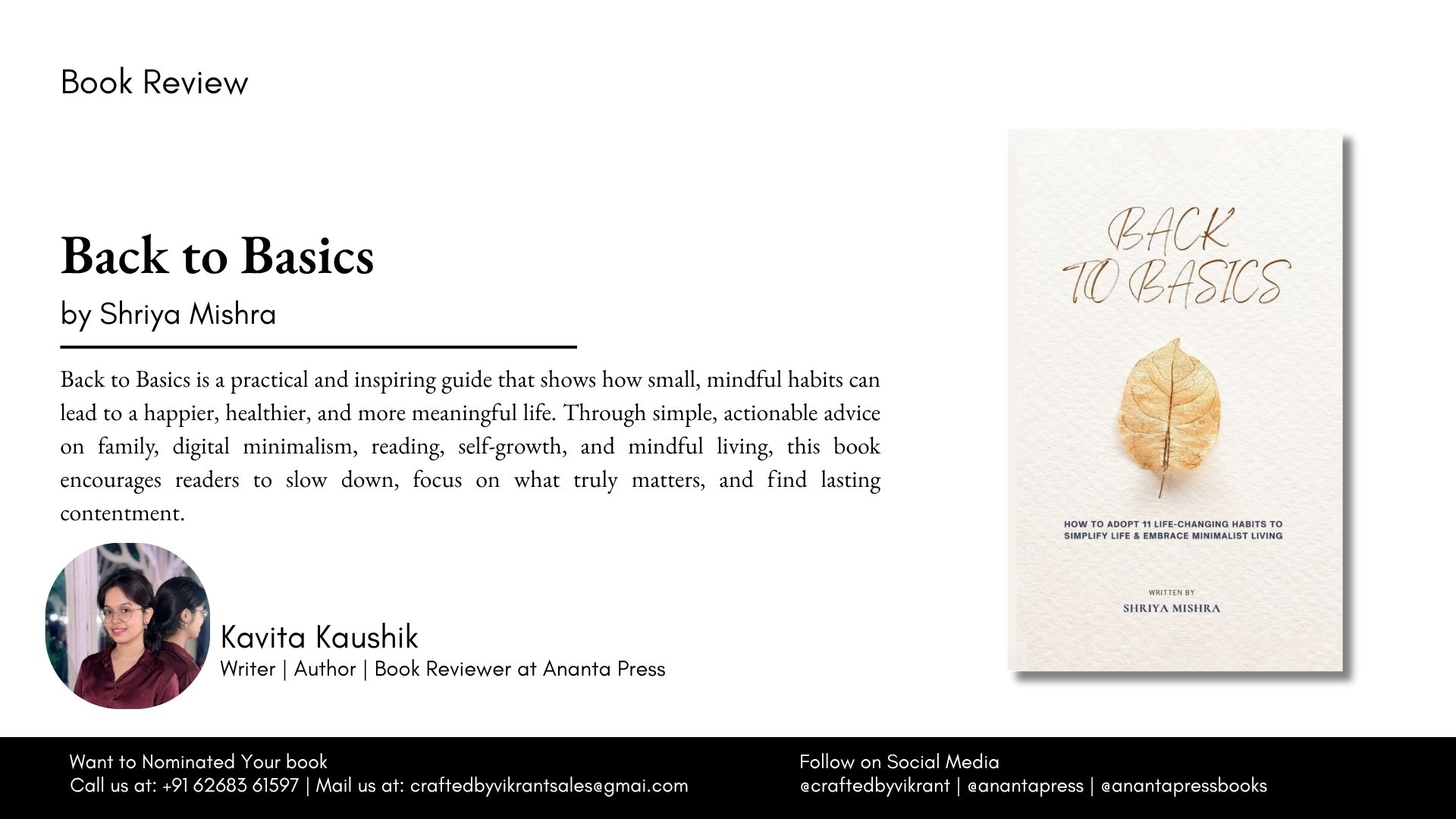
In today’s fast-moving world, where success is often measured by social media followers, expensive lifestyles, and endless productivity, Back to Basics offers a refreshing reminder that true happiness is rarely found in excess. Instead, it lies in simplicity, meaningful relationships, mindful habits, and intentional living. This book is not merely another self-help guide filled with motivational quotes; rather, it is a practical handbook that encourages readers to slow down, rethink their priorities, and reconnect with the essentials of life.
One of the greatest strengths of Back to Basics is its simplicity. The author avoids complicated theories or psychological jargon and instead presents relatable examples and step-by-step actions that readers can immediately implement. Every chapter ends with practical lessons and actionable takeaways, making the book highly useful rather than merely inspirational. Instead of telling readers what they should do, the author explains how they can gradually build better habits through small, consistent changes.
The book addresses some of the most common struggles of modern life, including balancing work and family, overcoming social pressure, reducing digital distractions, developing healthy habits, investing in personal growth, eating mindfully, traveling with purpose, creating meaningful memories, and escaping the endless cycle of comparison. Each topic is presented in a realistic manner, acknowledging that life cannot become perfect overnight. Rather than promoting unrealistic ideals, the author repeatedly emphasizes progress over perfection.
One particularly impactful chapter focuses on balancing family and professional life. In an era where being constantly busy is often celebrated, the author reminds readers that work should be an important part of life—not life itself. The practical suggestions, such as scheduling family time like business meetings, setting healthy workplace boundaries, and practicing distraction-free conversations with loved ones, are simple yet powerful. These recommendations encourage readers to realize that success loses much of its meaning if achieved at the cost of relationships and personal well-being.
Another highly relevant section discusses the influence of social media and the growing pressure of comparison. The author explains how constant exposure to carefully curated online lives quietly reshapes our expectations and often leaves us feeling dissatisfied. Rather than advising readers to abandon technology completely, the book promotes digital minimalism—using technology intentionally instead of allowing it to control daily life. Suggestions like muting unnecessary accounts, limiting notifications, creating offline time, and replacing endless scrolling with reading or journaling are practical strategies that many readers can realistically adopt.
The chapter encouraging readers to replace scrolling with reading is particularly timely. Modern lifestyles leave little room for focused attention, and the author highlights how reading strengthens concentration, creativity, and emotional intelligence. The recommendation to begin with only ten minutes of reading each day makes the habit feel achievable rather than overwhelming. By presenting reading as a source of peace rather than another productivity task, the book successfully reminds readers of its long-term value.
Another commendable aspect of the book is its emphasis on self-investment without spending large amounts of money. Instead of encouraging expensive courses or costly lifestyle upgrades, the author promotes learning practical skills such as cooking, gardening, journaling, repairing everyday items, and pursuing creative hobbies. This approach reinforces the central philosophy that meaningful personal growth often depends more on curiosity and consistency than on financial resources.
The chapters devoted to healthy eating and mindful travel further reinforce this philosophy. The discussion about replacing fast food with simple home-cooked meals highlights not only health benefits but also emotional well-being and stronger family connections. Similarly, the travel chapter encourages readers to travel for learning rather than social media validation. By slowing down, engaging with local communities, and appreciating everyday experiences, travel becomes a source of personal growth rather than merely an opportunity to collect photographs.
Perhaps the emotional heart of the book lies in its chapters about creating memories instead of collections and learning to stop comparing ourselves with others. These sections encourage readers to prioritize experiences over possessions, relationships over material success, and gratitude over constant competition. The idea of building a “Memory Fund” rather than endlessly purchasing unnecessary items is both creative and practical. Likewise, the advice to transform envy into curiosity and gratitude offers readers healthier ways to measure success.
The writing style throughout the book remains clear, conversational, and accessible. Readers from different age groups and educational backgrounds can easily understand the language. The short sections, bullet points, checklists, and practical exercises make the content engaging and easy to revisit whenever needed. Instead of overwhelming readers with information, each chapter focuses on one important aspect of life and provides manageable steps for improvement.
However, the book is not without a few limitations. Readers who regularly read psychology, philosophy, or advanced self-development literature may find some ideas familiar. Concepts such as mindfulness, gratitude, digital minimalism, and habit formation have been discussed extensively in contemporary personal development books. While Back to Basics does not necessarily introduce groundbreaking theories, its strength lies in combining these ideas into a practical and highly accessible guide.
Another area where the book could have been stronger is the inclusion of more real-life case studies or personal stories. Although the practical advice is excellent, additional narratives demonstrating how individuals successfully applied these principles would have created a stronger emotional connection and made the lessons even more memorable.
Despite these minor shortcomings, the book succeeds remarkably well in achieving its primary objective: helping readers simplify their lives without sacrificing personal growth or ambition. Rather than encouraging readers to reject modern life, the author advocates living with greater awareness, intention, and balance. The repeated emphasis on small daily improvements makes the advice sustainable and realistic for ordinary people juggling careers, families, and personal responsibilities.
One of the most admirable qualities of Back to Basics is its optimistic yet grounded tone. The author never promises instant transformation or overnight success. Instead, readers are reminded that meaningful change happens through consistent habits practiced over time. Whether it is spending thirty uninterrupted minutes with family, replacing ten minutes of scrolling with reading, preparing simple home-cooked meals, or writing down moments of gratitude, the book demonstrates how seemingly insignificant actions gradually create a richer and more fulfilling life.
Ultimately, Back to Basics is a thoughtful reminder that the answers to many of life’s challenges are often simpler than we imagine. Happiness does not necessarily require more possessions, more achievements, or more recognition. Sometimes it requires fewer distractions, stronger relationships, healthier habits, and greater appreciation for ordinary moments. In a society constantly encouraging people to do more, own more, and compare more, this book gently encourages readers to slow down and rediscover what truly matters.