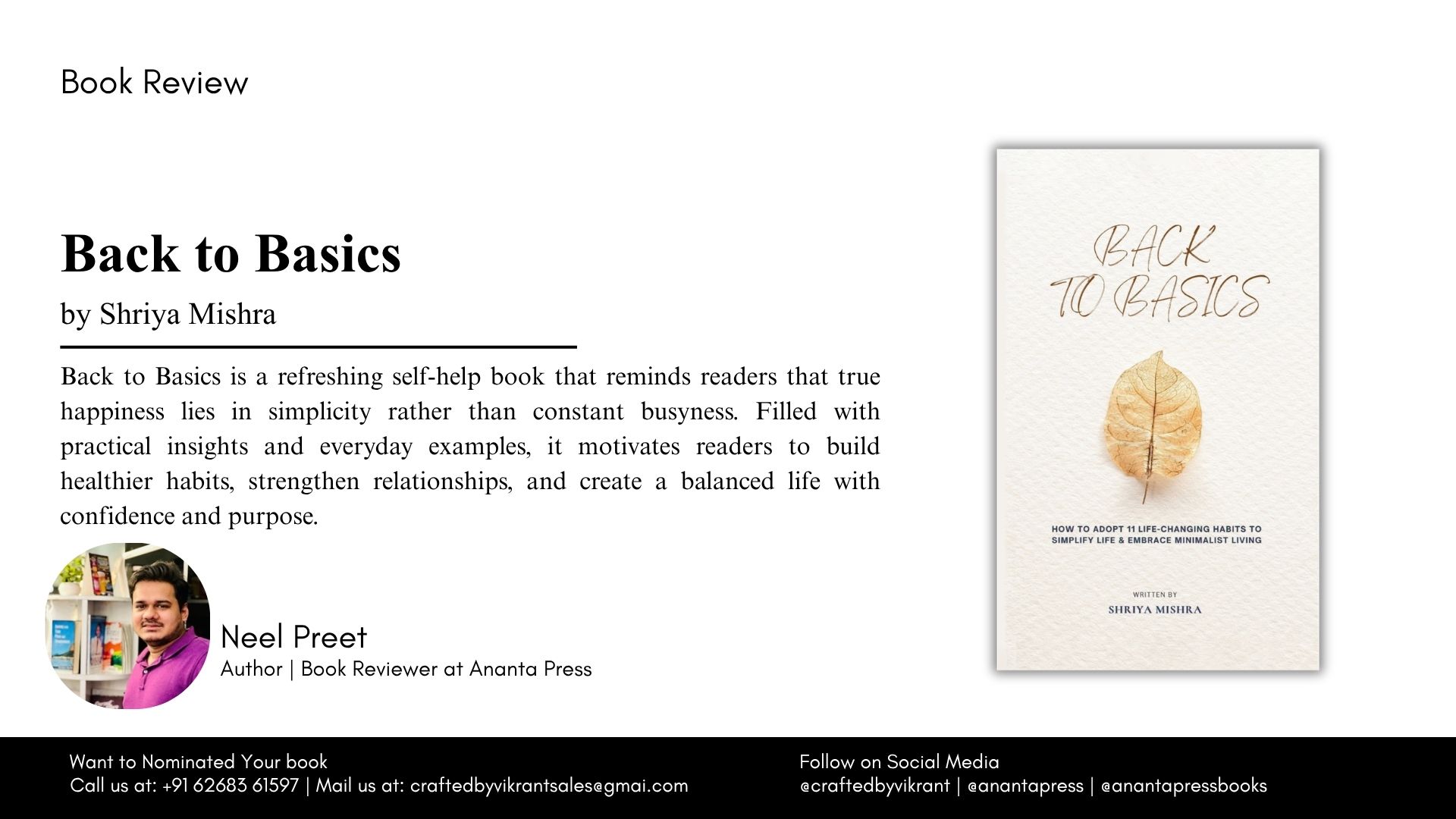
In an age where people are constantly chasing bigger careers, faster lifestyles, and endless digital engagement, Back to Basics arrives as a thoughtful invitation to pause and reconsider what truly matters. Rather than encouraging readers to pursue more, the book gently argues that a meaningful life is often built by appreciating less—less distraction, less comparison, and less unnecessary complexity. It is a practical guide for anyone who wishes to replace busyness with balance and discover fulfillment in everyday living.
What immediately distinguishes this book is its highly practical approach. Instead of presenting abstract philosophies or idealistic advice, the author breaks each topic into clear, achievable actions that readers can begin implementing immediately. Every chapter follows a structured format, introducing a common modern-day challenge before offering realistic solutions, simple exercises, and concise learning summaries. This makes the book feel less like a motivational lecture and more like a friendly mentor offering sensible guidance.
One of the central ideas running throughout the book is that modern life often pulls people away from what is genuinely important. Whether it is excessive screen time, unhealthy work habits, impulsive spending, or the constant pressure to keep up with others, the author demonstrates how these habits quietly erode peace of mind. Rather than asking readers to abandon technology or ambition altogether, Back to Basics advocates balance—using modern conveniences wisely while protecting time for relationships, personal growth, and inner well-being.
The chapter on balancing family and professional responsibilities is among the strongest in the book. Instead of treating work-life balance as an impossible ideal, the author provides realistic strategies for making family a consistent priority. Suggestions such as scheduling quality family time, setting healthy workplace boundaries, and giving loved ones undivided attention may appear simple, but they address a problem that many professionals face every day. The message is clear: career success becomes far less meaningful if achieved at the expense of personal relationships.
Another particularly relevant section explores the growing influence of social media. The book explains how constant exposure to carefully curated online lives often creates unrealistic expectations and unnecessary dissatisfaction. Rather than encouraging readers to disconnect completely, it introduces the concept of intentional technology use. Practical suggestions such as decluttering social media feeds, limiting notifications, creating daily offline periods, and replacing endless scrolling with meaningful activities make this chapter especially useful for today’s readers.
The discussion on developing a reading habit is equally compelling. The author points out how digital distractions have weakened our ability to concentrate and encourages readers to rediscover the joy of books through small, manageable steps. Beginning with just ten minutes of daily reading removes the pressure often associated with building new habits. More importantly, reading is presented not as another productivity tool but as a way to cultivate patience, imagination, and deeper thinking.
A refreshing aspect of Back to Basics is its perspective on personal development. Unlike many self-improvement books that promote expensive courses or dramatic lifestyle changes, this book emphasizes affordable, everyday learning. Gardening, cooking, journaling, repairing household items, learning creative skills, and developing practical hobbies are presented as meaningful investments that strengthen both confidence and independence. This grounded approach makes personal growth accessible to readers regardless of their financial circumstances.
The chapters on healthy eating and mindful travel further reinforce the book’s philosophy. Home-cooked meals are portrayed not only as healthier and more economical but also as opportunities to strengthen family bonds and create lasting memories. Similarly, travel is redefined as a chance to learn, observe, and connect with local cultures instead of simply collecting photographs for social media. The emphasis on slowing down and appreciating ordinary experiences adds depth to subjects that are often treated superficially.
Perhaps the most emotionally engaging parts of the book are those that encourage readers to value experiences over possessions. The author reminds us that lasting happiness rarely comes from acquiring more things; instead, meaningful conversations, shared meals, simple celebrations, and everyday moments with loved ones leave a far deeper impact. Ideas such as creating a “Memory Fund” and replacing impulse purchases with shared experiences beautifully capture the book’s central philosophy of intentional living.
The final chapters addressing comparison and contentment provide a fitting conclusion. The author explains that comparison quietly steals satisfaction by shifting attention away from personal progress toward other people’s achievements. Rather than promoting complacency, the book encourages readers to measure success according to their own values while practicing gratitude and celebrating small improvements. This balanced perspective makes the advice feel encouraging rather than idealistic.
The writing style deserves special appreciation. The language remains clear, conversational, and easy to understand throughout. The chapters are concise, well-organized, and filled with practical checklists, reflection exercises, and action plans that readers can revisit whenever needed. The straightforward presentation makes the book suitable for readers of different ages and backgrounds, especially those new to personal development.
Like most books in this genre, Back to Basics is not entirely without limitations. Readers familiar with self-help literature may recognize themes such as mindfulness, habit formation, gratitude, and digital minimalism. While these concepts are not new, the author’s strength lies in presenting them together in a coherent, practical, and highly approachable manner. Additionally, the inclusion of more detailed personal stories or real-life case studies could have made some lessons even more engaging and emotionally memorable.
Despite these minor observations, Back to Basics succeeds remarkably well in fulfilling its purpose. It avoids unrealistic promises of overnight transformation and instead focuses on gradual, sustainable improvement through consistent daily habits. The advice feels practical because it respects the realities of modern life and recognizes that lasting change begins with small, repeatable actions rather than dramatic lifestyle overhauls.
Overall, Back to Basics is a warm, practical, and inspiring guide for anyone seeking a calmer, healthier, and more intentional way of living. It reminds readers that genuine happiness is rarely hidden in extraordinary achievements but is often found in ordinary moments shared with family, meaningful conversations, healthy routines, continuous learning, and gratitude for the present. In a world that constantly encourages us to do more and own more, this book offers a refreshing message: sometimes the most meaningful way forward is simply to return to the basics.