Introduction: Questioning the Familiar
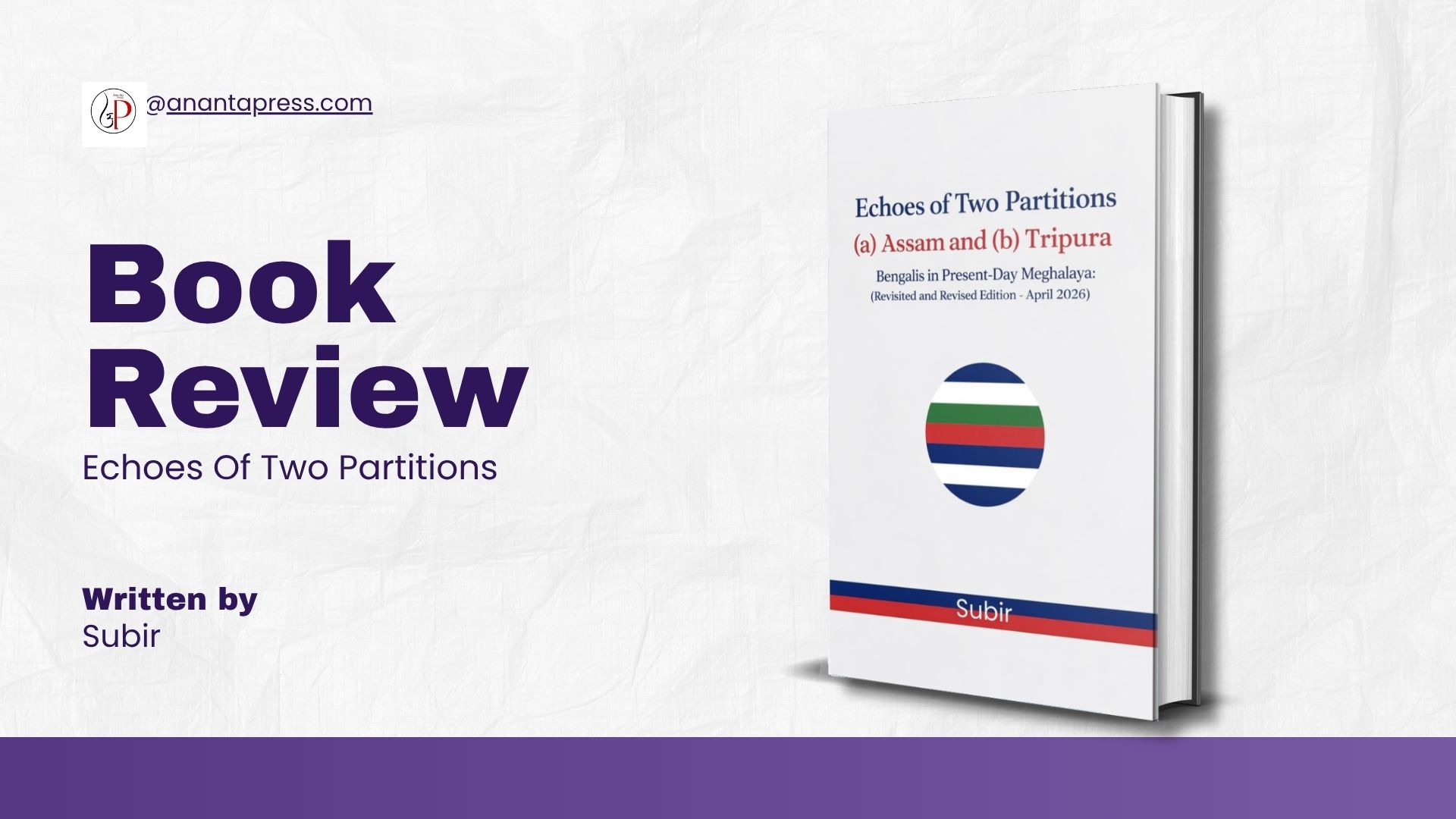
This book begins with a simple yet powerful question—why do we call it “North-East India” when geographically it lies in the eastern part of the country? From the very outset, the author challenges accepted terminologies and perceptions, urging readers to rethink what they have long taken for granted. This approach sets the tone for a thought-provoking exploration that seeks to uncover overlooked truths and hidden histories.
Uncovering Forgotten Histories
One of the book’s most compelling contributions lies in its focus on lesser-known aspects of India’s partition. While mainstream narratives predominantly highlight Bengal in the East and Punjab in the West, this work brings attention to the largely ignored partitions of Assam Province and the Princely State of Tripura. By doing so, it exposes gaps in historical discourse and invites readers to question why certain events have been marginalized or forgotten.
Challenging Established Narratives
The book boldly questions conventional historical understandings, such as the demographic reality of Assam being a Bengali-majority province from 1874 until its partition in 1947—an aspect rarely discussed in popular or academic narratives. These revelations push readers to reconsider long-held assumptions and recognize the complexity of regional histories that are often simplified or overlooked.
Geopolitical Sensitivity and Strategic Importance
A significant portion of the book highlights the geographical and strategic uniqueness of the region. The narrow Siliguri Corridor, which connects North-East India to the rest of the country, is presented as both a point of vulnerability and significance. This fragile connection underscores the importance of the region in India’s national integrity and security, adding a contemporary relevance to the historical discussions.
A Call for Greater Integration and Understanding
Beyond historical analysis, the book carries a strong message of unity and inclusion. It emphasizes the need for deeper engagement, understanding, and acceptance of the people of North-East India. By shedding light on their histories and realities, the author advocates for stronger emotional and cultural integration, which is essential for building a more cohesive and resilient nation.
Style and Approach
The narrative appears to be analytical yet accessible, driven by questions rather than assertions. This method encourages readers to actively engage with the content, making the reading experience more reflective than passive. The book does not merely present facts; it invites dialogue and introspection.
Conclusion: Expanding the National Perspective
In conclusion, this book is an important and timely contribution that broadens the scope of India’s historical and geopolitical understanding. By focusing on neglected narratives and questioning dominant perspectives, it challenges readers to look beyond the mainstream and appreciate the complexities of the North-East. It is not just a history book—it is a call to rethink, reconnect, and recognize a region that is both integral and indispensable to the nation’s identity.
Buy Now : https://www.amazon.in/Echoes-Two-Partitions-Assam-Tripura/dp/9378213391/