Introduction: Rediscovering an Ancient Knowledge Tradition
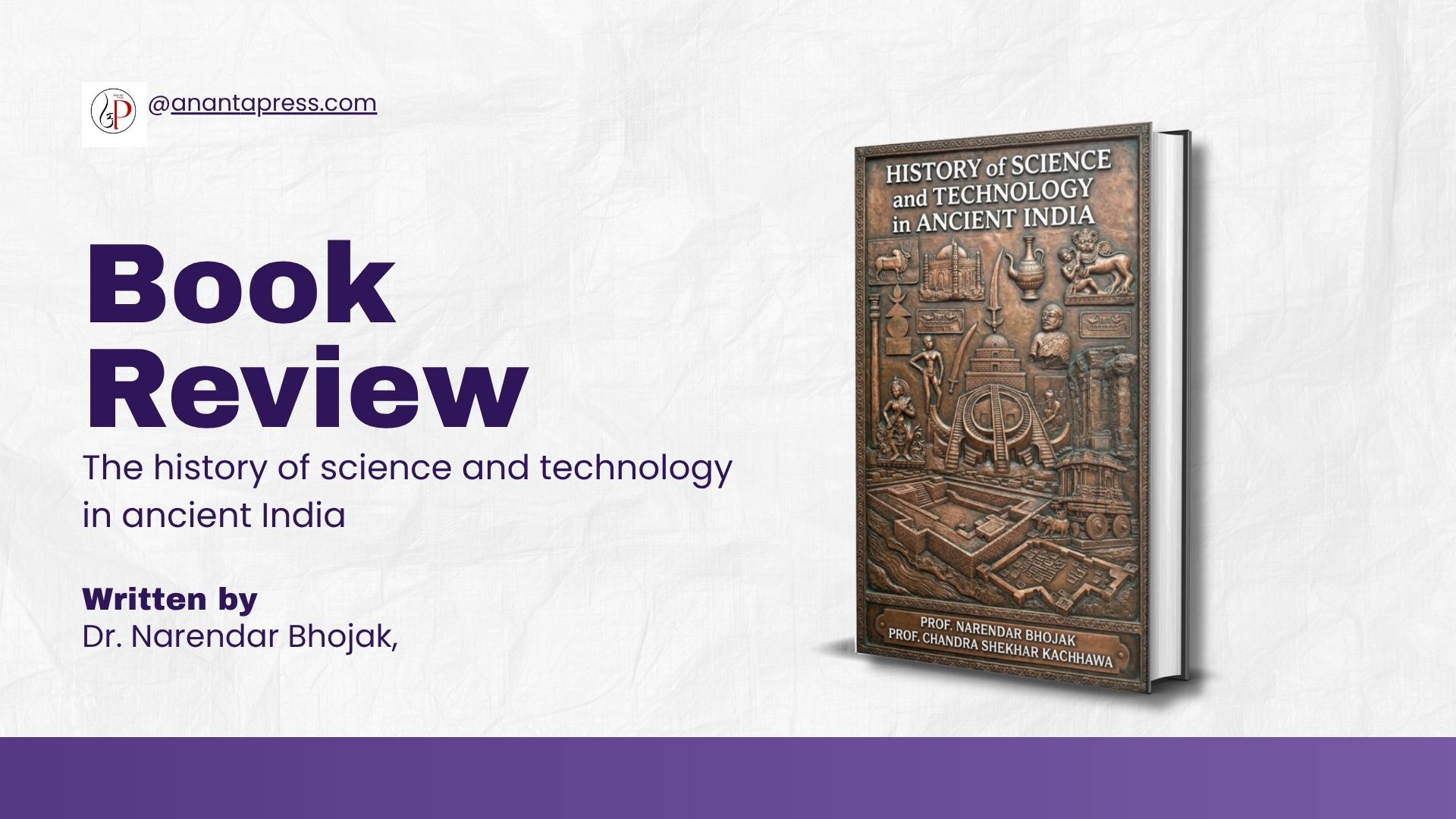
This book offers a rich and comprehensive exploration of the history of science and technology in ancient India, presenting it as one of the most influential intellectual traditions in world civilization. Covering a vast timeline—from the Vedic period to the early medieval era—it highlights how early Indian scholars combined observation, reasoning, and practical application to build systems of knowledge that supported both society and culture.
Philosophical Foundations: Knowledge Rooted in Tradition
A key strength of the book lies in its exploration of the philosophical roots of scientific thought. Drawing from ancient Sanskrit literature such as the Vedas and the Vedangas, the text shows how early frameworks of learning were deeply interconnected with spirituality and logic. These texts were not merely religious but also intellectual resources that laid the groundwork for systematic inquiry and disciplined thinking.
Mathematics and Astronomy: Pioneering Global Concepts
The book excels in explaining India’s groundbreaking contributions to mathematics and astronomy. It discusses the development of the decimal place-value system and the revolutionary concept of zero, which reshaped global mathematics.
It also highlights the work of eminent scholars such as Aryabhata, Varahamihira, and Brahmagupta. Their sophisticated methods for planetary calculations, eclipse prediction, and calendar systems demonstrate a high level of scientific precision and analytical thinking that was far ahead of its time.
Medicine and Health Sciences: Advanced Healing Systems
Another remarkable section of the book focuses on ancient Indian medicine. Classical texts like the Charaka Samhita and the Sushruta Samhita reveal detailed knowledge of anatomy, pharmacology, surgery, and preventive healthcare.
The book effectively shows how these systems were not only advanced but also holistic, emphasizing balance, lifestyle, and long-term well-being—principles that continue to influence modern alternative medicine.
Engineering, Metallurgy, and Architecture: Practical Innovation
The narrative extends beyond theory to highlight technological achievements. The discussion on metallurgy—especially the production of high-quality iron and steel—demonstrates the technical expertise of ancient craftsmen.
Architectural knowledge, guided by principles found in Vastu Shastra, reflects a deep integration of geometry, engineering, and aesthetics. Urban planning, construction techniques, and agricultural advancements further illustrate how science was applied in everyday life.
Centers of Learning and Knowledge Transmission
The book also sheds light on how knowledge was preserved and transmitted. It explores the Gurukula system and renowned ancient universities such as Takshashila and Nalanda University. These institutions played a crucial role in nurturing intellectual growth and spreading knowledge across regions.
Strengths of the Book
- Comprehensive and interdisciplinary approach
- Strong use of historical and textual evidence
- Balanced presentation without exaggeration
- Clear explanation of complex scientific ideas
- Effective connection between theory and practical application
Areas for Improvement
- Some sections could include more comparative analysis with other civilizations
- Visual aids such as diagrams or timelines would enhance understanding
- Greater focus on lesser-known contributors could broaden the narrative
Conclusion: A Timeless Contribution to Global Knowledge
This book successfully presents ancient India as a center of scientific innovation and intellectual rigor. It moves beyond myths and presents an evidence-based narrative that highlights genuine contributions to global knowledge systems.
By bridging history, philosophy, and science, the book not only informs but also inspires readers to appreciate the depth and relevance of ancient Indian wisdom in today’s world.