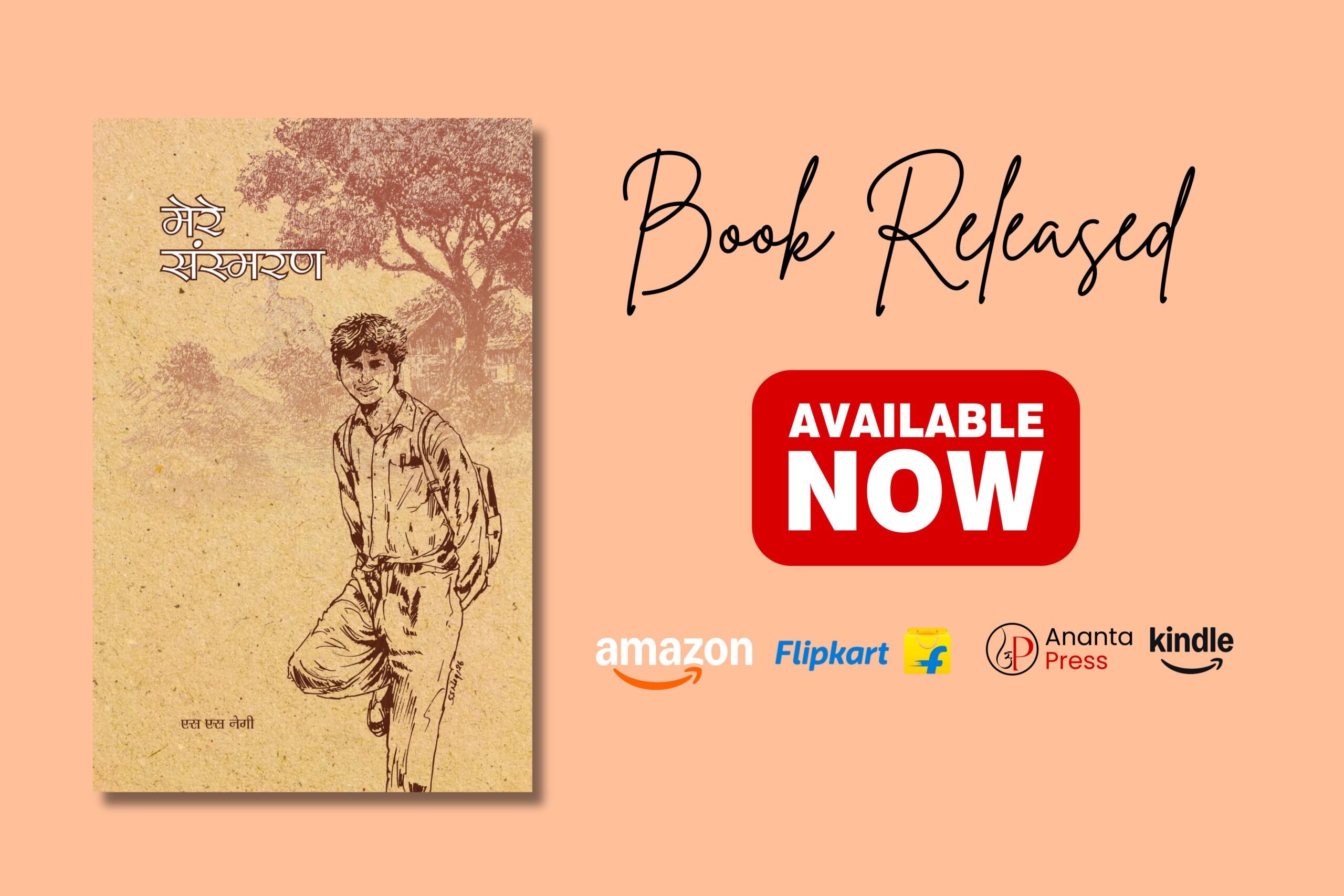
It is a matter of great pride and happiness that author S. S. Negi has released his autobiographical book titled Mere Sansmaran, which is now available on major platforms such as Amazon, Flipkart, Ananta Press, and Kindle. This publication is not merely the release of a book; it is the unveiling of a deeply personal journey shaped by memories, emotions, and life experiences.
Mere Sansmaran is not a display of literary flamboyance or ornamental language. Instead, it is a sincere and honest portrayal of life as it was lived. The author has transformed his lived experiences into words, presenting them with simplicity and emotional depth. The book stands as a testimony to a life observed closely, felt deeply, and remembered with gratitude.
The Emotional Landscape of Mere Sansmaran
When the author looks back at his life from this stage, he finds an endless ocean of memories rising before him. These memories form the soul of this book. From the dusty lanes of childhood to the refreshing waters of rivers where carefree moments were spent, from small joys shared with loved ones to silent struggles endured within—each experience finds a place in these pages.
The book beautifully captures the essence of childhood: innocent laughter, freedom without fear, and a close connection with nature. These moments are not merely nostalgic; they define the author’s identity. The simplicity of those days contrasts with the complexities of later life, making the narrative both tender and reflective.
Tribute to Parents and Family Values
One of the most touching aspects of Mere Sansmaran is the author’s portrayal of his parents. He remembers his mother as a figure of tireless dedication—working day and night to shape the family’s future with love and sacrifice. Her perseverance becomes a symbol of quiet strength.
Equally powerful is the depiction of his father’s silent struggle. Without loud expressions of hardship, the father carried the weight of responsibility and resilience. The author’s respect for this unspoken effort reflects deep emotional maturity and gratitude. These portrayals remind readers of their own parents and the countless sacrifices that often go unnoticed.
Transition from Childhood to Youth
As the narrative moves forward, the author describes his entry into college life—a turning point where his understanding of the world expanded. The simple worldview of childhood slowly transformed into a deeper awareness of society, relationships, and responsibility. The emotional transitions, unspoken fears, and internal conflicts of youth are depicted with honesty.
The changing social environment and evolving mindset are woven into the book with clarity. These moments of growth do not feel forced or dramatic; they appear natural and organic, just like real life. Readers will find themselves reflecting on their own journeys from innocence to awareness.
Writing Style and Authentic Voice
S. S. Negi openly admits that he is not a seasoned or professional writer. Yet this admission becomes the book’s greatest strength. He does not write as a literary expert but as a human being who finally gathered the courage to express what remained unsaid throughout his life.
His language is simple, sincere, and direct. The narrative feels like a conversation between the author and the reader. There is no artificial complexity or unnecessary ornamentation—only truth and emotion. This authenticity creates a powerful connection between the writer and the reader.
Beauty in Simplicity, Inspiration in Struggle
The author dedicates this book to those who seek beauty in simplicity and motivation in struggle. This theme resonates throughout the work. There are no extraordinary heroes or fictional victories here—only ordinary people facing real challenges.
The book quietly teaches that:
- Life is shaped by struggles
- Identity is built from experiences
- Memories define who we become
- Silence often holds the deepest emotions
Through small incidents and everyday moments, the author shows how ordinary life carries extraordinary meaning.
A Mirror for the Reader
Perhaps the greatest achievement of Mere Sansmaran is its ability to reflect the reader’s own story. While reading about the author’s childhood, parents, and struggles, readers are reminded of their own homes, their own streets and rivers, and their own family sacrifices.
The book gently asks:
“Is this not also my story?”
This sense of identification transforms the book from a personal narrative into a universal experience.
Social and Emotional Significance
In today’s fast-paced digital age, emotions are often buried under routines and screens. A book like Mere Sansmaran brings readers back to the emotional roots of life. It reconnects them with values such as gratitude, patience, family bonds, and humility.
For younger readers, the book offers lessons in respect for parents, understanding struggles, and valuing simple joys. For older readers, it becomes a journey of reflection and remembrance.
The book teaches that life is not merely a list of achievements; it is a collection of lived moments.
Conclusion
Mere Sansmaran is a work that touches the heart rather than impresses the intellect. It reminds us that memory is not just a record of the past; it is the foundation of our future.
This book teaches us that:
Our memories shape us,
Our struggles strengthen us,
And our stories connect us.
It is a quiet yet powerful contribution to autobiographical literature, rooted in sincerity and lived experience.
Availability
The book Mere Sansmaran by S. S. Negi is now available on:
- Amazon
- Flipkart
- Ananta Press
- Kindle
Readers who appreciate real-life stories, emotional depth, and honest expression will find this book deeply rewarding.
Final Words
Heartfelt congratulations to S. S. Negi on this remarkable literary achievement.
Mere Sansmaran is sure to find a special place in the hearts of readers and serve as an inspiration for those who believe in the power of simple stories and silent struggles.