
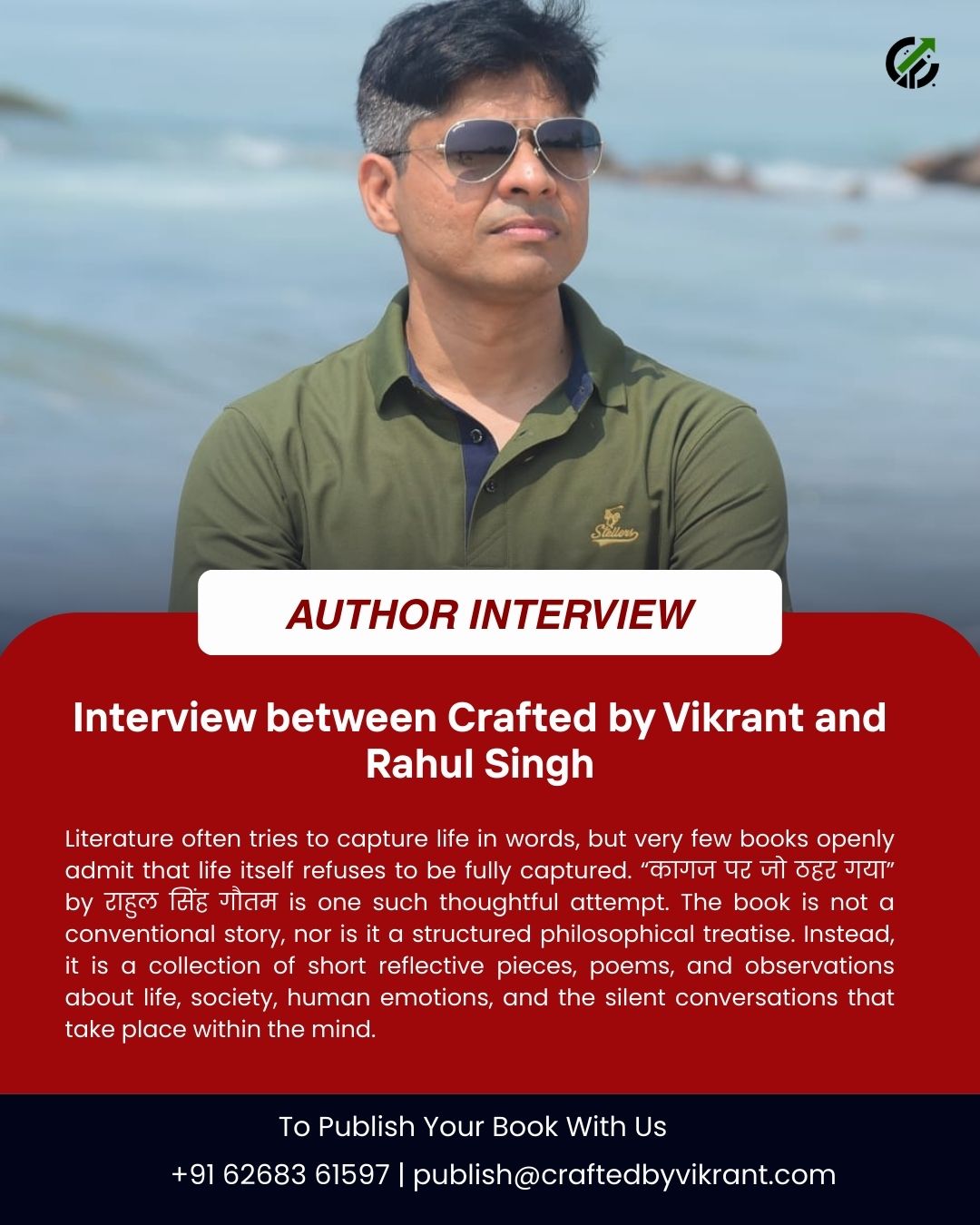
Book Title – Kagaj Par Jo Thahar Gaya ISBN – 9789378210983 Author Name – Rahul Singh Gautam Book Pages – 273 Crafted By Vikrant – What inspired you to write “कागज पर जो ठहर गया” and choose such a reflective format for the book? Rahul Singh – There was no single moment of inspiration behind writing this book. Often many thoughts come to the mind; some stay only for a moment and disappear with time. But there are certain feelings that remain within us for longer. When such thoughts find words, they settle on paper. “Kagaz Par Jo Thahar Gaya” is essentially a collection of those thoughts and emotions that stayed with me long enough to be written. Crafted By Vikrant – Many pieces in the book focus on the human mind and inner conflict. Are these thoughts based on personal experiences? Rahul Singh – Inner conflict is a natural part of every human life. The ideas expressed in my writing certainly carry shades of my own experiences, but they are not limited to them. They are also shaped by what I have observed, felt, and understood from the world and the people around me. Crafted By Vikrant – Your writing style is very simple yet philosophical. Was this simplicity a conscious choice? Rahul Singh – I have always believed that the deeper a thought is, the simpler its language should be. Complex words do not necessarily make an idea greater. My effort has been to express thoughts in a way that reaches the reader’s heart directly, without unnecessary ornamentation. Crafted By Vikrant – Several poems discuss time and existence. Why do you think these themes are so important in human life? Rahul Singh – Time is perhaps the greatest truth of life. Everything a person thinks, does, and becomes exists within the flow of time. Questions of existence are naturally connected to it. That is probably why these themes appear repeatedly in my reflections. Crafted By Vikrant – How long did it take you to write and compile the pieces in this book? Rahul Singh – This book was not written at a single point in time. It is a collection of thoughts, notes, and writings that emerged over several years and were gradually brought together. Crafted By Vikrant – Which poem or section in the book is closest to your heart and why? Rahul Singh – Each piece represents a particular moment and state of mind, so it is difficult to single out one. However, some writings where thoughts flowed naturally and honestly feel especially close to me. Crafted By Vikrant – The book sometimes criticizes modern society in subtle ways. What social issues influenced your writing the most? Rahul Singh – In today’s fast-paced life, human sensitivity sometimes seems to fade. The depth of relationships, patience, and self-reflection appear to be gradually diminishing. These changing aspects of society often find their way into my writing as quiet questions and reflections. Crafted By Vikrant – Do you think writing helps people understand themselves better? Rahul Singh – Certainly. Writing is not just the arrangement of words; it is also a process of looking inward. When a person writes, they often begin to see their own thoughts and emotions more clearly. Crafted By Vikrant – What kind of response from readers would make you feel that the book achieved its purpose? Rahul Singh – If a reader pauses even for a moment on a line or a thought and feels that it reflects something from their own life, I would feel that the book has fulfilled its purpose. Crafted By Vikrant – What advice would you give to young writers who want to express their thoughts through literature? Rahul Singh – The most important thing is honesty in writing. Write what you genuinely feel rather than trying to imitate someone else’s style. Reading and reflection are as important as writing itself. With time and patience, words naturally gain depth and maturity.
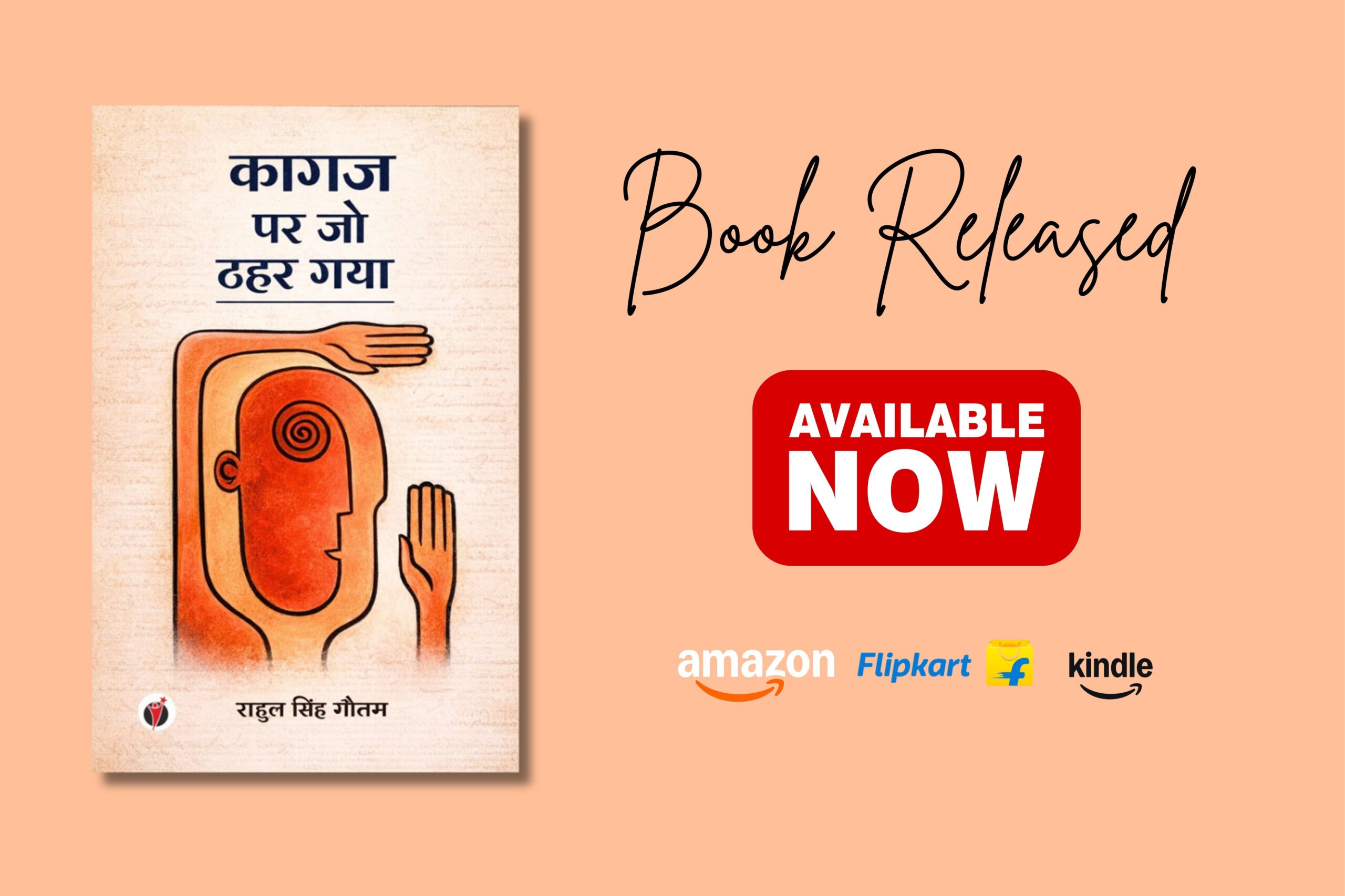
Heartfelt Congratulations to Rahul Singh Gautam on the Release of His Book Kagaj Par Jo Thahar Gaya
Literature often tries to capture life in words, but very few books openly admit that life itself refuses to be fully captured. “कागज पर जो ठहर गया” by राहुल सिंह गौतम is one such thoughtful attempt. The book is not a conventional story, nor is it a structured philosophical treatise. Instead, it is a collection of short reflective pieces, poems, and observations about life, society, human emotions, and the silent conversations that take place within the mind. The title itself is deeply symbolic. It suggests that life is constantly flowing like a river, and only a few moments, thoughts, or emotions manage to pause long enough to be written on paper. In the preface, the author clearly mentions that the book does not claim to present final truths or conclusions. Rather, it tries to record life as it appears in passing moments. This humble beginning sets the tone for the entire work. Style and Structure The book consists of numerous short pieces, each focusing on a single idea or feeling. Some are just a few lines long, while others are slightly longer reflections. The structure resembles a diary of thoughts or philosophical notes rather than a traditional literary work. This format is effective because it mirrors the way thoughts actually appear in human consciousness—brief, scattered, sometimes contradictory, and often unfinished. Each piece feels like a pause in the journey of life, inviting the reader to reflect on something simple yet meaningful. The language used by the author is simple and accessible. There are no unnecessarily complex metaphors or heavy philosophical terms. Instead, the ideas are presented through everyday experiences and familiar imagery. This simplicity allows readers from different backgrounds to connect with the text. Themes of Life and Time One of the most dominant themes in the book is the passage of time. The author repeatedly reflects on how time moves silently while humans remain busy with their struggles, ambitions, and emotions. In several pieces, the writer shows how people only realize the importance of time after it has already passed. The poem “मैं” highlights this beautifully by suggesting that while time keeps moving forward quietly, a person often realizes too late that their own time has slipped away beneath their feet. Through such reflections, the book reminds readers that life is fragile and temporary. However, the author does not present this idea in a depressing way. Instead, he uses it as a reminder to remain aware and thoughtful about how one lives. Human Mind and Inner Conflict Another strong theme in the book is the complexity of the human mind. Many pieces explore the constant battle between thoughts, emotions, desires, and reality. For example, in the section discussing anger, the author describes anger as something that is not brought from outside but already exists within the mind like a sleeping volcano. It only waits for the right moment to erupt. This metaphor illustrates how emotions often lie hidden beneath the surface of everyday behavior. Similarly, the piece about silence explains how silence sometimes enters the mind like an unwanted tenant who refuses to leave. Over time, people begin to accept that silence as part of their reality. This observation captures the quiet loneliness that many individuals experience in modern life. Social Commentary Although the book mainly focuses on personal reflections, it also includes subtle social criticism. The author occasionally comments on the artificial nature of modern society and the way people chase recognition, success, and validation. In the piece titled “इंसानी दर्द,” the writer talks about how society has started categorizing and evaluating pain. Only dramatic or visible suffering receives attention, while ordinary struggles remain unnoticed. This idea reflects the growing culture of social media where emotions are often displayed for approval rather than genuine understanding. Another interesting observation appears in the piece discussing “खामोशी की लिखावट.” Here, the author uses the metaphor of stagnant water to describe systems or environments where silence hides deeper problems. This metaphor suggests that when people stop questioning or speaking up, stagnation and decay quietly begin to grow. Philosophy Through Simple Images One of the strengths of the book is the author’s ability to explain philosophical ideas using everyday images. Instead of complex theories, he uses examples from nature and daily life. For instance, the comparison between worms and snakes in the poem “केंचुली” shows how society often crushes the harmless while fearing the dangerous. This short reflection highlights the irony of human behavior. Similarly, in another piece the author compares the character of bread (roti) with human hunger. The value of bread changes depending on whether someone is hungry or not. Through this simple example, the writer indirectly talks about how circumstances shape meaning and value in life. These kinds of small observations appear throughout the book and give it a thoughtful, almost meditative quality. The Power of Questions Rather than providing answers, the book frequently raises questions. Many pieces end with open thoughts that encourage readers to think deeper. For example, the poem about existence suggests that life itself might be an illusion similar to flowing water in a river. Even though the river looks the same every day, the water inside it constantly changes. In the same way, people believe that life remains the same, even though everything is continuously changing. Such reflections make the reader pause and reconsider familiar ideas about identity, memory, and permanence. Emotional Depth Despite its philosophical tone, the book also carries emotional warmth. The author acknowledges the influence of family, experiences, and relationships in shaping one’s perspective. In the preface, he expresses gratitude to his wife, daughters, and sisters for their support and inspiration. This personal touch makes the work feel genuine. The reader senses that the ideas presented in the book are not abstract theories but thoughts shaped by real experiences. Strengths of the Book One of the biggest strengths of “कागज पर जो ठहर गया” is its authenticity. The author writes honestly without trying to impress readers with complicated language or dramatic
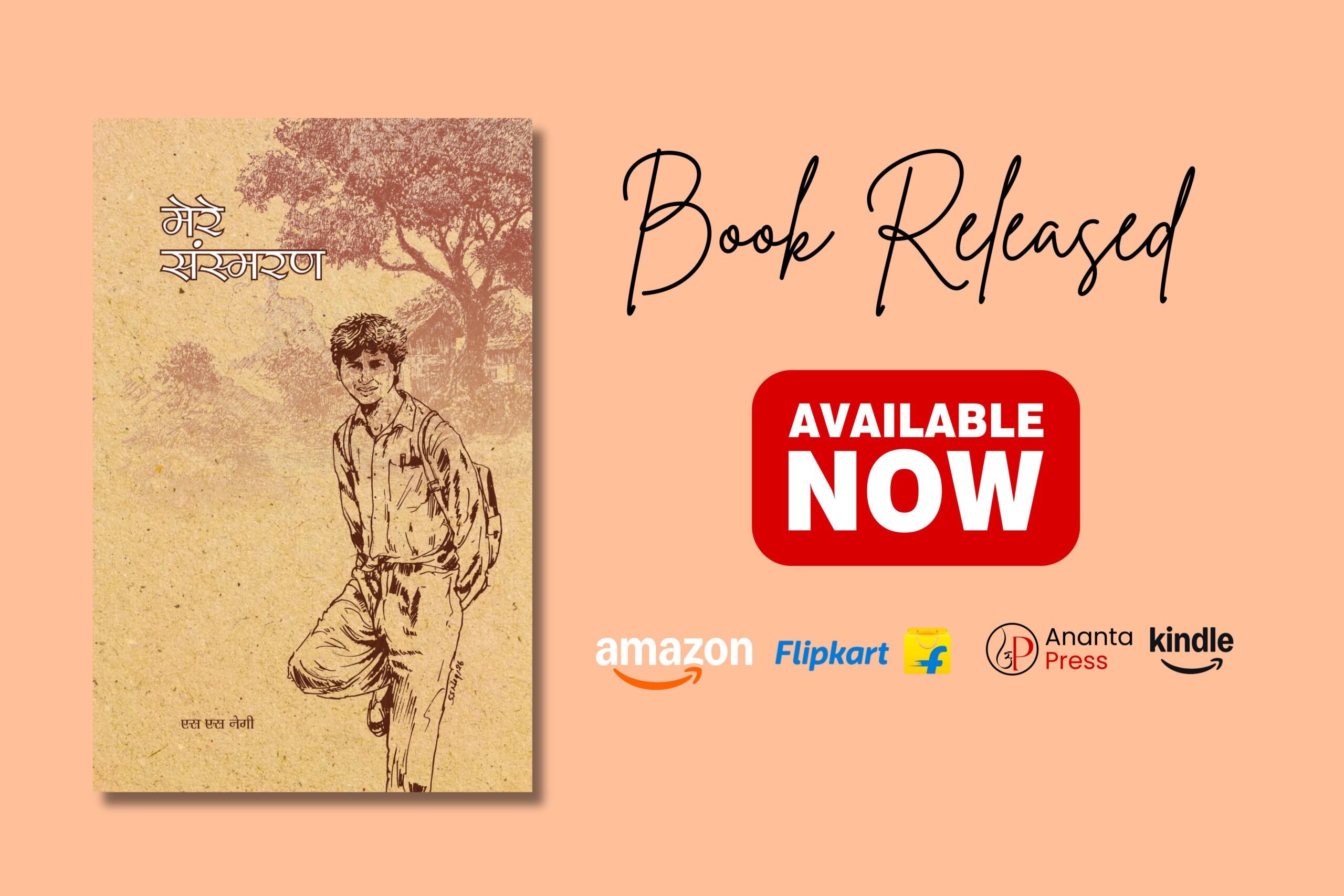
Heartfelt Congratulations to S. S. Negi on the Release of His Book Mere Sansmaran
It is a matter of great pride and happiness that author S. S. Negi has released his autobiographical book titled Mere Sansmaran, which is now available on major platforms such as Amazon, Flipkart, Ananta Press, and Kindle. This publication is not merely the release of a book; it is the unveiling of a deeply personal journey shaped by memories, emotions, and life experiences. Mere Sansmaran is not a display of literary flamboyance or ornamental language. Instead, it is a sincere and honest portrayal of life as it was lived. The author has transformed his lived experiences into words, presenting them with simplicity and emotional depth. The book stands as a testimony to a life observed closely, felt deeply, and remembered with gratitude. The Emotional Landscape of Mere Sansmaran When the author looks back at his life from this stage, he finds an endless ocean of memories rising before him. These memories form the soul of this book. From the dusty lanes of childhood to the refreshing waters of rivers where carefree moments were spent, from small joys shared with loved ones to silent struggles endured within—each experience finds a place in these pages. The book beautifully captures the essence of childhood: innocent laughter, freedom without fear, and a close connection with nature. These moments are not merely nostalgic; they define the author’s identity. The simplicity of those days contrasts with the complexities of later life, making the narrative both tender and reflective. Tribute to Parents and Family Values One of the most touching aspects of Mere Sansmaran is the author’s portrayal of his parents. He remembers his mother as a figure of tireless dedication—working day and night to shape the family’s future with love and sacrifice. Her perseverance becomes a symbol of quiet strength. Equally powerful is the depiction of his father’s silent struggle. Without loud expressions of hardship, the father carried the weight of responsibility and resilience. The author’s respect for this unspoken effort reflects deep emotional maturity and gratitude. These portrayals remind readers of their own parents and the countless sacrifices that often go unnoticed. Transition from Childhood to Youth As the narrative moves forward, the author describes his entry into college life—a turning point where his understanding of the world expanded. The simple worldview of childhood slowly transformed into a deeper awareness of society, relationships, and responsibility. The emotional transitions, unspoken fears, and internal conflicts of youth are depicted with honesty. The changing social environment and evolving mindset are woven into the book with clarity. These moments of growth do not feel forced or dramatic; they appear natural and organic, just like real life. Readers will find themselves reflecting on their own journeys from innocence to awareness. Writing Style and Authentic Voice S. S. Negi openly admits that he is not a seasoned or professional writer. Yet this admission becomes the book’s greatest strength. He does not write as a literary expert but as a human being who finally gathered the courage to express what remained unsaid throughout his life. His language is simple, sincere, and direct. The narrative feels like a conversation between the author and the reader. There is no artificial complexity or unnecessary ornamentation—only truth and emotion. This authenticity creates a powerful connection between the writer and the reader. Beauty in Simplicity, Inspiration in Struggle The author dedicates this book to those who seek beauty in simplicity and motivation in struggle. This theme resonates throughout the work. There are no extraordinary heroes or fictional victories here—only ordinary people facing real challenges. The book quietly teaches that: Through small incidents and everyday moments, the author shows how ordinary life carries extraordinary meaning. A Mirror for the Reader Perhaps the greatest achievement of Mere Sansmaran is its ability to reflect the reader’s own story. While reading about the author’s childhood, parents, and struggles, readers are reminded of their own homes, their own streets and rivers, and their own family sacrifices. The book gently asks:“Is this not also my story?” This sense of identification transforms the book from a personal narrative into a universal experience. Social and Emotional Significance In today’s fast-paced digital age, emotions are often buried under routines and screens. A book like Mere Sansmaran brings readers back to the emotional roots of life. It reconnects them with values such as gratitude, patience, family bonds, and humility. For younger readers, the book offers lessons in respect for parents, understanding struggles, and valuing simple joys. For older readers, it becomes a journey of reflection and remembrance. The book teaches that life is not merely a list of achievements; it is a collection of lived moments. Conclusion Mere Sansmaran is a work that touches the heart rather than impresses the intellect. It reminds us that memory is not just a record of the past; it is the foundation of our future. This book teaches us that:Our memories shape us,Our struggles strengthen us,And our stories connect us. It is a quiet yet powerful contribution to autobiographical literature, rooted in sincerity and lived experience. Availability The book Mere Sansmaran by S. S. Negi is now available on: Readers who appreciate real-life stories, emotional depth, and honest expression will find this book deeply rewarding. Final Words Heartfelt congratulations to S. S. Negi on this remarkable literary achievement.Mere Sansmaran is sure to find a special place in the hearts of readers and serve as an inspiration for those who believe in the power of simple stories and silent struggles.
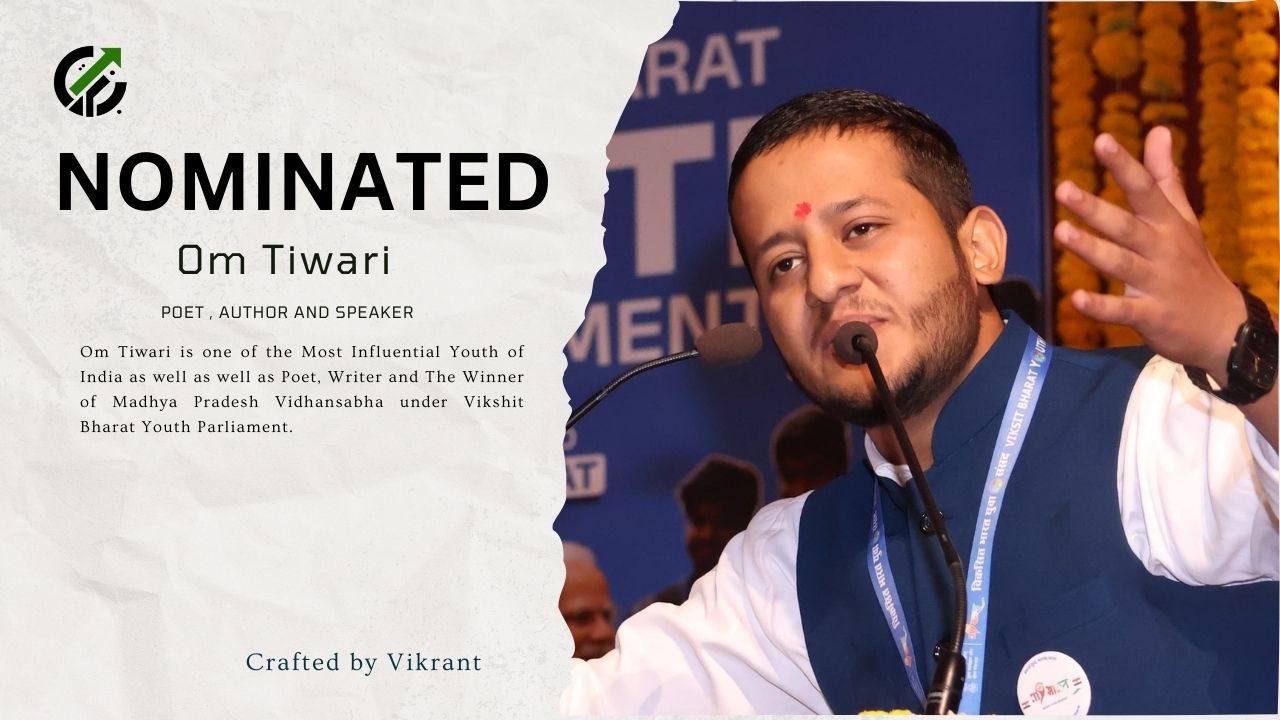
Congratulations to Om Tiwari on His Prestigious Nomination for the CFV Spark Awards
From Narrow Lanes to Grand Halls From the humble streets of his hometown to the distinguished chambers of the Madhya Pradesh Vidhan Sabha, Om Tiwari’s journey reads like a chapter from a modern epic. Born with insatiable curiosity and a mind equally drawn to words and ideas, he found his earliest joy in weaving verses, stories, and speeches. Even as a boy, his words carried a power that could quiet a noisy crowd—not with volume, but with meaning. Friends recall him under a tree, notebook in hand, writing poems that captured both the struggles and the hidden beauty of everyday life. Writing, for him, was not just expression—it was a weapon, a tool, and a mirror to society. A Poet with a Purpose As the years passed, Om’s literary gifts merged with a keen awareness of the world’s pressing issues. He refused to remain a silent observer. His writings took on the weight of social consciousness, advocating reform, unity, and progress. This blend of art and activism earned him respect as both a poet and a writer, but it was his commitment to action that set him apart. He believed that the pen and the podium were not rivals, but allies—two powerful forces shaping a better tomorrow. The Call to Leadership That belief carried him into the arena of political dialogue, a space where the voices of youth often go unheard. His defining moment came with the Vikshit Bharat Youth Parliament, a national platform bringing young leaders into direct conversation with policymakers. Representing the hopes of countless young Indians, Om stepped into the Madhya Pradesh Vidhan Sabha not merely as a participant, but as a force of conviction. His speeches—crafted with research, empathy, and poetic clarity—earned the attention of senior leaders, drawing nods and thoughtful silences from seasoned politicians. Victory and Recognition In a landmark achievement, Om Tiwari emerged as the Winner of the Madhya Pradesh segment of the Youth Parliament. The victory cemented his position as one of India’s most influential youth voices, a leader who could bridge the gap between young dreams and national discourse. Rooted in the Community Despite the titles and accolades, Om has never strayed from his roots. He conducts literary workshops for aspiring poets, mentors students in debate and public speaking, and leverages social media to spotlight causes that matter. Those who meet him are struck by his humility; he treats everyone—from a village farmer to a city entrepreneur—with the same respect. For Om, true leadership is not about standing above others, but walking beside them. The Story Still Unfolds Today, Om Tiwari stands at the crossroads of literature, leadership, and youth empowerment. As a Poet, Writer, and Winner of the Madhya Pradesh Vidhan Sabha’s Vikshit Bharat Youth Parliament, he continues to prove that when words are paired with action, they can transform the course of history. His journey so far is remarkable, but Om knows this is only the beginning. The rest of his story will be written—one poem, one speech, and one act of courage at a time.
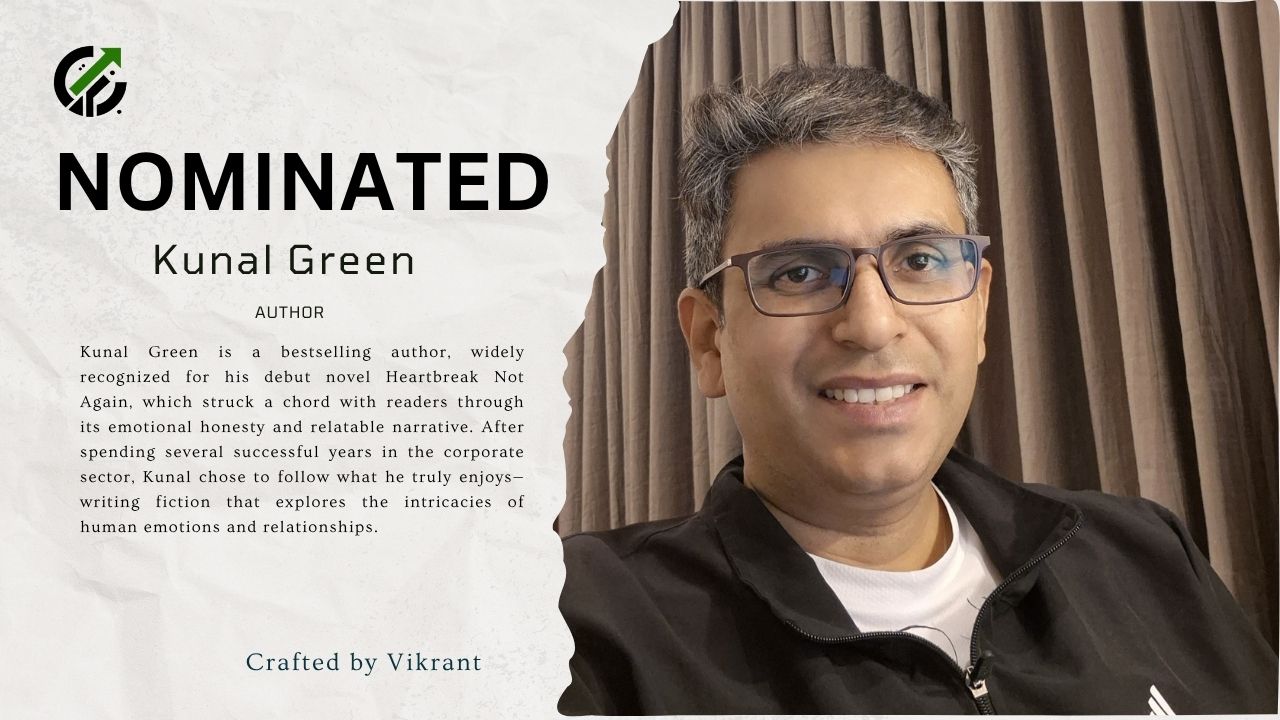
Congratulations to Kunal Green on His Prestigious Nomination for the CFV Spark Awards
1. The Corporate Climb: A Promising Beginning Kunal Green began his professional journey with precision and purpose. After completing his Bachelor’s degree in Electronics and Communication Engineering, he went on to earn a Post Graduate Diploma in Business Administration with a focus on Marketing. Armed with both technical knowledge and managerial insight, Kunal entered the competitive world of corporate management. His talent for strategy and leadership was evident early on, and over the years, he rose through the ranks. A certified Project Management Professional (PMP), he handled high-stakes projects with remarkable discipline and efficiency. Yet, beneath the structured chaos of deadlines and board meetings, a quiet desire stirred—a longing to tell stories. 2. The Inner Voice: Calling of the Heart While Kunal’s corporate life was fulfilling on paper, his inner world was rich with untold narratives. He found solace in scribbling thoughts after long workdays, penning fragments of fiction inspired by everyday moments, heartbreaks, and personal observations. These weren’t just diary entries—they were seeds of something bigger. As his passion for storytelling deepened, the corporate world started to feel like borrowed time. He realized that while his career was built on strategy and execution, his soul resonated with words, emotions, and human connections. 3. The Leap of Faith: Leaving the Familiar It wasn’t an easy decision. Letting go of a stable, successful career to pursue writing full-time involved both risk and vulnerability. But Kunal believed that if his heart was in writing, he owed it to himself to give it everything. He stepped away from the corporate routine and into the unpredictable world of creative writing. It was a leap of faith—not just in storytelling, but in his own voice. 4. Heartbreak Not Again: The Breakthrough Debut Kunal’s debut novel, Heartbreak Not Again, was born from raw, personal emotion and keen observation. It told the story of love lost and found again—not in people, but in oneself. The novel’s emotional honesty, relatable characters, and authentic tone struck a chord with readers across age groups. Without relying on drama or glamour, Kunal created a narrative that felt real. The book became a bestseller, and more importantly, it made Kunal a name to watch in contemporary Indian fiction. 5. A Writer’s Identity: Style and Impact Kunal’s writing style is subtle yet powerful—marked by introspection, poetic simplicity, and a deep understanding of human emotions. He doesn’t aim to preach or dazzle. Instead, he invites readers to reflect on their own journeys through the mirror of his characters. His corporate background often informs the structure and realism of his plots, adding layers of discipline and insight to the emotional arcs. Readers connect with Kunal not just because of what he writes, but how he writes—with care, grace, and a quiet urgency. 6. The Second Step: A New Chapter Begins With his second book, Kunal Green continues his journey of exploring the inner landscapes of love, loss, healing, and hope. His growing readership eagerly awaits his next offering, knowing that it will once again reflect the truths they live with, but seldom articulate. As an author, he isn’t chasing fame—he’s chasing emotional resonance. And with every book, he gets closer to the heart of what makes us human. 7. The Message: A Life Rewritten Kunal Green’s journey is more than a career shift—it’s a story of choosing authenticity over comfort. His life reminds us that success isn’t always about climbing higher, but about listening deeper. By walking away from the expected path, he carved a new one—one that led to connection, meaning, and creative fulfillment. Quote Summary:“In every page he writes, Kunal Green tells us—your story matters, and it’s never too late to write it.”
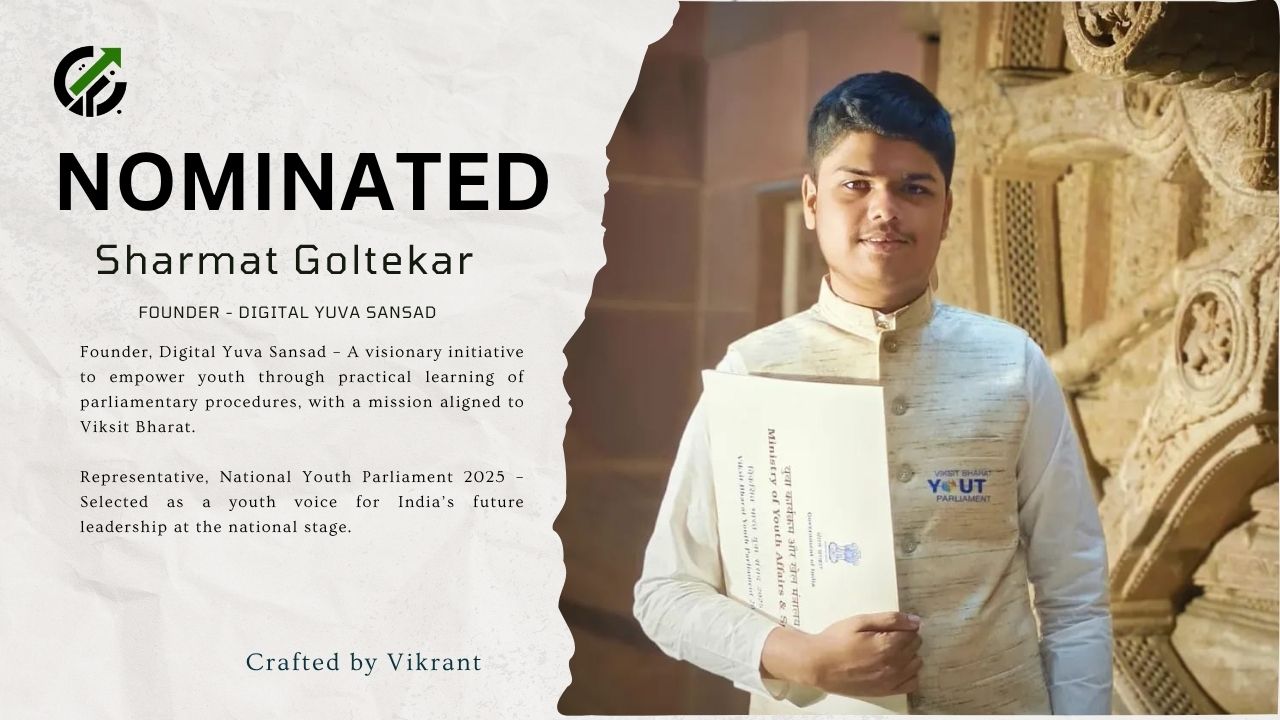
Congratulations to Sharmat Goltekar on His Prestigious Nomination for the CFV Spark Awards
Sharmat Goltekar: Forging the Path to a Developed India “The youth are not just the future of this nation—they are its most powerful present.” – Sharmat Goltekar In an age where noise often drowns wisdom, Sharmat Goltekar emerges as a calm yet compelling force—a youth visionary redefining leadership with integrity, intellect, and action. His journey is not merely an individual pursuit of success; it is the unfolding of a larger mission to see India realize its full potential as Viksit Bharat. Planting the Seed: The Birth of Digital Yuva Sansad It all began when Sharmat, deeply observant of the gaps in civic education, realized that while young Indians were full of passion, they lacked a platform to understand and participate in democratic processes meaningfully. This insight became the foundation of Digital Yuva Sansad, an innovative initiative that brings together the energy of students and the essence of parliamentary democracy. Through this platform, he introduced interactive simulations of the Indian Parliament, policy debates, and mock sessions that allowed youth from across the country to experience governance firsthand. What began as a concept soon evolved into a movement—bridging classrooms with corridors of power. Today, Digital Yuva Sansad stands as a beacon of participatory democracy and youth empowerment. A National Voice: The Youth Parliament Journey Sharmat’s leadership caught national attention when he was selected as a Representative at the National Youth Parliament 2025. Standing amidst India’s brightest young minds, he represented not just himself—but millions of aspiring citizens who dream of contributing to India’s transformation. At the Parliament, his speech championing grassroots development, youth inclusion, and education reform drew applause from policymakers and peers alike. His ideas were rooted in lived experiences and reflected a maturity beyond his years. This platform propelled him to become a symbol of responsible youth leadership—a voice grounded in vision. A Literary Milestone: Read India Celebration Winner In 2022, Sharmat further expanded his influence by winning the Read India Celebration, a national platform recognizing literary brilliance. His thoughtful writings on nation-building and youth responsibility earned him not only the winner’s title but also an exclusive feature on Republic TV. The interview broadcasted his thoughts to a wide audience, inspiring thousands of students and educators. This recognition wasn’t just about accolades—it solidified his position as a thinker who writes with purpose, blending creativity with civic awareness. Viksit Bharat – The Book, The Mission Currently, Sharmat is pouring his passion and research into his upcoming book titled “Viksit Bharat”. Far from being theoretical, the book draws on ground-level experiences from over 16 states and union territories, reflecting India’s diversity, challenges, and emerging opportunities. Set to be released on 15th August, this book will be more than just a publication—it will be a declaration of commitment to the nation. With every page, Sharmat hopes to inspire readers to not only dream but to act, to not only question but to contribute. A Beacon for His Generation Sharmat Goltekar stands at the intersection of youth, governance, and grassroots empowerment. His work reaffirms that transformational leadership doesn’t wait for permission—it begins with conviction. Whether it’s guiding students through parliamentary procedures, addressing national forums, or writing about the soul of India, Sharmat is steadily carving out a legacy of service, intellect, and vision. In a world that often asks what the youth can become tomorrow, Sharmat boldly answers with his actions:“We are already the leaders of today.”

Congratulations to Nimisha Suryanshi on His Prestigious Nomination for the CFV Spark Awards
The Storyteller of Change: The Journey of Nimisha Suryanshi Patra “When passion fuels purpose, even the quietest voice can become a revolution.” In a world where voices are often lost in noise, Nimisha Suryanshi Patra has carved a space where her voice doesn’t just echo — it resonates. A documentary filmmaker, youth parliamentarian, creative visionary, and passionate advocate for gender equity, Nimisha’s journey is a vivid tapestry of bold actions, artistic excellence, and unwavering determination. Humble Roots, Bold Vision Born and raised in Haryana, Nimisha was never content with simply watching the world go by. From her early years, she displayed an insatiable curiosity and a deep desire to understand the world around her. While most young people were exploring hobbies, she was exploring issues — social, political, cultural — and asking difficult questions. How could stories inspire change? How could one voice shake systems? How could art become activism? These questions shaped her path as she pursued a B.A. (Hons. with Research) in Mass Communication at Guru Jambheshwar University of Science & Technology. But for Nimisha, education wasn’t just confined to the classroom. Every street she walked, every voice she heard, and every injustice she witnessed became her syllabus. The Camera as a Catalyst Nimisha’s breakthrough came through the lens of her camera. Her debut documentary, K. K. Rath – A Celebration of Life, was a solo project — filmed, directed, and edited entirely by her. What began as a heartfelt tribute evolved into a powerful narrative of human resilience, drawing attention and accolades across borders. The film was selected at five international platforms and bagged three national awards — including the prestigious Best Director award at the 6th Haryana International Film Festival. Her storytelling was not just technically sound; it was emotionally charged, layered, and authentic. She wasn’t documenting events — she was archiving emotion. Her second film, Dhoomil Dharohar, reinforced her growing status as a filmmaker of substance. A cultural deep dive into the forgotten legacies of India, the film earned honours at the 7th HIFF and the 3rd HIFA, standing as a reminder of how art can preserve heritage while shaping the future. Voicing the Voiceless But Nimisha’s talent isn’t confined to the camera. As a youth parliamentarian, she represented Haryana twice at both the Indian Parliament and the Haryana Vidhan Sabha. Standing at podiums usually dominated by seasoned politicians, she spoke fearlessly about issues often left in the shadows — youth development, women’s empowerment, and the urgent need for gender equity in public policy. Her speeches were not performances — they were declarations. Declarations that the future would no longer wait for permission. It would be led by prepared, passionate, and powerful voices like hers. Mentor, Speaker, Artist — A Multidimensional Changemaker Nimisha is not just a doer — she is a multiplier of impact. As a public speaking coach, she trains young minds to express themselves with clarity and confidence. As a video editing and photography trainer, she shares her skills with those who wish to tell their own stories. Her voice — refined, impactful, and commanding — has earned her a place as a recognised voice-over artist and a youth speaker for All India Radio, Hisar. She speaks not just to inform, but to ignite. Simultaneously, her artistic talent paints another dimension of her spirit. A national photography champion and gold medalist, she has held eight solo art exhibitions, all themed around India’s unsung heroes — freedom fighters, scientists, women pioneers, and the vibrant cultural heritage of the nation. Her art is storytelling without words — colors and strokes that scream of pride, power, and legacy. The Written Word: Her Intellectual Arsenal Nimisha’s pen is as powerful as her lens. Her poetry and essays focus heavily on women’s empowerment, identity, and social reform. Her words are deeply personal yet universally resonant. Many of her research papers — carefully crafted, well-argued, and deeply researched — have been published in reputed academic journals across India, bridging the gap between activism and academia. For Nimisha, every word written is a seed planted — a seed of thought, awareness, and eventually, change. Fueling Tomorrow with Today’s Action What makes Nimisha’s journey exceptional is not just her achievements — but the clarity of her purpose. She does not chase fame or applause. Instead, she chases impact. She is committed to leading through example, inspiring through effort, and changing narratives not with anger, but with awareness and art. Whether it’s in a film festival or a parliamentary debate, an art gallery or a poetry slam, Nimisha carries the same energy — bold, clear, and compassionate. In Conclusion: The Story Has Just Begun Nimisha Suryanshi Patra is not just a name on a list of achievers — she is a movement in motion. She represents the new India — informed, fearless, creative, and compassionate. Her journey proves that age is no barrier, and that one voice — when backed by vision and values — can become the voice of many. As she continues to write, film, paint, speak, and mentor, one thing is certain: her story is far from over. In fact, it’s just the first chapter of a legacy that will inspire generations.
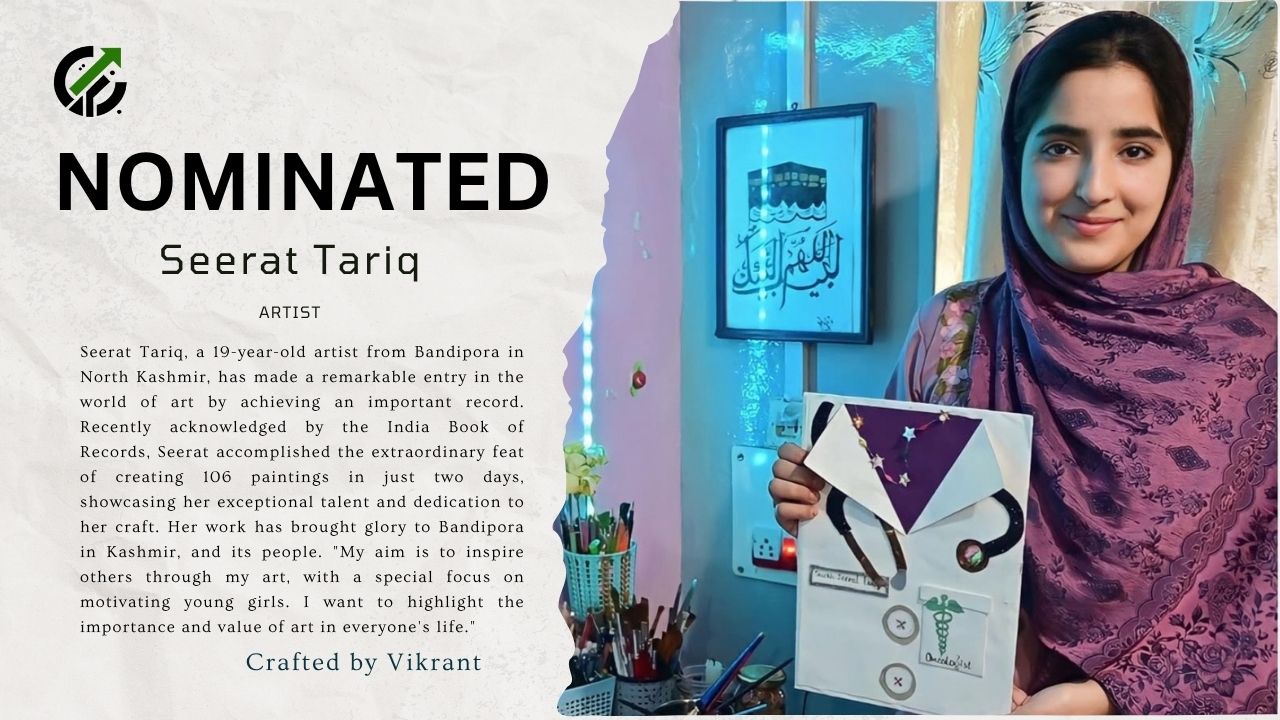
Congratulations to Seerat Tariq on His Prestigious Nomination for the CFV Spark Awards
Brushstrokes of Brilliance: The Unstoppable Journey of Seerat Tariq from Kashmir In the tranquil, snow-capped hills of Bandipora, a beautiful district tucked away in North Kashmir, a remarkable story is unfolding—one that speaks of grit, grace, and ground-breaking creativity. It is the story of Seerat Tariq, a 19-year-old girl whose name is now etched in the prestigious India Book of Records and the Asia Book of Records. But her real canvas isn’t just the sheets she paints on—it is the hearts of the people she inspires. From the moment Seerat could hold a pencil, she was drawing her dreams. Born into a modest family surrounded by the pristine beauty of Kashmir, her early life was infused with the cultural richness and the serene atmosphere of the valley. While others around her played with dolls or gadgets, Seerat found her joy in colors—crayons, pencils, and watercolors. Her notebooks were filled not with homework but with sketches of birds, mountains, eyes, and feelings she couldn’t express in words. Despite the region’s socio-political challenges, Seerat’s passion for art remained undeterred. She often had to balance schoolwork, limited access to resources, and the societal expectation that girls should follow a safer, more conventional path. But she chose the road less traveled—a path marked by canvases, competition halls, and creative exploration. Her defining moment came when she decided to attempt something no one her age in the region had dared before: to create 106 paintings in just two days. It wasn’t just a personal challenge; it was a mission—to push her own limits and to prove to the world that art can be powerful, fast, and meaningful. With hardly any rest, supported by sheer passion, determination, and a heart full of ambition, she painted hour after hour, pouring her soul into every brushstroke. At the end of the 48-hour marathon, not only did she complete her target, but she also created a record that would inspire countless others. This incredible feat earned her recognition from the India Book of Records, officially marking her entry into the league of young Indian prodigies. Not long after, her efforts were also acknowledged by the Asia Book of Records, solidifying her reputation as one of the most talented young artists in South Asia. But Seerat’s list of achievements doesn’t end there. With 12 state-level awards and over 30 district-level honors, she has become a household name in Kashmir’s art circles. Whether it’s painting live at public events, mentoring children in art workshops, or showcasing her work at exhibitions, Seerat’s presence has become symbolic of rising talent from conflict-ridden regions. Her paintings are not just pretty images; they carry messages—of female empowerment, environmental awareness, peace, identity, and cultural pride. One of her most admired works, “The Silent Valley,” depicts a faceless girl standing amid a storm, symbolizing the unheard voices of young girls in conflict zones. Another, “The Colors of Courage,” celebrates the resilience of Kashmiri women. These works have moved viewers to tears and received accolades from critics, journalists, and art curators across India. Yet, despite her fame, Seerat remains humble and deeply rooted in her community. “I don’t just paint for recognition,” she says, “I paint to tell stories that are often left untold. I want young girls from villages and towns like mine to believe that their voice matters.” This sense of purpose is what drives Seerat every day. She has become more than just an artist; she is now a mentor, motivator, and a movement. She regularly conducts art camps for children, especially girls from underprivileged backgrounds, teaching them not just how to paint, but how to dream. Through her initiative “Color Beyond Borders,” she has reached more than 500 children so far, helping them explore creativity as a path to healing and expression. But success has not come without sacrifice. There were days when she lacked materials, when the power would cut off in the middle of work, or when she was discouraged by people who questioned the “usefulness” of art. But in each obstacle, she found fuel for her fire. “I remember using old newspapers as canvas once,” she recalls with a smile. “But I never stopped painting. My hunger to create was bigger than my lack of tools.” Today, Seerat’s story is being told in schools, media articles, and even across social platforms where her paintings have gone viral. She has become an emblem of a new Kashmir—a land not just of beauty and politics, but of talent, resilience, and renaissance. Looking ahead, Seerat dreams of opening her own Art Academy in Bandipora, where children from all walks of life can come, create, and be celebrated. She also hopes to represent India on international platforms, showcasing the untapped artistic potential of the region. As her journey unfolds, one thing remains certain—Seerat Tariq is more than an artist. She is a symbol of hope, the voice of a generation that refuses to be silenced, and a force of creativity destined to leave a lasting impact on the world.

Congratulations to Sahil Muzaffar on His Prestigious Nomination for the CFV Spark Awards
From a Fighter’s Heart to a Nation’s Arena: The Journey of Sahil Muzaffar“Discipline doesn’t begin in the ring—it begins in the soul.” The Beginning: A Boy with Fire in His Veins In the narrow streets of a modest town, Sahil Muzaffar was no stranger to struggle. While others his age were consumed by distractions, Sahil found solace in sweat, grit, and discipline. His heart beat not just for one sport, but for the entire spirit of athleticism. Whether it was the disciplined art of martial arts, the rhythm of volleyball, or the strategy behind cricket, Sahil was drawn to the essence of sport—not just for competition, but for character-building. The Birth of a Vision: The Real Fighters Academy What began as a personal passion soon transformed into a mission. Sahil realized that while talent existed in every corner of India, opportunity did not. Youths with burning passion had nowhere to train, no mentors to guide them, and no structure to shape their potential. And that’s where The Real Fighters Academy was born—not just as an academy, but as a movement. The Real Fighters Academy is a multi-disciplinary sports training institution founded by Sahil Muzaffar, with a vision to create an ecosystem where sports become a lifestyle, not just a pastime. It offers coaching and development programs in martial arts, volleyball, cricket, and other team and solo sports, blending physical training with mental conditioning. Martial Arts: Strength in Silence, Power in Control Sahil’s deep-rooted foundation in martial arts shaped not just the structure of his academy, but its philosophy. The martial arts wing of The Real Fighters Academy teaches more than self-defense—it trains for self-respect, emotional control, and resilience. Under Sahil’s leadership, countless students have achieved state and national recognition in disciplines such as Karate, Taekwondo, and Mixed Martial Arts (MMA). The academy regularly organizes belt testing camps, national-level sparring tournaments, and international martial arts exchange programs—putting homegrown fighters on global platforms. “We don’t train to fight others. We train to conquer ourselves.” – Sahil Muzaffar Volleyball: The Pulse of Team Spirit Understanding the importance of team coordination and unity, Sahil also established a dedicated volleyball coaching program. Trained by certified professionals and supervised by Sahil himself, the volleyball wing is one of the fastest-growing departments in the academy. Young athletes are taught court discipline, serve strategies, blocking techniques, and leadership skills that extend beyond the game. Several of Sahil’s students have now represented their districts and are on the radar of national selectors—all thanks to the rigorous coaching modules, talent exposure tours, and intra-academy tournaments. Cricket: India’s Religion, Sahil’s Strategy How can an Indian sports academy be complete without cricket? Sahil knew that nurturing cricketing talent meant more than just nets and bats. His academy introduced data-driven training, fitness drills inspired by international standards, and psychological mentoring to help young cricketers rise above pressure. From U-14 hopefuls to semi-pro league players, The Real Fighters Academy has seen its cricketers climb the ladder of excellence, some even being picked for regional teams and trials by national selectors. Empowering Through Sport: Not Just Players, But Leaders Beyond the court, field, or dojo, Sahil’s mission has always been clear—empower youth through sports. His leadership training sessions, fitness bootcamps, and motivational seminars have been instrumental in transforming ordinary athletes into extraordinary leaders. Under Sahil’s guidance, the academy has initiated “Project Real Fighters”, an outreach campaign that travels to rural and underserved areas, offering free training camps, scholarships, and mentorship to young athletes who otherwise couldn’t afford professional coaching. A Legacy in Motion Today, The Real Fighters Academy is not just a building or a business—it’s a legacy. Built from Sahil Muzaffar’s relentless commitment, it stands tall as a beacon of what’s possible when passion meets purpose. Whether you’re a young girl wanting to learn self-defense, a village boy dreaming of cricket stardom, or a student seeking discipline and direction, Sahil’s academy opens its arms wide. His work continues to inspire not just athletes—but anyone who believes in pushing limits. The Real Fighters Academy isn’t about winning medals—it’s about winning life. “Through sweat, sacrifice, and unshakable belief, we build more than athletes—we build warriors of life.” – Sahil Muzaffar

Congratulations to Srikar Chitta on His Prestigious Nomination for the CFV Spark Awards
Ink in His Veins: The Literary Voyage of Srikar Chitta “The power of a young mind is not in how loud it speaks, but in how deeply it writes.” In the bustling educational landscape of Hyderabad, nestled within the innovative environment of Gaudium International School, walks a quiet yet powerful force—Srikar Chitta, a name that has begun to echo through the literary world with growing resonance. While his peers chase grades and gadgets, Srikar is busy chasing thoughts, stories, and the unspoken emotions that linger in the shadows of everyday life. An Indian American prodigy born with an insatiable hunger for discovery, Srikar was not molded by textbooks alone—he was nurtured by the rhythm of language, the poetry in silence, and the truth found in stories. From an early age, his room became a sanctuary where ideas turned into paragraphs, and observations transformed into narratives. The flicker of candlelight, the rustle of trees, the news of a changing world—everything was a potential story waiting to be written. Though naturally drawn to science, nature, and emerging technologies, Srikar found his truest identity in writing. It wasn’t a hobby—it was his calling. Every word he wrote was an exploration of something greater: the human condition, unspoken struggles, the joy of imagination, and the complexities of the modern world. His passion grew into purpose, and that purpose turned into powerful work. By the time most students were still finding their voices, Srikar had already found his. He authored two solo books—each showcasing his literary maturity, emotional intelligence, and visionary imagination. Not stopping there, he became a featured contributor in thirteen anthologies, writing alongside seasoned authors and holding his own with grace and insight. His articles and poems, published across prestigious online and offline platforms, explored everything from personal reflection to global issues—delivered with a voice that was both youthful and wise. In 2025, the world finally recognized what his readers had known for years. Srikar Chitta was awarded the prestigious World Icon Award by the World Talent Network, honoring his remarkable contributions to the field of literature. The award was more than a trophy—it was a symbol of how far dedication, depth, and dreams can take someone. It was a celebration of his ability to articulate emotions too complex for conversation, and to build bridges between cultures, ages, and ideas. Srikar’s writing draws deeply from the cultural heritage of India, the evolving world around him, and the nuances of being a young person in an increasingly complex era. His stories breathe authenticity, often reflecting themes of identity, resilience, innovation, and empathy. Readers of all ages find themselves in his characters—not because they are extraordinary, but because they are real. His secret? He listens. To people, to nature, to silence. And from those whispers, he crafts worlds. As a student at Gaudium International School, Srikar balances his academic pursuits with his literary endeavors. His teachers see him as a thinker. His peers see him as a dreamer. The world now sees him as an author with a voice that matters. But Srikar remains grounded—focused not on fame, but on growth. He understands that writing is not a destination, but a lifelong journey. And he walks it with courage, curiosity, and compassion. Today, with two books behind him and countless stories ahead, Srikar Chitta is not just writing pages—he’s writing legacy. So to the dreamers, the quiet thinkers, the curious wanderers—let his journey be your sign:You are never too young to change the world with your words.