1. What inspired you to create Career Cards Based on the Folk Knowledge of Chhattisgarh, and what gap were you aiming to address?
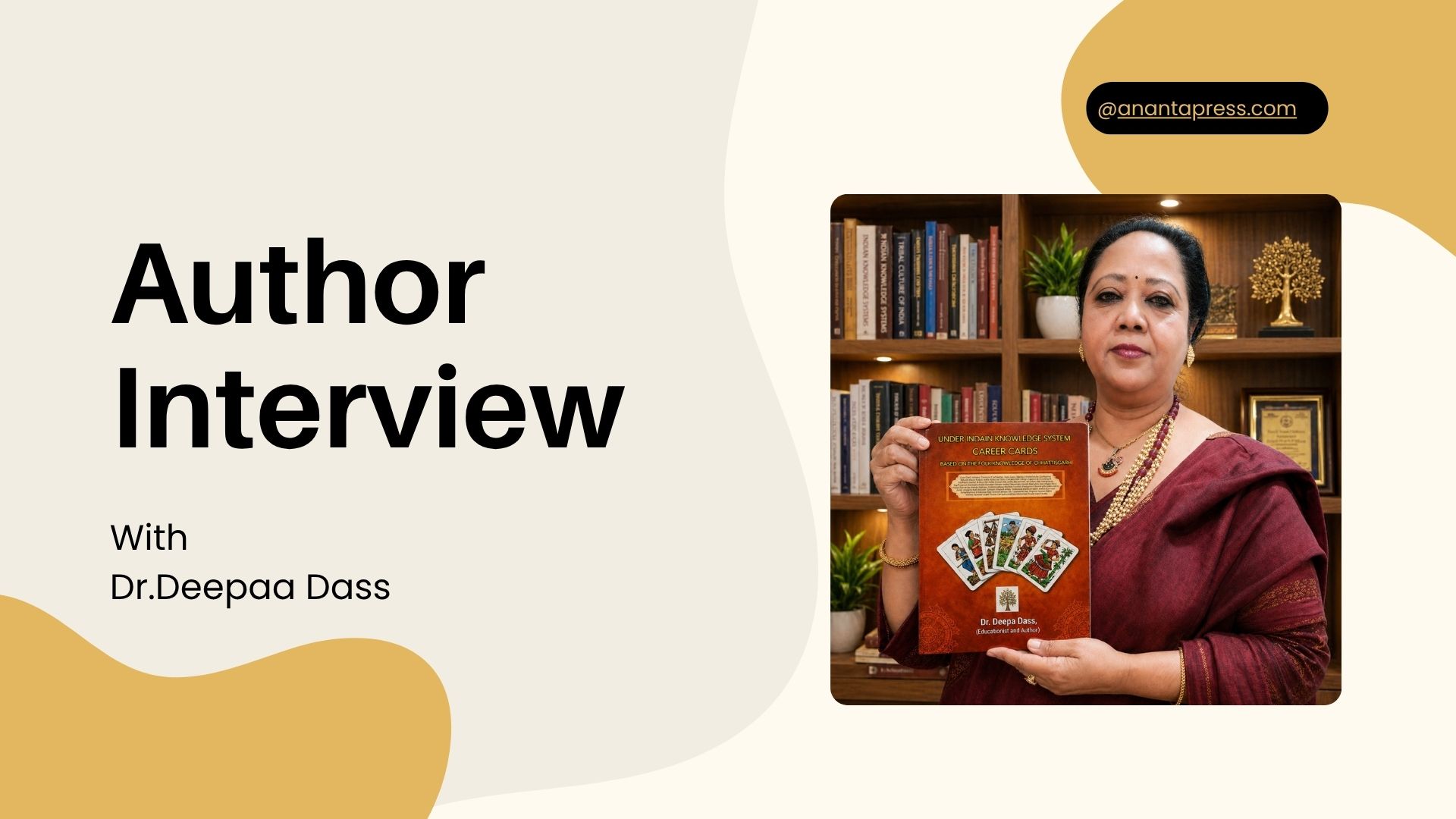
The inspiration behind Career Cards Based on the Folk Knowledge of Chhattisgarh emerged from a deep reflection on India’s indigenous systems of livelihood, skill transmission, and community-based professions. Traditionally, Indian occupational structures were closely aligned with local ecology, regional needs, and the availability of natural resources. These professions were not merely economic activities; they represented sustainable knowledge systems developed over generations.
However, with rapid modernization, industrialization, and the dominance of formalized career pathways, many traditional occupations have either lost visibility or are gradually disappearing. At the same time, some of these crafts and trades are regaining relevance due to growing interest in sustainability, handmade production, cultural tourism, and ethical entrepreneurship.
I observed a significant gap in career guidance systems where students are often exposed only to mainstream professions such as engineering, medicine, or corporate employment, while indigenous professions remain absent from formal educational discourse. In the era of Artificial Intelligence, where job structures are rapidly transforming, it becomes even more important to diversify our understanding of careers. AI can help document, preserve, and scale indigenous knowledge systems rather than replace them.
The Career Cards were thus conceived as a pedagogical intervention to bridge this gap—to help students recognize traditional occupations as viable, dignified, and entrepreneurial career options while also contributing to the preservation of India’s cultural heritage.
2. How has your journey as an educationist and researcher influenced your focus on the Indian Knowledge System (IKS)?
My journey as an educationist and researcher has consistently reinforced the understanding that education must remain rooted in cultural context and social relevance. Working closely with vocational education, teacher training, and curriculum development made me realize that many formal educational models often neglect the lived knowledge of communities.
As I engaged with diverse learners and field-based educational settings, I found that traditional practices—whether in agriculture, weaving, metalwork, herbal medicine, or food systems—contained highly sophisticated forms of knowledge, problem-solving, and sustainability. These systems represent what we now recognize under the broader framework of the Indian Knowledge System (IKS).
Research further strengthened this perspective by showing that indigenous knowledge is not “informal” in the sense of being lesser; rather, it is systematically developed, contextually tested, and socially validated. It reflects deep ecological intelligence and vocational wisdom.
This realization shifted my academic focus toward integrating IKS into mainstream education so that students not only learn global competencies but also remain connected to their cultural and intellectual roots. Education should not produce alienation from one’s own heritage; instead, it should cultivate pride, continuity, and innovation grounded in tradition.
3. Why do you believe integrating Lok Vidya into modern education is essential for today’s students?
Integrating Lok Vidya into modern education is essential because it restores the relationship between knowledge and lived reality. Lok Vidya, or people’s knowledge, is knowledge generated through experience, observation, and collective wisdom. It is practical, sustainable, and deeply contextual.
Today’s students often receive education that is highly theoretical and disconnected from local realities. As a result, learning becomes abstract rather than transformative. Lok Vidya brings relevance to education by connecting students with their environment, culture, and community.
It also supports experiential learning, skill development, and entrepreneurial thinking. For example, understanding traditional pottery, forest-based livelihoods, natural dyeing, or bamboo crafts introduces students to design thinking, sustainability, local economics, and resource optimization.
In addition, Lok Vidya promotes dignity of labour and respect for traditional professions, which is crucial in addressing social hierarchies associated with manual work. It helps students understand that intelligence is not limited to textbook knowledge but is also embodied in craftsmanship, observation, and inherited expertise.
Therefore, integrating Lok Vidya is not about returning to the past; it is about creating a more inclusive, meaningful, and future-ready education system.
4. How did you identify and select the 51 traditional careers featured in the book?
The identification of the 51 traditional careers was based on a combination of field observation, community interaction, local occupational mapping, and educational relevance. The primary criterion was that each profession should represent a meaningful component of Chhattisgarh’s folk knowledge system and still retain cultural or economic significance.
I focused on occupations that have historically contributed to community life—such as weaving, pottery, blacksmithing, bamboo work, herbal healing, folk performance, forest produce processing, and traditional food systems. These were selected not only for their historical value but also for their contemporary potential in entrepreneurship and livelihood generation.
Another important factor was accessibility and relatability for students. The selected careers needed to be understandable and inspiring for young learners, especially those from rural and semi-urban backgrounds who may already have some connection to these occupations through family or community.
I also considered the possibility of modernization and scalability. Some professions have strong potential for revival through digital platforms, design innovation, tourism, and market linkages. Thus, the final selection balanced heritage preservation with future employability.
5. Could you share your process of developing each Career Card and ensuring its practical relevance?
Each Career Card was designed as both an informational and motivational learning tool. The process began with understanding the occupation in its social, economic, and cultural dimensions. This involved documenting the nature of work, required skills, traditional knowledge involved, tools and materials used, and its relevance in present-day contexts.
I then structured each card to make it student-friendly and pedagogically useful. The card included key elements such as the career title, nature of work, traditional significance, required competencies, entrepreneurial possibilities, sustainability value, and pathways for skill enhancement.
Practical relevance was ensured by linking each occupation with contemporary opportunities. For example, traditional weaving was connected with textile entrepreneurship, pottery with eco-friendly product design, and herbal knowledge with wellness industries. This helped reposition traditional work as a modern livelihood option rather than merely a cultural artifact.
The cards were also aligned with vocational education principles so that teachers could use them in classrooms for career counseling, project-based learning, and skill exploration. The goal was not just awareness, but actionable inspiration.
6. What were some key learnings or memorable experiences while working closely with local communities and artisans?
One of the most powerful learnings was the realization that knowledge does not always exist in written form—it often lives in hands, habits, and lived practices. Many artisans may not use formal academic language, yet they possess extraordinary technical precision, design intelligence, and environmental understanding.
Working with local communities taught me humility. I saw how generations of knowledge are transmitted through observation and participation rather than formal instruction. A potter understands soil chemistry intuitively; a weaver calculates pattern symmetry without mathematical formulas; a herbal practitioner identifies medicinal value through ecological familiarity.
A particularly memorable experience was witnessing how artisans adapted to changing market demands while preserving the essence of their craft. Their resilience and innovation challenged the misconception that traditional professions are static or outdated.
I also learned that respect and trust are essential in such work. Documentation must not become extraction; it must become collaboration. The process strengthened my belief that education must listen before it teaches.
7. In what ways does your work align with the vision of the National Education Policy (NEP) 2020?
My work strongly aligns with the vision of the National Education Policy (NEP) 2020, particularly its emphasis on holistic education, vocational integration, experiential learning, and the promotion of Indian Knowledge Systems.
NEP 2020 advocates moving beyond rote learning toward competency-based education that values critical thinking, creativity, and practical application. The Career Cards support this by presenting traditional professions as learning opportunities that combine skill, culture, sustainability, and entrepreneurship.
The policy also highlights the importance of vocational exposure from an early stage and seeks to remove the artificial divide between academic and vocational education. By introducing indigenous careers as legitimate professional pathways, the Career Cards directly contribute to this objective.
Furthermore, NEP 2020 calls for integrating local knowledge and cultural heritage into education. This initiative reflects that vision by bringing Lok Vidya into classrooms and validating community knowledge as educationally significant.
In essence, the project translates policy into practice by making IKS visible, accessible, and usable for learners and educators.
8. How can these Career Cards help promote entrepreneurship and sustainable livelihoods among youth?
The Career Cards help promote entrepreneurship by shifting students’ perception of traditional occupations from survival-based work to innovation-based livelihood opportunities. Many indigenous professions already possess strong foundations for sustainable enterprise because they are based on local materials, low-cost production, and community knowledge.
For example, bamboo crafts, handloom weaving, herbal products, organic food processing, and terracotta work can all be developed into modern micro-enterprises with the support of branding, digital marketing, and value addition.
The cards introduce students to these possibilities early, helping them see self-employment as a respectable and practical option. This is especially important in a time when formal employment opportunities are becoming increasingly uncertain due to automation and AI-driven changes in labor markets.
Entrepreneurship rooted in folk knowledge also promotes local economic resilience. It reduces migration pressure, strengthens rural economies, and supports environmentally sustainable production models.
Thus, the Career Cards do not merely inform students about careers—they encourage them to become creators of livelihoods rather than only seekers of jobs.
9. What challenges did you face in connecting traditional knowledge with formal education systems?
One of the major challenges was overcoming the perception that traditional knowledge is outdated or academically inferior. Formal education systems often privilege textbook-based and urban-centric knowledge while undervaluing experiential and community-based learning.
Another challenge was the lack of structured documentation. Much of folk knowledge exists orally, and translating it into educational formats without losing authenticity requires careful interpretation and sensitivity.
There was also resistance in terms of curriculum acceptance. Teachers and institutions sometimes hesitate to adopt unconventional career pathways because they are accustomed to standardized academic models and examination-oriented learning.
Language was another issue. Many indigenous practices are embedded in local dialects and cultural expressions that do not translate easily into formal educational terminology.
The challenge, therefore, was not only academic but also attitudinal—to create recognition that traditional knowledge is not separate from education, but an essential part of it.
10. What is your vision for the future of folk knowledge in education, and how would you like this initiative to evolve in the coming years?
My vision is to see folk knowledge become an integral and respected part of mainstream education rather than a peripheral cultural topic. I would like schools, colleges, and vocational institutions to recognize local knowledge systems as sources of innovation, research, and career development.
In the coming years, I hope this initiative evolves into a larger ecosystem that includes digital archives, multilingual learning resources, teacher training modules, community-based internships, and entrepreneurship incubation linked to indigenous professions.
I also envision the use of Artificial Intelligence and digital platforms to document endangered crafts, connect artisans with wider markets, and make traditional careers visible to a new generation. Technology should serve as a bridge between heritage and modernity.
Ultimately, the goal is not only preservation but transformation—to ensure that traditional knowledge remains living, evolving, and economically empowering. When students can proudly say that their heritage is also their future, education has truly fulfilled its purpose.